Learn how a casino game development company handles game design, prototyping, software architecture, QA testing, budgeting, and compliance.
Casino Game Development Company: A Guide to Game Design, Engineering, and Quality Assurance
Choosing a casino game development company involves more than finding a team that can create attractive graphics or build a playable interface. A complete game project requires creative planning, software engineering, testing, performance optimisation, and a clear understanding of the product's intended market.
From the initial concept to the final release, each development decision affects how the game looks, behaves, and performs across supported devices. A well-organised development process helps teams identify technical limitations early, manage project costs, and maintain consistent quality throughout the software lifecycle.
What Does a Casino Game Development Company Do?
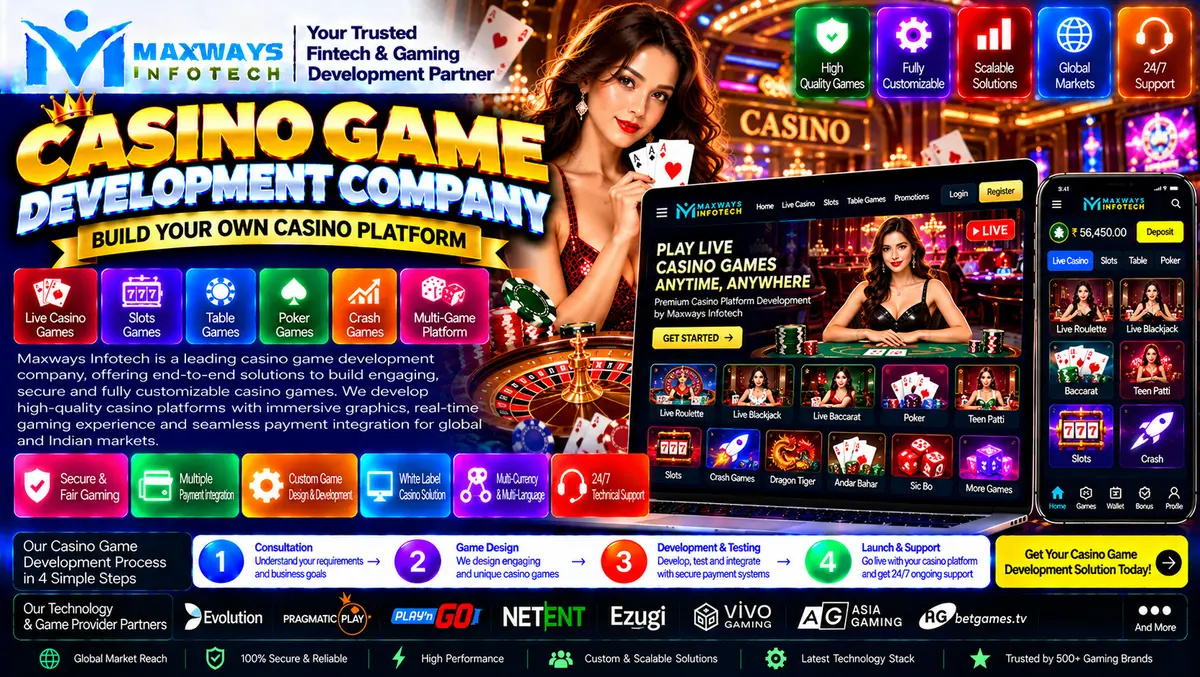
A casino game development company brings together designers, developers, testers, and project managers to create gaming software or related interactive entertainment experiences.
Depending on the agreed scope, the work may include:
-
Game concept development and visual design.
-
User-interface and animation development.
-
Frontend and backend programming.
-
Game-state management and software integration.
-
Automated and manual quality assurance.
-
Performance testing and device compatibility checks.
-
Technical documentation and post-release maintenance.
Not every project requires every service. The best starting point is a written project brief that defines the expected experience, target devices, technical requirements, delivery milestones, and acceptance criteria.
Turning a Game Idea Into a Development Plan
1. Define the Core Game Concept
Before production begins, the team should establish the game's purpose, visual theme, interaction model, and intended audience.
A concept document can describe the main screen, navigation structure, animation style, audio requirements, supported languages, and essential interactions. Reference images or a simple storyboard can help stakeholders agree on the direction before detailed design work starts.
This early planning stage also helps identify features that are unnecessary for the first release.
2. Build a Functional Prototype
A prototype is a limited version of the proposed experience. It allows the team to evaluate the interface, animations, interaction flow, and technical feasibility before committing to a full build.
For example, a prototype might demonstrate how a player moves between screens, how an animation responds to an input, or how the interface behaves when a connection is interrupted.
Feedback should be documented and prioritised. Changes made at this stage are generally easier to manage than major redesigns after the complete application has been developed.
3. Establish Technical Requirements
The technical specification should identify supported browsers and devices, application architecture, required integrations, performance expectations, and data-handling requirements.
It should also explain which components are custom-built and which depend on third-party software. This distinction helps the team estimate effort and understand the consequences of future dependency changes.
A clear specification gives developers and stakeholders a shared definition of what the finished product must deliver.
Game Design and Visual Experience
Creating a Consistent Visual Language
The visual design should connect the game's theme with its interface, typography, colour palette, icons, and animations. A consistent design system makes it easier to introduce new screens without creating an inconsistent experience.
Designers should consider how visual effects behave on smaller displays and lower-powered devices. Heavy animation, oversized images, and unnecessary effects can affect loading time and responsiveness.
Animation and Audio
Animation can communicate transitions, feedback, and changes in application state. Audio can support the atmosphere and reinforce interface events where appropriate.
Both should be designed with performance and accessibility in mind. Users should have suitable controls for audio, and important information should not depend exclusively on sound or visual effects.
Interface Clarity
Controls should have clear labels and predictable behaviour. Text needs sufficient contrast, and important actions should be easy to distinguish from decorative elements.
Keyboard navigation, focus indicators, touch targets, and accessible text alternatives should be included in the design review rather than left until the final testing stage.
Software Architecture and Development
A game's architecture determines how its interface, application logic, data, and supporting services work together.
Frontend Engineering
The frontend handles the visible interface and user interactions. Depending on the project, developers may use browser technologies, a game engine, or a combination of suitable frameworks.
The chosen technology should reflect the game's visual complexity, supported platforms, performance needs, and long-term maintenance requirements.
Backend and State Management
Some games require server-side services for session management, configuration, data persistence, or synchronisation between components.
The backend design should define how application state is stored and updated, how errors are handled, and which services are responsible for individual operations. Clear service boundaries can simplify testing and future development.
Third-Party Integrations
External libraries, media components, analytics tools, and other authorised services can reduce the amount of custom engineering required. However, each dependency introduces considerations such as version compatibility, licensing, security, and ongoing maintenance.
Before integration, the team should review the provider's documentation, supported features, access requirements, and data-use terms.
Testing and Quality Assurance
Testing is an essential part of game development, not simply a final check before release.
Functional testing: Verifies that screens, controls, transitions, and supported workflows behave as specified.
Compatibility testing: Checks performance across supported devices, browsers, operating systems, and screen sizes.
Performance testing: Measures loading time, memory consumption, responsiveness, and behaviour under representative workloads.
Recovery testing: Evaluates how the application responds to interrupted connections, unavailable services, invalid inputs, and unexpected application states.
Security testing: Reviews authentication, permissions, input validation, data protection, and third-party dependencies where relevant.
Test results should be recorded in a defect-tracking system, with clear priorities and criteria for confirming that each issue has been resolved.
For products that require independent testing or regulatory approval, internal quality assurance should be supplemented with the appropriate external review.
Project Management and Delivery Milestones
A defined delivery process helps prevent misunderstandings and makes progress easier to measure.
Each milestone should have an agreed review process. Stakeholders should know when feedback is required, how changes are approved, and whether new requirements affect the budget or delivery schedule.
How to Evaluate a Casino Game Development Company
When comparing development partners, look beyond portfolio images and headline pricing. Ask how the team manages technical risk, verifies quality, and supports software after delivery.
Useful questions include:
-
Can the team explain its proposed architecture and technology choices?
-
Does the project include a prototype or an early technical validation stage?
-
What testing methods will be used, and how will defects be documented?
-
How will third-party dependencies and software updates be managed?
-
Who owns the source code, original artwork, and project documentation?
-
What maintenance and support arrangements are included?
-
How are scope changes, delivery delays, and additional costs handled?
The answers should be reflected in the project proposal and contract. A detailed agreement provides a more reliable basis for comparison than an informal promise that every requested feature can be delivered.
Budgeting and Long-Term Maintenance
Development costs depend on the complexity of the game, the number of supported platforms, the amount of custom artwork, the required integrations, and the depth of testing.
A useful estimate separates initial development from ongoing expenses such as hosting, software licences, third-party services, security reviews, and compatibility updates.
The project should also establish how defects will be handled after delivery, how updates will be approved, and which party is responsible for maintaining external dependencies.
Planning these responsibilities early helps stakeholders understand the total cost of ownership rather than focusing only on the initial development price.
Legal and Regulatory Considerations
Gaming software must be assessed according to its actual functionality, intended market, and applicable law. Requirements may cover intellectual property, data protection, consumer safeguards, licensing, and other regulatory obligations.
In India, the Promotion and Regulation of Online Gaming Act, 2025 addresses online money games and related activities. The Promotion and Regulation of Online Gaming Rules, 2026 were announced with an effective date of 1 May 2026. The legal classification of a product depends on its features and applicable requirements, so businesses should seek qualified legal advice before developing or deploying gambling-related functionality.
A development agreement or third-party technology licence does not automatically establish that a proposed product is lawful in every market.
Working With a Technology Partner
A productive development partnership starts with clear requirements, documented responsibilities, and measurable delivery milestones. Before work begins, both parties should agree on the design scope, technical deliverables, ownership terms, testing expectations, and maintenance arrangements.
To learn more about technology services, visit Maxways Infotech. You can also explore its fintech page for related software topics and browse the Maxways Infotech blog for additional technology articles.
Conclusion
Selecting a casino game development company is a decision that combines creative direction, engineering capability, quality assurance, project management, and long-term support.
A well-planned development process begins with a clear concept, validates important assumptions through a prototype, and uses documented testing to verify the final application. Reviewing ownership terms, technical dependencies, maintenance responsibilities, and applicable legal requirements also helps stakeholders make informed decisions.
By evaluating these factors together, businesses can compare development proposals more effectively and establish a clearer path from an initial idea to a technically well-documented software product.