Learn how to choose a casino game development company in Rajasthan, with guidance on design, budgeting, localisation, testing, and compliance.
Casino Game Development Company in Rajasthan: A Project Planning Guide
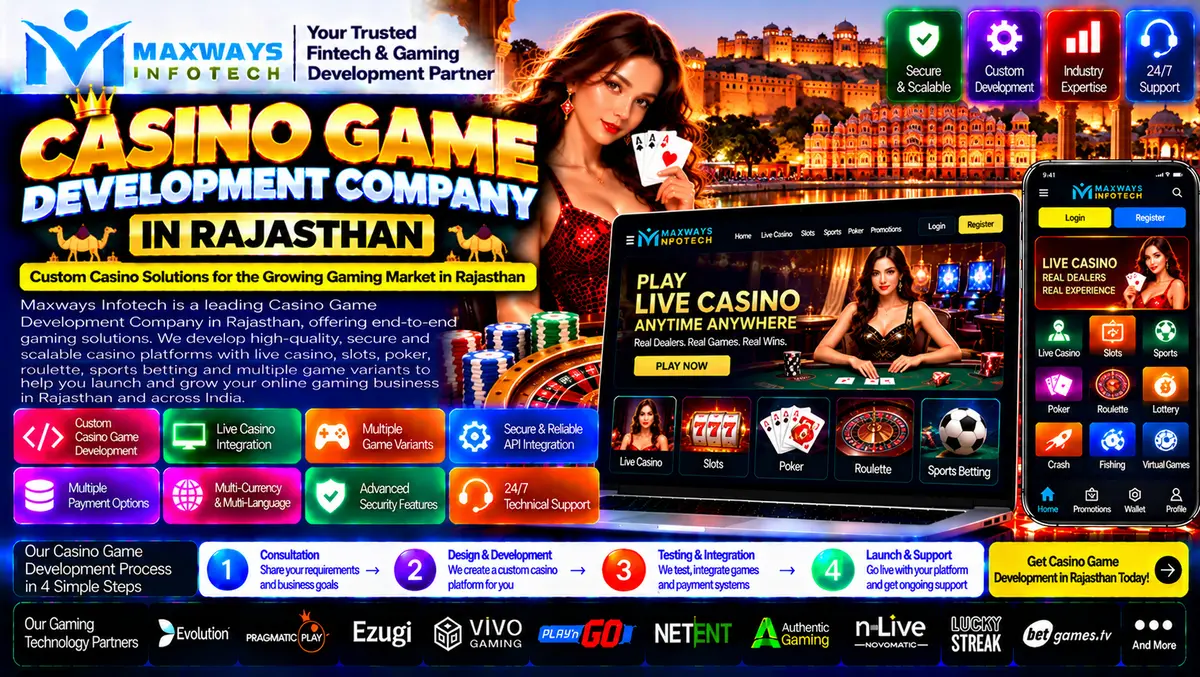
Finding a casino game development company in Rajasthan starts with understanding the experience you want to create. A successful game project requires a clear creative concept, suitable technology, a practical budget, reliable testing, and a plan for ongoing support. Businesses exploring lawful casino-themed social or entertainment games should evaluate these areas before choosing a development partner.
Rajasthan offers a useful regional setting for businesses looking to coordinate technology and creative work locally. However, the location of a development team should be only one consideration. Its portfolio, communication process, technical capabilities, and understanding of the project's legal requirements matter just as much.
Why Project Planning Comes First
A game idea can change considerably once designers and developers begin testing it. Defining the project's boundaries early helps avoid unnecessary features, repeated redesigns, and unexpected costs.
Start by writing a short project brief that explains the intended audience, gameplay concept, visual style, supported devices, language requirements, and expected launch scope.
It is helpful to separate the requirements into three groups:
-
Essential features: The functions required for the initial release.
-
Future improvements: Enhancements that can be considered after testing.
-
Technical requirements: Performance, accessibility, security, and maintenance expectations.
This approach gives the development team a practical starting point and helps stakeholders evaluate proposals on consistent criteria.
Regional Design and Visual Identity
One opportunity when developing games for different audiences is to create a visual identity that feels distinctive rather than relying on generic templates. Rajasthan's architecture, traditional patterns, landscapes, colours, and artistic styles can provide inspiration when they suit the intended creative direction.
The goal is not to add regional motifs to every screen. Instead, designers should decide whether cultural references genuinely support the game's theme and audience.
A visual style guide can define the colour palette, typography, character designs, interface elements, animation principles, and asset specifications. This keeps the project consistent as more screens and game elements are created.
Original artwork should also be reviewed for licensing and ownership. A development agreement should clearly establish which assets are custom-made, which are licensed, and who owns the finished work.
Hindi, English, and Interface Localisation
If a project serves users who prefer different languages, localisation should be considered during the design phase. Translating text after the interface is complete can create problems when longer phrases no longer fit the original layout.
Developers can make localisation easier by separating text from application code, using flexible layouts, and testing the interface with realistic translated content.
The team should also consider date and number formats, font support, readable text sizes, and consistent terminology. Language selection should be straightforward, and important information should remain understandable when users change their preferences.
A properly planned localisation process makes future language additions less expensive and reduces the likelihood of visual defects.
Choosing the Right Development Technology
The appropriate technology depends on the kind of experience being built. A browser-based interactive game may require a different stack from a mobile game with detailed animations or complex scenes.
A development company should explain why its proposed framework, game engine, backend, and hosting arrangement suit the project's requirements. Technology choices should account for supported devices, performance, maintenance costs, and the availability of developers who can support the application over time.
Before approving the architecture, request a demonstration or prototype of the most technically uncertain feature. This gives the team an opportunity to test feasibility before committing the full budget.
A modular codebase, clear documentation, and reusable components can make later updates easier and reduce unnecessary rework.
Budgeting for the Full Development Lifecycle
A development estimate should cover more than programming. Design, asset creation, testing, project management, hosting, licensing, and post-launch support can all affect the final cost.
When comparing proposals from a casino game development company in Rajasthan, ask for a breakdown of the main deliverables and expenses. Confirm whether the quoted amount includes revisions, testing devices, deployment assistance, documentation, and defect corrections.
A milestone-based payment arrangement can link payments to clearly defined deliverables, such as an approved prototype, completed interface, tested build, and final handover.
It is also sensible to reserve part of the budget for unforeseen technical work. This does not mean spending without limits; it means recognising that testing can reveal issues that were not visible during initial planning.
Quality Testing Across Devices
A game that works well on one developer's computer may behave differently on another device or browser. Testing should therefore cover the environments the project intends to support.
The quality-assurance process can include functional checks, layout reviews, loading performance, accessibility, error handling, and compatibility testing.
Developers should record defects in a shared tracking system and classify them according to their impact. Critical issues should be resolved before release, while lower-priority improvements can be scheduled according to the project plan.
A staging environment allows the team to test new builds without immediately affecting the live application. Before launch, the project should also have a documented backup, recovery, and rollback process.
Communication and Project Ownership
Local coordination can make meetings and review sessions easier, but a successful partnership still needs clear communication. Agree on who approves design changes, who answers technical questions, how progress is reported, and how quickly feedback is expected.
The contract should explain ownership of source code, artwork, documentation, domains, and project assets. It should also specify how third-party software and licensed resources may be used.
Before the final handover, request setup instructions, deployment details, a list of dependencies, and information about any ongoing service costs. These materials help the business maintain the project without relying entirely on the original development team.
Maintenance After Launch
A game project needs continued technical attention after release. Browser updates, operating-system changes, dependency vulnerabilities, and newly discovered bugs can all require maintenance.
A support plan should define how issues are reported, which defects receive priority, how updates are tested, and who is responsible for hosting and monitoring.
Periodic performance reviews can identify slow screens, oversized assets, and compatibility issues. Feedback can also help the team prioritise improvements that make the experience clearer and easier to use.
Planning maintenance from the beginning is generally more practical than treating it as an unexpected expense after launch.
Legal Compliance and Responsible Game Design
Before commissioning a casino-themed game, businesses should review the product's actual mechanics, rewards, payment arrangements, intended audience, and target markets.
India's Promotion and Regulation of Online Gaming Act, 2025 prohibits online money games and related activities, including offering, facilitating, advertising, and promotion. The Promotion and Regulation of Online Gaming Rules, 2026 came into force on 1 May 2026. Businesses should obtain qualified legal advice to determine how the law applies to their proposed product.
A casino-style appearance does not by itself establish whether a product is permitted. The legal assessment should focus on how the game actually works and how it is offered.
Depending on the product and applicable requirements, planning may also need to address privacy notices, age-appropriate design, accessibility, user support, and appropriate safety measures.
How to Evaluate a Development Partner in Rajasthan
Before choosing a provider, compare its relevant portfolio, technical proposal, project management process, testing practices, and maintenance arrangements. Ask for a realistic delivery schedule and a clear list of exclusions so that expectations are aligned from the start.
Useful questions include:
-
Can the team demonstrate work relevant to the proposed project?
-
How will the prototype be evaluated before full development?
-
Who owns the code and design assets after payment?
-
What testing and documentation are included?
-
How are scope changes and delays handled?
-
What support is available after launch?
For more company information, visit Maxways Infotech. You can also explore its fintech page for related technology information and the company blog for additional digital development topics.
Conclusion
Choosing a casino game development company in Rajasthan is about finding a team that understands your creative goals, technical needs, budget, and responsibilities. A clear project brief, regionally appropriate design where relevant, flexible localisation, structured testing, and documented ownership can make the development process easier to manage.
Start with a small, testable concept, confirm legal requirements before committing to a product model, and select a development partner based on demonstrable capability rather than location or price alone. These steps create a stronger foundation for a maintainable and well-designed lawful entertainment experience.