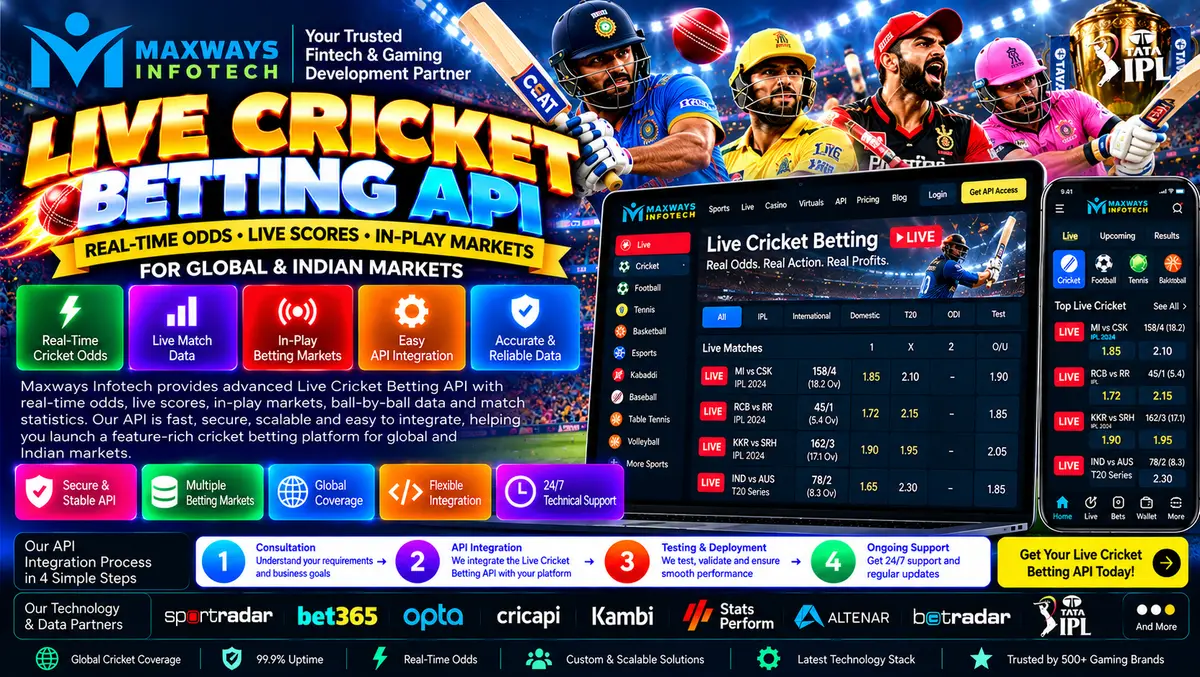
Learn how to evaluate a Cricket Betting Data Provider by data coverage, accuracy, historical records, API integration, licensing, and technical support.
Cricket Betting Data Provider: Data Coverage, Accuracy, and Technology Guide
Introduction
Choosing a Cricket Betting Data Provider is an important decision for businesses developing cricket data platforms, sports analytics products, live score applications, or other technology services that require structured cricket information. The quality of a data feed affects more than what appears on a screen. It can influence event identification, score reconciliation, historical analysis, system performance, and the reliability of downstream applications.
Different providers offer different combinations of live scores, fixtures, player statistics, ball-by-ball records, historical results, and odds-related information. These services should not be treated as interchangeable. A company that supplies historical scorecards, for example, may not offer the same live update frequency or commercial rights as a specialist live data provider.
This guide explains how to assess cricket data sources, compare provider capabilities, understand licensing, and build a reliable technical integration. Learn more about technology services and digital solutions through Maxways Infotech.
What Is a Cricket Betting Data Provider?
A Cricket Betting Data Provider supplies structured cricket-related information to applications and systems. Depending on its service offering, the provider may deliver match schedules, live scores, innings information, player statistics, ball-by-ball events, historical records, or odds data.
The delivery method may include REST APIs, streaming connections, scheduled data feeds, or downloadable datasets. Some providers specialise in a particular data category, while others combine several services under one subscription.
Before selecting a provider, businesses should define the exact information their product requires. The phrase “cricket data” can describe several different datasets, and not every provider offers all of them.
Types of Cricket Data Available
1. Fixtures and Competition Information
Fixtures provide the foundation for identifying upcoming and completed matches. Typical fields may include competition names, participating teams, scheduled start times, venue information, and match identifiers.
Consistent fixture identifiers are especially important when the same event appears in multiple systems. A mapping layer can connect provider records with an application's internal database.
2. Live Scores and Match Status
Live score data may include runs, wickets, overs, innings, batting and bowling information, and the current match status.
The provider's update policy matters just as much as the available fields. Check whether updates are event-driven, periodically refreshed, or delivered through a streaming connection.
3. Ball-by-Ball Records
Ball-by-ball data provides a more detailed view of match progression. Depending on coverage, records may describe runs, extras, dismissals, delivery outcomes, and other events.
These records are useful for detailed scorecards, statistical analysis, match timelines, and data-quality testing. The provider should explain how corrections, missing deliveries, and event ordering are represented.
4. Player and Team Statistics
Player and team datasets may include batting averages, bowling figures, strike rates, appearances, and historical performance records.
Statistical definitions should be documented. For example, different systems may treat incomplete matches, abandoned fixtures, or particular competition formats differently. Understanding these definitions helps prevent misleading comparisons.
5. Historical Cricket Data
Historical data supports trend analysis, research, player comparisons, and application testing. Available coverage can vary by competition, format, season, and level of detail.
Ask for a coverage matrix that identifies the earliest available records, missing competitions, data fields, and any limitations affecting historical completeness.
6. Odds-Related Data
Some providers supply odds data alongside cricket information, while others specialise in scores and statistics only. Where odds are offered, review the available market definitions, selection identifiers, timestamps, update frequency, and status fields.
Confirm that the provider's licence permits the specific commercial use you intend. Access to an API does not automatically grant permission to redistribute its data or use it in every type of product.
What Makes a Reliable Cricket Data Provider?
Data Accuracy and Reconciliation
A provider should document how match information is collected, updated, and corrected. Developers should test the data against authoritative scorecards or other appropriately licensed references.
Useful validation checks include missing identifiers, inconsistent innings totals, duplicate event records, unexpected status changes, and differences between a detailed event feed and the current match summary.
Coverage Transparency
A provider's overall coverage claim is not enough to assess suitability. Ask for details covering the competitions, formats, seasons, and specific fields needed for your project.
A structured coverage matrix makes it easier to compare suppliers without relying on general marketing statements.
Update Frequency and Data Freshness
“Live” can mean different things across services. Some APIs refresh periodically, while others deliver event updates as they become available.
Ask the provider to define expected update intervals, timestamp semantics, known delays, and recovery behaviour after an interruption. Evaluate these details against your actual application requirements.
Stable Identifiers and Consistent Schemas
Consistent match, team, player, and event identifiers make integrations easier to maintain. Documented schemas also help developers adapt to changes without breaking existing features.
A provider should explain its versioning policy and how it communicates changes to fields, endpoints, and data formats.
Service Reliability and Technical Support
Review service availability commitments, incident reporting, support channels, and documented recovery procedures. Where a service-level agreement is offered, check exactly what it covers and how performance is measured.
Technical support is especially important when a provider changes its API, introduces new competitions, or modifies a data field used by your application.
How to Compare Cricket Data Providers
Use a consistent evaluation framework before signing a contract.
The best provider is the one that meets your documented requirements with acceptable data quality, integration effort, licensing terms, and total operating cost.
Building a Cricket Data Integration
A structured integration helps keep provider-specific details separate from the rest of the application.
1. Define the data requirements. List the competitions, match fields, statistics, historical records, and optional odds information your application needs.
2. Review access and licensing. Confirm authentication requirements, subscription limits, permitted storage, and the scope of commercial use before collecting data.
3. Create an ingestion service. Retrieve information through the provider's supported API or feed method. Keep authentication credentials on the server.
4. Normalize the records. Map external identifiers and provider-specific field names into a consistent internal data model. Preserve source identifiers for troubleshooting.
5. Validate incoming data. Check required fields, data types, timestamps, duplicate records, and unexpected state changes before updating the main database.
6. Store and serve the information. Use caching where appropriate and design database updates to avoid conflicting writes. Make sure that stored records retain the metadata needed for later reconciliation.
7. Monitor data quality. Track request failures, processing delays, stale records, and changes in response schemas. Use alerts to identify issues before they affect the application.
For additional information about the company's technology offerings, visit Maxways Infotech's services page.
Common Challenges When Working With Cricket Data
Inconsistent Team and Player Names
Names can differ across competitions and data sources. Use stable identifiers wherever possible, and maintain mapping tables for records that must be matched across providers.
Missing or Delayed Updates
Network interruptions and source delays can create gaps in the application's current state. Define a recovery process that can fetch a fresh snapshot and reconcile the stored records.
Different Statistical Definitions
Statistics can be calculated differently depending on competition rules and provider methodology. Record the definition used for each metric rather than combining values that appear similar but are not directly comparable.
API Rate Limits and Operating Costs
High request volumes may exceed a subscription's quota or increase costs. Use efficient polling intervals, caching, incremental updates, and request monitoring according to the provider's documented terms.
Schema Changes
An API response can change as a provider adds or modifies fields. Use schema validation, automated integration tests, and version-aware code to reduce the risk of unexpected failures.
Unclear Commercial Permissions
A subscription may permit access without permitting redistribution, sublicensing, or use across multiple brands. Obtain written clarification of the rights needed for the intended application.
Security and Legal Considerations
Protect API keys through server-side storage, encrypted connections, access controls, and appropriate credential rotation. Avoid exposing secrets in client-side code or diagnostic logs.
Legal review is also necessary for services connected to betting or online money gaming. India's applicable national and state requirements should be assessed by qualified legal counsel before deployment. A provider's willingness to supply data does not establish that every downstream use is permitted.
Businesses should review the data licence, applicable gaming regulations, advertising restrictions where relevant, privacy requirements, and any obligations arising from their product's functionality and target markets.
Questions to Ask Before Choosing a Provider
Before committing to a Cricket Betting Data Provider, request clear answers to these questions:
-
Can you provide a detailed coverage matrix for our required competitions?
-
How are live updates delivered, timestamped, and corrected?
-
What happens when an event is delayed, interrupted, or unavailable?
-
Are historical data and test environments included?
-
How are API version changes announced?
-
Which storage, display, and redistribution rights are included?
-
What are the usage limits, pricing conditions, and support commitments?
-
Can we validate the feed against representative test cases before launch?
Documenting these answers makes supplier comparisons more objective and reduces the likelihood of costly integration changes later.
Conclusion
Selecting a Cricket Betting Data Provider involves more than finding a source that returns match scores. Data coverage, event identifiers, historical completeness, update behaviour, technical documentation, and commercial licensing all influence the long-term success of an integration.
A structured evaluation process helps businesses identify the provider that best fits their data requirements and technical architecture. By combining validation, monitoring, secure credential management, and clear data-use permissions, developers can build more maintainable cricket data applications.
For more technology articles, software insights, and development-related resources, explore the Maxways Infotech blog.