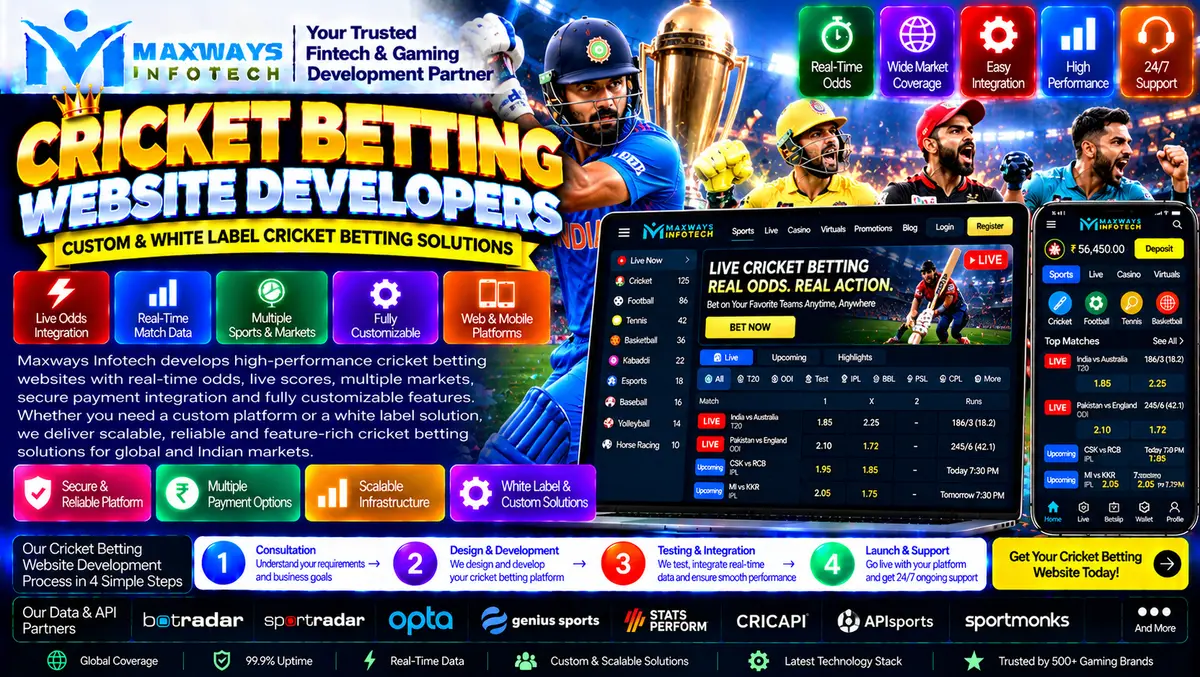
Learn about cricket betting website developers, including website architecture, cricket data integration, responsive design, SEO, security, and compliance.
Cricket Betting Website Developers: Website Architecture, Features, and Quality Planning
A cricket-focused website requires more than an attractive homepage. It may need to display match information, organise tournament pages, present statistics, support multiple devices, and process live data without creating confusing or inconsistent experiences.
Cricket betting website developers work on the technical components of cricket-related web platforms, including interface design, data integration, administrative tools, performance optimisation, and software testing. The exact scope depends on the intended product, the available data sources, and the legal requirements of the target market.
Understanding these development areas helps businesses define their requirements and evaluate software proposals before committing to a project.
What Do Cricket Betting Website Developers Work On?
A development team may include frontend engineers, backend developers, interface designers, data-integration specialists, and quality assurance testers. Their responsibilities depend on the project's approved scope.
Common technical work includes:
-
Designing responsive page layouts and navigation.
-
Integrating authorised cricket schedules, scores, and statistics.
-
Building content management and administrative tools.
-
Developing APIs that connect internal software components.
-
Improving website speed and data consistency.
-
Testing browser compatibility and application security.
-
Preparing documentation and maintenance procedures.
For a cricket information or non-wagering entertainment platform, these components can support a structured experience without requiring real-money betting functionality.
Essential Features of a Cricket-Focused Website
1. Match Information and Tournament Pages
Cricket websites often organise content around teams, competitions, fixtures, venues, and historical results. A clear information structure makes it easier for visitors to find relevant details.
Developers should define how tournament pages connect to individual matches and how postponed, completed, or rescheduled events are represented. Consistent naming conventions also help avoid duplicate pages and conflicting information.
2. Live Data and Statistics Integration
When a website displays live cricket information, the quality of its data integration becomes important. Developers need to understand the source's update frequency, field definitions, usage limits, and permitted display rights.
A structured integration layer can convert incoming data into a consistent internal format. Validation rules can identify missing values, unexpected status changes, and duplicate updates before information reaches the website.
The interface should also communicate when data was last updated and handle temporary delays without presenting stale information as current.
3. Responsive User Interface
Visitors may use smartphones, tablets, laptops, or desktop computers. The website should adapt its layout to each supported screen size without making essential information difficult to read.
Responsive design includes more than reducing the width of a desktop page. Navigation, tables, menus, text, and interactive controls should all be reviewed for smaller screens.
4. Content Management Tools
An administrative interface can help authorised staff maintain tournament information, editorial content, images, and website settings.
Useful controls include role-based permissions, draft previews, content revision history, and validation before publication. Administrative changes should be logged appropriately so that teams can investigate mistakes and understand when important information was updated.
5. Search and Information Discovery
A well-organised search function can help users locate teams, tournaments, articles, and historical match information.
Search results should use consistent labels, relevant filters, and clear empty states. Developers should also ensure that search pages do not create large numbers of unnecessary or duplicate URLs.
Planning the Technical Architecture
The architecture should be based on the project's size and expected workload rather than a fixed technology trend.
A typical design may include three main layers:
Frontend: Displays match information, navigation, articles, statistics, and other approved content.
Backend: Handles application rules, access permissions, configuration, and communication with supporting services.
Data layer: Stores the information the application is authorised to retain and provides controlled access to that information.
A modular architecture can help separate external data integrations from the main website. This makes it easier to replace a provider or update a data format without redesigning every page.
For smaller projects, a well-structured application may be sufficient. More complex systems may require separate services or background processing. The right choice depends on performance requirements, development resources, and maintenance costs.
Managing Data Accuracy and Performance
Cricket information can change frequently during a match. A website should therefore distinguish between the time an event occurred, the time the source published it, and the time the application received it.
Developers can use timestamps, event identifiers, validation checks, and monitoring to identify inconsistencies. Caching can reduce unnecessary requests where permitted by the data provider, while background jobs can process updates without slowing down page rendering.
Performance testing should examine:
-
Page loading time on mobile networks.
-
Response times for frequently accessed pages.
-
Data-processing delays.
-
Behaviour during traffic spikes.
-
Recovery after a provider or network interruption.
-
Cache invalidation and stale-data handling.
A useful monitoring dashboard tracks these indicators over time instead of relying on occasional manual checks.
Security and Administrative Access
Security requirements should be defined before development begins. Administrative tools and APIs should use appropriate authentication, restricted permissions, encrypted connections, and secure credential storage.
Input validation helps protect application components from malformed data. Software dependencies should be reviewed for vulnerabilities, and logs should avoid exposing passwords, access tokens, or unnecessary personal information.
If a website collects user information, the project should document what is collected, why it is needed, how long it is retained, and who can access it.
These measures are relevant to cricket information websites as well as other data-driven applications.
SEO and Content Structure for Cricket Websites
Search engine optimisation is most effective when it is built into the website's structure.
Clear URLs
Use descriptive URLs that identify the subject of a page. Tournament, team, and editorial sections should follow a consistent hierarchy.
Useful Page Titles
Each page should have a title that accurately reflects its content. Avoid using identical titles across every tournament or match page.
Structured Content
Headings, tables, descriptive links, and appropriate structured data can help users and search engines understand a page. Any structured data must match the information actually visible on the page.
Content Quality
Match previews, historical analysis, team information, and cricket explainers should provide original, accurate information. Automated pages should be reviewed to avoid publishing duplicate, incomplete, or outdated content.
Mobile Performance
Test page speed, layout stability, navigation, and readability on mobile devices. Performance improvements should be measured on representative pages, not just the homepage.
SEO should support accurate and useful cricket information rather than make unsupported promises about rankings or traffic.
How to Evaluate a Development Proposal
Before selecting a development company, compare its technical approach and deliverables.
A proposal should also describe the acceptance criteria for each milestone. This allows the client to evaluate completed work against agreed requirements rather than subjective expectations alone.
Development Stages and Project Budgeting
A cricket website project can be divided into manageable stages.
-
Discovery: Document the intended audience, required pages, data sources, technical constraints, and legal considerations.
-
Design: Prepare wireframes, page structures, and a consistent visual system.
-
Prototype: Validate navigation and key user interactions.
-
Development: Implement the approved frontend, backend, content tools, and permitted integrations.
-
Quality assurance: Test functionality, performance, accessibility, security, and data accuracy.
-
Deployment and maintenance: Release through a controlled process and establish ongoing monitoring.
Costs depend on the number of pages, custom features, data-provider fees, expected traffic, and ongoing support requirements. A reliable estimate should distinguish one-time development costs from recurring infrastructure, licensing, and maintenance expenses.
Legal Considerations for Cricket Betting Websites
Before developing or launching any betting-related functionality, businesses must assess the product under the laws that apply to its intended market.
In India, the Promotion and Regulation of Online Gaming Act, 2025 addresses online money games and related services, and the associated 2026 Rules came into force on 1 May 2026. The framework includes prohibitions concerning online money gaming and related activities. A business should obtain qualified legal advice to determine whether its specific product, content, integrations, and proposed operations are permitted.
A website's technical readiness, a third-party contract, or an API connection does not by itself establish legal permission to offer betting services.
Exploring Technology Services
When assessing a development partner, look for clear communication, documented technical decisions, transparent project milestones, and a practical maintenance plan.
You can explore Maxways Infotech for information about the company's technology services. Its fintech page provides additional information about related software topics, while the Maxways Infotech blog offers further technology-related reading.
Conclusion
Cricket betting website developers may work across interface design, cricket data integration, backend architecture, content management, performance optimisation, and software testing. The most important first step is to define the intended product and document its technical and legal requirements.
A well-planned project should prioritise accurate information, reliable data handling, mobile usability, secure administration, and maintainable software. By comparing proposals against these criteria and reviewing applicable regulations before launch, businesses can make more informed development decisions.