Diamond Exchange Platform Integration Services: APIs, Custom Development, and Connectivity
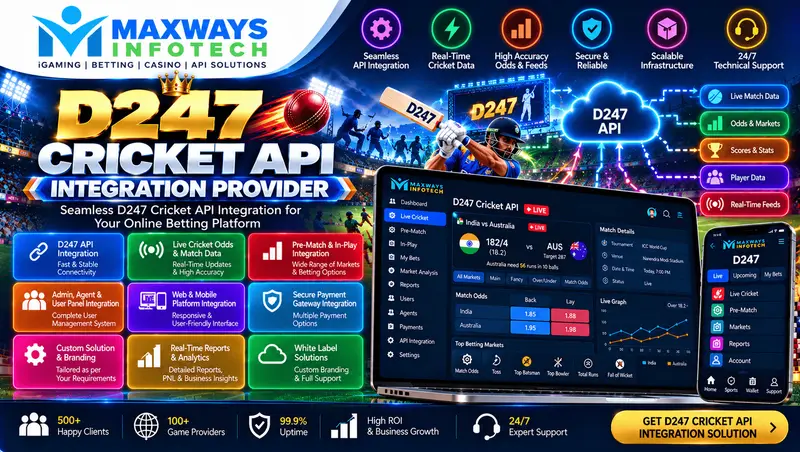
Businesses developing digital exchange platforms need reliable integration between their websites, backend applications, databases, and authorized third-party services. Diamond Exchange Platform Integration Services help connect these components so information can move between systems efficiently and consistently.
A well-planned integration project can include API connectivity, backend development, data synchronization, authentication, administrative tools, and performance monitoring. The right approach depends on the platform's requirements, the external provider's documentation, and the intended use of the software.
Maxways Infotech provides software development and API integration services for businesses exploring customized digital platforms.
What Are Diamond Exchange Platform Integration Services?
Diamond Exchange Platform Integration Services involve connecting an exchange-related website or application with compatible software components and external services. The objective is to create a coordinated system that can process authorized requests, exchange data, and support the required business workflows.
Depending on the project, integration work may include:
-
Third-party API connectivity
-
Frontend and backend integration
-
Database synchronization
-
User authentication and access management
-
Administrative dashboard integration
-
Error handling and system monitoring
-
Testing, deployment, and maintenance
Each integration should be designed around the relevant API documentation, security requirements, licensing permissions, and expected usage.
For an introduction to the underlying technology, read our Diamond Exchange API guide.
Key Components of Platform Integration
1. API Connectivity
APIs allow separate applications to exchange information through defined interfaces. REST APIs commonly use HTTP requests and structured responses, while WebSocket connections can support ongoing communication when the provider offers that capability.
Before connecting an API, developers should verify its authentication method, supported endpoints, rate limits, data formats, error responses, and versioning policy.
Businesses evaluating provider-related integration can also explore our Diamond Exchange API Provider guide.
2. Frontend and Backend Integration
The frontend manages the user interface, while the backend processes application logic, validates requests, and communicates with databases and external services.
A properly designed integration keeps sensitive credentials on the server, validates user input, and returns only the information the frontend is authorized to access.
3. Database Integration
A platform may need to store user profiles, configuration settings, application records, or other permitted data. Database integration should define data structures, validation rules, transaction handling, and synchronization procedures.
Developers should also plan for duplicate requests, incomplete transactions, failed API calls, and recovery procedures to help maintain data consistency.
4. Authentication and Permissions
Secure integration requires appropriate authentication and authorization. Depending on the application, this can include token validation, role-based access controls, session management, and restricted access to administrative functions.
Sensitive actions should be logged where appropriate, and API credentials should be stored securely rather than exposed in client-side code.
5. Administrative Dashboard Integration
An integrated administration panel can provide authorized staff with access to system settings, account management, reports, integration status, and operational logs.
The dashboard should clearly distinguish between actions performed locally and operations handled by third-party providers.
Benefits of Professional Integration Services
Working with an experienced development team can help businesses organize integration work and reduce avoidable technical issues.
-
Centralized workflows: Compatible services can communicate through defined interfaces.
-
Reduced manual data handling: Approved data transfers can automate repetitive operations.
-
Better maintainability: Modular integration components can be updated independently.
-
Improved error handling: Logging and retry strategies can help diagnose temporary failures.
-
Security controls: Authentication, permissions, and credential management can protect system access.
-
Scalability planning: Architecture and performance testing can help prepare for expected growth.
The results depend on the quality of the implementation, the capabilities of external services, and the accuracy of the original requirements.
Custom Integration vs. Ready-Made Solutions
Businesses can approach platform integration in two main ways.
Custom integration is useful when an existing website or application must connect to a particular provider, use specialized workflows, or follow specific data-processing rules.
Ready-made or white-label solutions may be appropriate when the existing software already supports the required integrations and the licensing terms allow the intended use.
Before selecting an approach, compare development costs, supported APIs, customization limits, maintenance requirements, data ownership, and third-party dependencies.
For a related configurable software option, visit our White Label Diamond Panel page.
Technologies Used for Platform Integration
The technology stack should be selected according to the application's requirements and the external provider's supported interfaces.
Common technologies include:
-
Backend: Node.js, Express, PHP, and Laravel
-
Frontend: JavaScript, React, Next.js, HTML, and CSS
-
Databases: MySQL and other suitable database systems
-
Communication: REST APIs and WebSocket connections where supported
-
Infrastructure: VPS or cloud hosting, Nginx, SSL/TLS, and monitoring tools
A project does not necessarily require every technology listed above. Developers should select tools that the team can maintain and that meet the platform's performance and security requirements.
Our Platform Integration Process
A structured process helps keep integration projects measurable and manageable.
Step 1: Requirement Analysis
Identify the applications involved, the data that needs to be exchanged, user permissions, provider dependencies, and expected results.
Step 2: API and Architecture Review
Review the API documentation, authentication requirements, supported endpoints, rate limits, and licensing conditions. Define the data flow between the frontend, backend, database, and external services.
Step 3: Integration Development
Build the required API clients, backend services, validation logic, and user interface connections. Keep private credentials on the server and use secure communication.
Step 4: Error Handling and Data Validation
Plan for timeouts, invalid responses, duplicate requests, unavailable services, and synchronization failures. Use appropriate logging and retry policies without creating duplicate operations.
Step 5: Testing and Security Review
Test normal and failure scenarios, permissions, data accuracy, performance, and compatibility with the provider's documented behavior.
Step 6: Deployment and Maintenance
Deploy the integration to the agreed environment, configure monitoring, document dependencies, and establish a process for handling API changes and security updates.
Businesses exploring other API-based projects can also review our sports betting API services.
Common Integration Challenges and How to Address Them
API Changes
External providers may update endpoints, authentication methods, or response formats. Version tracking, documentation, and regression testing can help reduce unexpected failures.
Rate Limits and Timeouts
Excessive requests may be throttled or rejected. Request caching, controlled retries, queues, and rate-limit monitoring can help applications use APIs responsibly.
Data Inconsistency
Two systems may represent the same information differently or update at different times. Explicit data mappings, validation rules, timestamps, and reconciliation processes can help identify inconsistencies.
Security Risks
Exposed credentials, insufficient permissions, and unvalidated input can create vulnerabilities. Secure credential storage, encrypted connections, least-privilege access, and regular security reviews are important safeguards.
How to Choose a Platform Integration Company
Before hiring an integration partner, evaluate:
-
Experience with backend development and API connectivity.
-
Ability to understand and document the required data flows.
-
Security practices for credentials, accounts, and sensitive data.
-
Testing methods and procedures for handling integration failures.
-
Documentation, source-code ownership, and deployment responsibilities.
-
Maintenance arrangements for API changes and production issues.
-
Clear project milestones, deliverables, and pricing.
Also confirm that the intended integrations and data uses are authorized by the relevant providers and comply with applicable laws and contractual requirements.
Conclusion
Diamond Exchange Platform Integration Services help connect websites, backend applications, databases, and compatible third-party systems. Effective integration requires careful architecture, secure API handling, data validation, error recovery, testing, and ongoing maintenance.
Maxways Infotech offers software development and API integration services for businesses exploring customized digital platforms. Visit the Maxways Infotech website to learn more about available services and discuss your project requirements.
Frequently Asked Questions
1. What are Diamond Exchange Platform Integration Services?
They involve connecting exchange-related software with compatible APIs, databases, frontend interfaces, and external services to support defined application workflows.
2. Which APIs can be integrated into a platform?
Only APIs supported by the relevant provider and authorized for the intended use should be integrated. Availability depends on provider documentation, permissions, and technical compatibility.
3. Can an existing website be integrated with a third-party API?
Yes. An existing website can often be connected to a compatible API after reviewing its architecture, authentication, data requirements, and technical constraints.
4. Which technologies are used for integration?
Depending on the project, developers may use Node.js, Express, PHP, Laravel, MySQL, REST APIs, and WebSocket connections.
5. How long does platform integration take?
The timeline depends on the number of integrations, API documentation quality, authentication requirements, testing needs, and existing software architecture. A reliable estimate requires a technical review.