lotus panel on monthly rents, including features, pricing factors, customisation, setup, security, support, and provider selection.
Lotus Panel on Monthly Rent: Features, Pricing Factors and Setup Guide
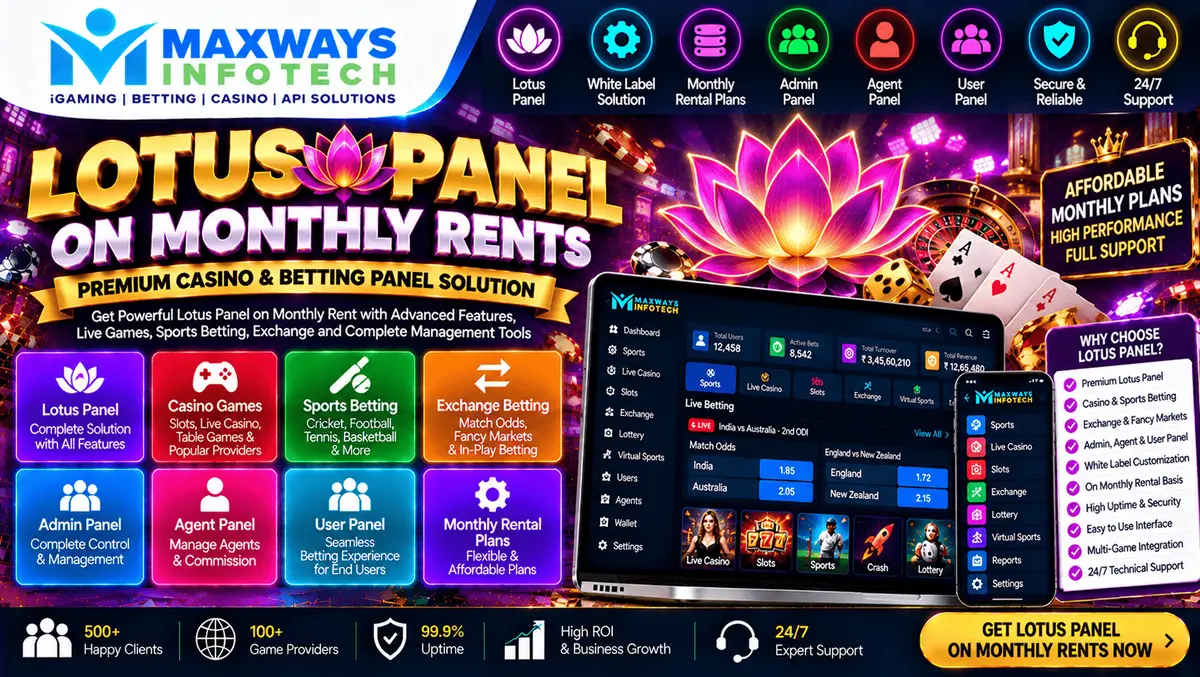
lotus panel on monthly rents should compare the available software features, rental terms, customisation options, technical support, and ongoing costs before selecting a provider. A monthly rental arrangement may offer access to an existing software platform without requiring the customer to fund an entirely new system from the beginning.
However, the term “Lotus Panel” may refer to different products or software configurations. The exact features, licensing conditions, and rental price should therefore be confirmed with the relevant provider before making a commitment.
This guide explains how monthly panel rentals work, what to check before choosing a package, which costs to consider, and how to evaluate a software provider.
What Is a Lotus Panel on Monthly Rent?
A monthly rental panel is a software solution made available under a recurring payment agreement. Depending on the specific product and contract, it may include an administration dashboard, account management tools, reporting, configuration options, and supported integrations.
A Lotus-branded or Lotus-named panel should be evaluated using its actual documentation rather than its name alone.
Before selecting a package, ask the provider to confirm:
-
The exact software product and version.
-
The modules included in the rental package.
-
Available administrative functions.
-
Custom branding and domain options.
-
Compatibility with required third-party services.
-
Hosting and infrastructure responsibilities.
-
Monthly payment terms and renewal conditions.
-
Support, maintenance, and cancellation policies.
These checks help establish what the rental agreement actually provides.
For software development and integration information, visit MaxWays Infotech.
How Monthly Rental Panel Software Works
A rental arrangement generally provides access to an existing software solution for an agreed period in exchange for recurring payments.
The process may involve the following stages.
1. Requirements discussion
The customer identifies the intended use, required modules, user roles, branding needs, and technical requirements.
2. Package and licence review
The provider explains the available package, its limitations, recurring fees, permitted use, and any additional charges.
3. Configuration and customisation
Where supported, the software may be configured with agreed settings, branding, domain details, and compatible integrations.
4. Testing and deployment
The provider and customer test the agreed functionality, access permissions, integrations, and responsive behaviour before deployment.
5. Ongoing support
Maintenance, updates, technical assistance, and infrastructure management are handled according to the service agreement.
The precise process and delivery timeline depend on the provider and the amount of customisation required.
Features to Check Before Renting a Lotus Panel
Not every rental panel includes the same functions. Review the product demonstration and written feature list before selecting a plan.
Administration Dashboard
Check which configuration and management functions are available, whether permissions can be customised, and how administrative actions are recorded.
User and Role Management
Confirm whether the software supports the required account types, access restrictions, account status controls, and administrative permissions.
Reports and Activity Records
Ask which reports are available, how records are generated, whether historical information can be exported, and how long data is retained.
Branding and Domain Configuration
Some products allow a custom logo, brand colours, or domain configuration. Confirm which changes are included and whether domain registration, hosting, or certificates cost extra.
API Integration
If the panel needs external data or software services, confirm compatibility with the intended API. Review authentication, access rights, rate limits, documentation, and additional integration charges.
Mobile Compatibility
Ask whether the interface works correctly on supported mobile browsers and tablets. Test important screens instead of relying only on promotional images.
Technical Support
Clarify whether support covers setup, bug fixes, updates, integration issues, and infrastructure problems. Confirm support hours and any separate maintenance charges.
These features should be treated as items to verify, not guaranteed capabilities of every Lotus panel.
Lotus Panel Monthly Rent: What Affects the Price?
The monthly rental cost depends on the provider, package, infrastructure, licensing terms, and customisation required. A reliable quotation should explain the recurring cost and any additional charges.
| Pricing factor | What to ask the provider |
|---|---|
| Software package | Which modules are included in the monthly fee? |
| Setup charges | Is there a one-time installation or configuration fee? |
| Customisation | Are branding and feature changes included or billed separately? |
| Hosting | Is server infrastructure included in the rent? |
| API access | Are third-party subscriptions and integration costs separate? |
| Maintenance | Are updates, bug fixes, and support included? |
| Renewal terms | Can the monthly fee change at renewal? |
| Cancellation | What happens to access, data, and backups when the agreement ends? |
Why You Should Request an Itemised Quote
A low advertised rental price may not include every service a project needs. Ask for a written quotation that separates the monthly subscription from setup, customisation, hosting, third-party licences, and maintenance.
Compare the total expected cost over several months rather than choosing only by the initial payment.
No verified current Lotus Panel rental price is available in this guide, so a specific monthly amount should not be assumed.
Monthly Rental vs Custom Panel Development
Monthly rental and custom development serve different requirements.
| Factor | Monthly rental | Custom development |
|---|---|---|
| Initial investment | May be lower when existing software meets requirements | Depends on design and development scope |
| Deployment | May be quicker with a ready-made product | Requires development and testing |
| Customisation | Limited by the product and licence | Can be tailored to agreed requirements |
| Payment model | Recurring rental or subscription | Development charges plus any ongoing costs |
| Source-code ownership | Depends on the rental contract | Defined by the development agreement |
| Maintenance | Depends on the provider's service terms | Requires a clear maintenance arrangement |
A rental solution may suit projects that can use existing functionality. Custom development may be more appropriate when the project requires specialised workflows, integrations, or control over the underlying architecture.
For broader provider-selection considerations, explore Bookies Software Solutions Providers.
How to Choose a Lotus Panel Rental Provider
Choosing a provider requires more than comparing prices or feature lists.
Step 1: Confirm the Exact Product
Ask the provider to identify the product, version, available modules, and any third-party dependencies. This is particularly important when similar product names are used by different vendors.
Step 2: Request a Demonstration
Review the actual software and test the functions relevant to your requirements. Ask which advertised features are standard and which require additional configuration.
Step 3: Read the Rental Agreement
Check payment frequency, renewal, termination, service availability, data handling, and restrictions on use. Ensure that all important commitments are documented.
Step 4: Review Security
Ask how the provider handles authentication, account permissions, credentials, software updates, backups, and security incidents.
Step 5: Check Integration Requirements
If the panel connects to external services, confirm API compatibility, licensing, and responsibility for future integration changes.
Related technical information is available in the iGaming Platform API guide.
Step 6: Confirm Data Access and Exit Terms
Before signing, ask how you can export your permitted business data, what happens to the data when the rental ends, and whether migration assistance is available.
Step 7: Establish Support Expectations
Confirm who will handle technical issues, how requests are submitted, what response times apply, and which services carry additional charges.
Security and Maintenance Considerations
Security should be included in the rental evaluation from the beginning.
Access controls: Check that administrative permissions can be limited according to responsibilities.
Credential protection: Confirm how passwords, API keys, and other sensitive credentials are protected.
Software updates: Establish who maintains dependencies and applies security fixes.
Backups: Ask how often backups are created, how long they are retained, and whether restoration is tested.
Activity logs: Determine whether important administrative changes and system events are recorded.
Data handling: Understand what information is stored, who can access it, and how it is deleted or exported.
Incident response: Ask how the provider communicates outages or security incidents and what responsibilities fall to each party.
A rental agreement should clearly separate the responsibilities of the software provider, hosting provider, and customer.
Can a Rental Panel Be Customised?
Customisation depends on the software's architecture, the provider's permissions, and the terms of the rental agreement.
Possible configuration options may include branding, domain settings, interface changes, additional reports, or supported API connections. Each option should be confirmed with the provider.
Before paying for a custom change, ask:
-
Is the change included in the current package?
-
Is there a one-time or recurring charge?
-
Will the change affect future updates?
-
Who owns the custom work?
-
Will the modification remain available after renewal?
-
Can the change be exported or transferred if the agreement ends?
A written scope prevents misunderstandings about what the provider is expected to deliver.
How MaxWays Infotech Can Help With Software Requirements
MaxWays Infotech offers software development and API integration services. Businesses evaluating a rental panel can use a clear requirements brief to compare the available options and identify any gaps between an existing product and the intended project.
The brief should describe the required features, integrations, access controls, hosting expectations, support needs, and budget. Ask the provider to confirm which services are available before making a purchasing decision.
You can also review the Reddy Anna Panel on Monthly Rent page for a general example of how monthly panel rental arrangements can be presented, including package configuration and pricing factors. This is a separate product page and does not verify Lotus Panel availability, pricing, or affiliation.
For custom website requirements, see Custom Bookies Website Developers.
Frequently Asked Questions
1. What does Lotus Panel on monthly rent mean?
It refers to a search term for obtaining access to a Lotus-named panel under a recurring rental arrangement. The exact product and included services should be confirmed with the provider.
2. What is the monthly rent for a Lotus Panel?
The price depends on the actual product, package, setup requirements, hosting, customisation, and support. Request a current written quotation because a verified price is not provided in this guide.
3. What features are included in a rental panel?
Depending on the product, features may include an administration dashboard, account management, reports, configuration, or supported integrations. Confirm the actual package contents before paying.
4. Can I use my own branding?
Some rental products support custom logos, colours, and domain configuration. Availability and additional charges depend on the product and agreement.
5. Is monthly rental better than custom development?
Monthly rental may be suitable when existing functionality meets the requirements. Custom development offers more control but can require greater initial investment and ongoing maintenance.
6. Does the rental fee include hosting and support?
Not necessarily. Hosting, support, maintenance, and third-party subscriptions may be included, optional, or billed separately. Check the written quotation.
7. Can a rental panel integrate with APIs?
Integration may be possible if the software is compatible and the required access permissions are available. Additional development or third-party charges may apply.
8. What should I check before renting a panel?
Verify the exact product, features, price, licence, security, support, data export options, renewal terms, cancellation conditions, and applicable legal requirements.
Conclusion
Choosing a Lotus panel on monthly rent requires careful verification of the product, included features, recurring charges, customisation options, security practices, and support arrangements.
Before committing, request a demonstration and an itemised quotation. Read the rental agreement carefully and confirm what happens to your access and data if the contract ends.
For general software development and integration information, visit MaxWays Infotech.
Compliance note: If the intended use involves regulated betting or wagering, confirm the applicable laws, required authorisations, third-party data rights, and contractual restrictions before deployment.
Frequently asked questions
What should I check before renting a panel?
Verify the exact product, features, price, licence, security, support, data export options, renewal terms, cancellation conditions, and applicable legal requirements.