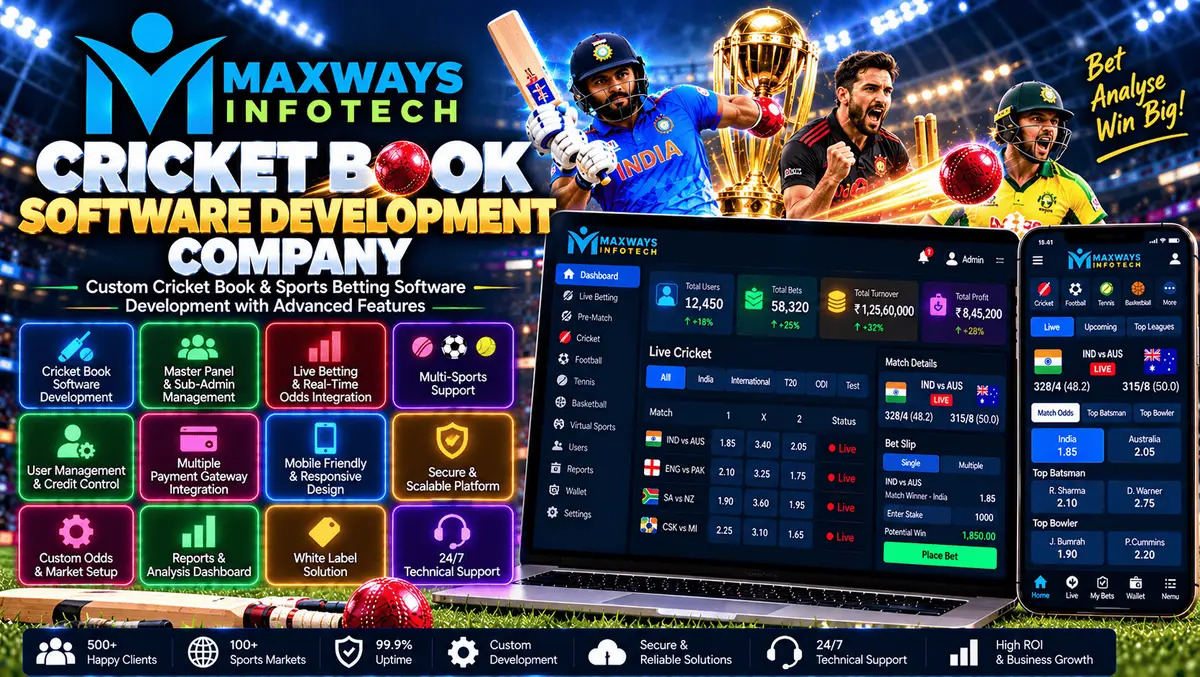
Cricket Book Software Development Company, cricket software development, cricket scorecard software, cricket statistics application,
Cricket Book Software Development Company: Technology, Features and Project Planning
Choosing a Cricket Book Software Development Company requires careful evaluation of software architecture, data handling, system reliability, security, and long-term maintenance. Businesses researching cricket-related software should first understand the intended purpose of the application and identify the technical components needed to support it.
A cricket-focused software project might involve match information, scorecards, statistics, reporting dashboards, content management, or other sports-related functionality. Each project has different requirements, so the right development approach depends on the intended use, available data sources, supported devices, budget, and applicable legal obligations.
Maxways Infotech provides web, application, and software development services. Businesses can visit the Maxways Infotech website to explore its technology services and discuss their software development requirements.
What Is Cricket Book Software Development?
The phrase “cricket book software” can refer to different types of cricket-related applications. Before choosing a development company, clarify whether the project concerns a cricket information system, a scorekeeping application, a statistics dashboard, or another lawful sports software product.
Depending on the approved scope, the application may include:
-
Cricket fixtures and match schedules
-
Scorecards and innings summaries
-
Player and team statistics
-
Historical match information
-
Administrative dashboards
-
Reporting and data export
-
Authorized third-party API integrations
-
Technical monitoring and maintenance
Defining the intended product helps the development team recommend an appropriate architecture instead of offering a generic package that may not match the actual requirements.
Why Requirements Planning Matters
A well-documented project brief helps reduce confusion during development. It also gives the client and development team a common reference for estimating costs, planning milestones, and reviewing the final product.
Identify the Intended Users
Start by identifying who will use the application. The requirements for a cricket statistics website may differ from those of an internal scorekeeping tool or a content management system.
Understanding the audience helps determine the necessary interface, permissions, data fields, and reporting features.
Separate Essential and Optional Features
Create a list of features required for the initial release and a separate list of future improvements. This makes it easier to control the project scope and prioritize the most important functionality.
Define Data Requirements
Specify which cricket information the application needs, how frequently it should update, and whether historical records are required. Confirm that the selected provider supplies the required data and permits the intended use.
Establish Acceptance Criteria
Each feature should have clear completion criteria. For example, a scorecard requirement might specify the information displayed, supported match formats, and how the application handles missing data.
Clear criteria make project reviews more objective.
Core Features of Cricket-Related Software
The final feature set depends on the application, but several components are commonly useful in cricket information and analytics systems.
1. Match and Scorecard Management
A scorecard interface can organize innings totals, wickets, overs, batting figures, bowling figures, and match status, depending on the data available.
The system should account for differences between cricket formats and avoid assuming that every match follows the same innings structure.
2. Player and Team Records
Player profiles and team records can make historical information easier to explore. Developers should use consistent identifiers so that records from different screens refer to the correct players and teams.
If data comes from an external provider, the application should follow the provider's documented field definitions and update rules.
3. Search and Filtering
Search tools can help users find matches, competitions, players, and teams. Filters may include date ranges, match formats, tournaments, or other relevant attributes.
The interface should display useful messages when no records match a search and should avoid unnecessary loading delays when users change filters.
4. Reporting and Data Export
Reporting features can help users review historical information and export permitted records for further analysis.
The development team should define the report formats, filters, permissions, and data retention requirements. Exported files should contain only information the user is authorized to access.
5. Administration Dashboard
An administrative dashboard can help authorized staff manage settings, review system activity, and monitor technical issues.
Useful functions may include role management, configuration controls, error reports, audit logs, and system health indicators.
Administrative actions should be restricted according to the user's role and recorded where appropriate.
Choosing the Right Technology Stack
There is no single technology stack that suits every cricket software project. The selection depends on the expected workload, data structure, supported platforms, and the resources available to maintain the application.
These are examples rather than mandatory choices. A development company should explain why its recommended stack suits the project and how it will be maintained over time.
Cricket Data Integration and Accuracy
If the application relies on external cricket data, integration planning becomes an important part of the project.
Review API Coverage
Confirm which competitions, match formats, player records, and historical statistics the provider supports. The provider's actual coverage should match the application's requirements.
Map Data Correctly
Different endpoints may represent matches, innings, players, and teams separately. Developers should map these records using documented identifiers rather than relying only on display names.
Handle Missing or Delayed Information
An API may return incomplete data or experience temporary delays. The application should record update timestamps and avoid presenting outdated information as current.
Respect Usage Limits
API providers may impose rate limits or charge according to usage. Developers should choose suitable request intervals, cache permitted information, and handle rate-limit responses according to the provider's documentation.
Verify Data Licensing
Access to an API does not automatically grant permission to redistribute all the data. Review the provider's licensing terms and commercial-use conditions before publishing information.
Security and Access Control
Security should be part of the software design from the beginning. The appropriate controls depend on the application's functionality and the information it processes.
A project should consider:
-
Secure authentication and administrative access
-
Role-based permissions
-
HTTPS and appropriate security headers
-
Input validation and safe error handling
-
Secure storage of API credentials
-
Software dependency updates
-
Backup and recovery procedures
-
Monitoring and incident response
If the application stores personal information, the team should define what information is necessary, who can access it, how long it will be retained, and how relevant privacy obligations will be handled.
A responsible security process also includes testing and regular review. No development company can guarantee that a system will never encounter a security issue.
Testing Before Launch
A cricket software application should be tested against the agreed requirements before it is accepted.
Functional Testing
Verify that the scorecards, filters, reports, and administrative functions behave as specified.
Data Validation
Test missing fields, unexpected values, duplicate records, delayed updates, and changes in match status.
Compatibility Testing
Check the application on supported browsers, devices, and screen sizes.
Performance Testing
Measure page response times, API latency, and database behaviour under representative workloads.
Recovery Testing
Confirm how the system responds to failed requests, unavailable data services, interrupted connections, and data restoration requirements.
Documenting test results makes it easier to identify outstanding issues before deployment.
How to Evaluate a Cricket Book Software Development Company
A reliable development partner should explain the project scope, technical decisions, delivery process, and ongoing responsibilities.
Review Relevant Experience
Ask for examples of sports websites, scorekeeping tools, statistics dashboards, or data-driven applications. Clarify what the company developed and how it handled testing and maintenance.
Request a Detailed Proposal
The proposal should specify:
-
Included features and excluded work
-
Proposed technology stack
-
Data sources and third-party dependencies
-
Delivery milestones
-
Testing and acceptance criteria
-
Source-code and design ownership
-
Deployment and maintenance arrangements
Confirm Ownership and Documentation
The agreement should clarify who owns the source code, design assets, and documentation. It should also explain who controls hosting accounts, repositories, and third-party service accounts.
A proper handover makes future maintenance or a transfer to another developer easier.
Compare Support Arrangements
Ask who will handle defects, provider API changes, security updates, and infrastructure problems. Confirm which services are included in the maintenance agreement and which require additional payment.
Development Costs and Budget Planning
The cost of cricket software development depends on the scope and complexity of the application. A simple scorekeeping tool may require a different level of effort from a data-intensive application with historical statistics, integrations, reporting, and administrative controls.
Common cost factors include:
-
Number of features and supported platforms
-
Custom interface design
-
Backend and database complexity
-
External API subscriptions
-
Data migration and reporting
-
Testing and security reviews
-
Hosting and monitoring
-
Documentation and handover
-
Ongoing maintenance
Ask for a written estimate that separates initial development from recurring expenses. If requirements are still evolving, begin with a discovery phase and a clearly defined first release.
SEO Considerations for Cricket Software Websites
If the application has a public-facing website, search engine optimization should be considered during planning.
Useful practices include:
-
Unique page titles and meta descriptions
-
Clear page headings
-
Original and useful cricket-related content
-
Mobile-friendly layouts
-
Fast page loading
-
Descriptive image alt text
-
Relevant internal links
-
Monitoring indexing and broken links
Avoid creating several nearly identical pages that target small variations of the same keyword. Each page should answer a distinct question or provide a specific benefit to visitors.
For more software and technology-related articles, explore the Maxways Infotech blog.
Legal and Compliance Considerations in India
The legal requirements depend on what the cricket software actually does. A scorekeeping or statistics application can raise different issues from software designed to facilitate betting or money-based gaming.
India's Promotion and Regulation of Online Gaming Act, 2025, and the Promotion and Regulation of Online Gaming Rules, 2026 establish a regulatory framework that includes prohibitions relating to online money games and associated services. Before developing or launching a product connected to betting, stakes, deposits, or money-based gameplay, verify the current legal position with a qualified legal professional.
Do not assume that a product is lawful merely because similar software is available online. The development contract should also clarify responsibility for data licences, privacy, intellectual property, and third-party services.
How Maxways Infotech Can Support Software Planning
Maxways Infotech provides web, application, and software development services. Businesses can discuss their cricket-related software requirements with the team to identify the appropriate project scope, technical approach, and maintenance expectations.
Before requesting a proposal, prepare a short brief describing the intended application, required cricket data, supported devices, essential features, budget, and maintenance expectations. This will help the development team assess the project more accurately.
Frequently Asked Questions
What does a Cricket Book Software Development Company do?
Depending on the intended product, it may develop cricket information systems, scorekeeping tools, statistics dashboards, databases, administrative panels, and authorized data integrations.
Can cricket software display live scores?
Yes, when an authorized provider supplies the required data and permits the intended use. The application should handle delayed updates, missing fields, and provider errors appropriately.
What technologies are suitable for cricket software?
The choice depends on the application. Frontend frameworks, backend technologies, databases, and cloud infrastructure should be selected according to the data model, workload, and maintenance requirements.
How long does cricket software development take?
The timeline depends on the feature set, design requirements, integrations, testing, and availability of external services. A realistic estimate should follow a requirements review.
What affects the cost of cricket software development?
Custom design, backend functionality, external data services, testing, infrastructure, documentation, and ongoing maintenance can all affect the cost.
Should legal review happen before development?
Yes. If the intended use may involve regulated activities, legal review should take place before committing to the product design and development budget.
Conclusion
Choosing a Cricket Book Software Development Company requires a clear understanding of the intended application, its data requirements, and the technical work needed to maintain it. Good planning, reliable data mapping, secure access controls, thorough testing, and clear ownership terms can help businesses evaluate development partners more effectively.
Maxways Infotech can discuss general software development requirements with businesses planning cricket-related digital products. Define the project scope, review the technical proposal, and verify the applicable legal requirements before proceeding.