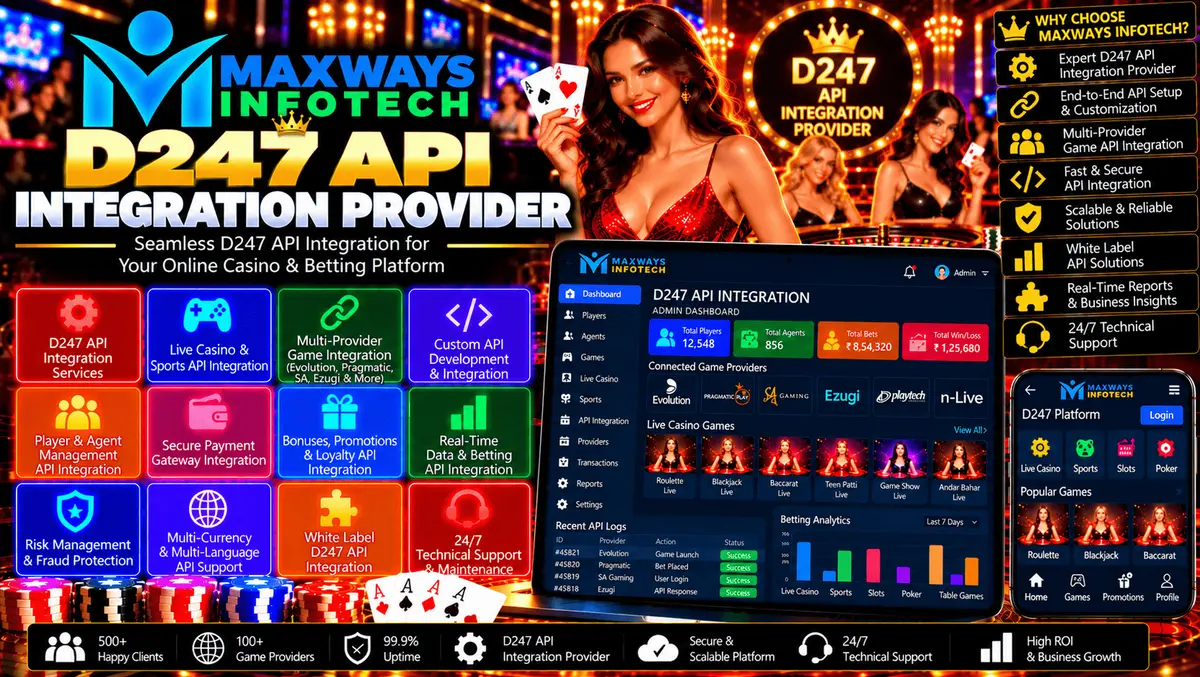
Explore D247 API integration services, API connectivity, secure authentication, data mapping, compatibility testing, and ongoing technical support.
D247 API Integration Provider: Features, Connectivity, Security, and Support
Modern digital platforms often depend on multiple applications working together. Connecting these systems requires compatible software interfaces, secure communication, accurate data handling, and reliable technical support. A D247 API Integration Provider can help businesses evaluate integration requirements, configure supported connections, and connect compatible applications according to their technical needs.
At MaxWays Infotech, businesses can explore information about software development, APIs, and digital platform solutions. Before selecting an integration provider, it is important to understand API compatibility, authentication methods, data mapping, testing procedures, and ongoing maintenance requirements.
What Is a D247 API Integration Provider?
An API integration provider helps connect compatible software applications through documented application programming interfaces (APIs). An API defines how applications exchange requests and responses, access permitted information, and perform supported operations.
Depending on the software and available documentation, a D247-related integration project may involve:
-
Connecting compatible applications and backend services.
-
Configuring authorized API credentials.
-
Mapping information between different data formats.
-
Implementing request validation and error handling.
-
Testing API responses and application compatibility.
-
Monitoring integrations and maintaining connections.
The exact functionality depends on the specific software, provider permissions, API documentation, and agreed project scope. Businesses should verify available endpoints before assuming that a particular integration is supported.
Key Features of API Integration Services
1. API Compatibility Assessment
Before development begins, an integration team should check whether the required API works with the existing application.
This assessment may cover supported endpoints, authentication requirements, request formats, response structures, version compatibility, and usage limits.
A compatibility review helps identify technical limitations before they cause delays or additional development costs.
2. Secure API Authentication
APIs often require credentials or tokens to verify that an application is authorized to access a service.
A secure implementation should protect API keys, restrict permissions, and store credentials on the server or in an appropriate secrets-management system. Private keys should never be exposed in public-facing website code or unsecured logs.
3. Data Mapping and Transformation
Connected applications may represent the same information differently. Data mapping defines how fields from one application correspond to fields in another.
Developers should validate required fields, data types, timestamps, and identifiers. Consistent mapping helps reduce incorrect records and makes troubleshooting easier.
4. Real-Time or Scheduled Data Exchange
The appropriate update method depends on the API's capabilities and the application's needs.
Some integrations use scheduled requests, while others support webhooks or streaming connections. Developers should confirm which methods are available and plan for delays, interruptions, and repeated notifications.
5. Error Handling and Monitoring
API requests may fail because of network problems, expired credentials, invalid parameters, or third-party service interruptions.
A reliable integration should include appropriate timeouts, structured error logs, controlled retry behaviour, and monitoring. For operations that could create duplicate records, suitable duplicate-prevention controls are important.
6. Technical Documentation
Documentation helps teams understand how the integration works and how it should be maintained.
Useful documentation includes endpoint details, authentication procedures, request examples, response fields, error codes, rate limits, version changes, and troubleshooting guidance.
Benefits of Choosing a Suitable D247 API Integration Provider
The right provider can help businesses plan integrations around their actual requirements rather than relying on assumptions about available features.
Improved Application Connectivity
Compatible applications can exchange information through defined interfaces, reducing the need for disconnected manual processes.
More Consistent Data
Validation rules and documented field mappings can help maintain consistency across connected systems.
Easier Troubleshooting
Structured logging and monitoring help technical teams identify failed requests, unexpected responses, and service interruptions.
Flexible Software Architecture
A dedicated integration layer can separate external API communication from the main application. This structure can make future changes easier to manage.
Better Long-Term Maintenance
Documented integrations, version management, and defined support responsibilities help teams maintain compatibility as software evolves.
For broader context, explore the iGaming platform API development guide.
How the D247 API Integration Process Works
A structured implementation process helps businesses confirm requirements and test the solution before production deployment.
Step 1: Define the Requirements
Identify the applications that need to communicate, the information to be exchanged, and the expected outcomes.
Separate essential functions from optional features so the project scope remains clear.
Step 2: Review API Documentation
Obtain the official API specification and verify that the required endpoints are available for the intended use.
Review authentication, request formats, response fields, rate limits, error codes, and any applicable licensing restrictions.
Step 3: Design the Integration Architecture
Determine how requests will move between the application and the external service.
A typical architecture uses a backend integration layer to authenticate requests, validate data, process responses, and return only the information needed by the application.
Step 4: Configure and Develop
Implement the agreed API connections, data mappings, authentication mechanisms, and error-handling rules.
Use approved test credentials and a sandbox environment where available.
Step 5: Test and Validate
Testing should include successful requests, invalid inputs, expired credentials, timeouts, rate limits, and recovery scenarios.
Confirm that the integration behaves correctly when an external service becomes temporarily unavailable.
Step 6: Deploy and Monitor
After testing and approval, deploy the integration to the intended environment.
Monitor request failures, response times, and unexpected data changes. Document the recovery procedure and define responsibility for future updates.
Security Considerations for API Integration
Security is an essential part of any software integration project. A working API connection is not necessarily a secure one.
Businesses should evaluate the following safeguards:
-
Credential protection: Store API keys securely and rotate them when required.
-
Access restrictions: Grant only the permissions needed for the integration.
-
Encrypted communication: Use secure transport for supported API connections.
-
Input validation: Check incoming and outgoing data against expected formats.
-
Audit logging: Record relevant integration events without exposing secrets.
-
Dependency management: Review software libraries and apply appropriate updates.
-
Privacy controls: Exchange only the data necessary for the intended purpose.
Security responsibilities should be documented between the business, integration provider, and any third-party API service.
How to Choose the Right API Integration Company
Selecting an integration partner requires more than comparing prices or advertised features.
Review Technical Experience
Ask about experience with backend development, REST APIs, authentication, databases, data transformation, and automated testing.
A provider should be able to explain how the proposed integration will work and identify any known limitations.
Confirm API Access and Compatibility
Verify that the required documentation, credentials, and permissions are available. Confirm that the provider can legally support the intended integration.
Evaluate Testing Procedures
Ask how the provider tests errors, rate limits, duplicate requests, service interruptions, and recovery scenarios.
Understand the Total Cost
The project cost may include initial development, third-party API subscriptions, hosting, monitoring, maintenance, and future modifications. Request an itemized quotation.
Check Support Arrangements
Confirm who will maintain the integration, how issues are reported, and how API version changes will be handled.
Businesses evaluating alternative API models can also read about the White Label iGaming API approach.
Common API Integration Challenges
Even well-planned projects can encounter technical problems. Understanding common challenges makes it easier to plan preventive measures.
Incompatible data formats: Use documented mappings and validation rules to handle differences between systems.
Rate limits: Follow the API provider's usage restrictions and implement suitable request scheduling.
Expired credentials: Establish a process for credential renewal and access review.
Unstable connections: Use sensible timeouts, controlled retries, and monitoring.
Duplicate records: Apply idempotency controls where supported and maintain reliable identifiers.
API version changes: Track version updates, test compatibility, and plan migrations before older versions are retired.
Insufficient documentation: Record configuration details, dependencies, error-handling behaviour, and recovery procedures.
A clear maintenance plan can reduce disruption when connected services change.
Related API and Software Integration Resources
Businesses researching API connectivity can explore additional topics through the iGaming Data API Provider guide, which discusses data quality, documentation, integration considerations, and reporting.
For projects involving other data services, the Diamond Exchange API overview provides another example of how APIs can connect compatible applications.
These resources can help businesses understand the importance of confirming data coverage, authorized access, technical compatibility, and service limitations before starting an integration project.
Why Explore MaxWays Infotech?
Businesses researching software development and API connectivity can visit MaxWays Infotech to explore available company information and related technology services.
Before selecting an integration provider, prepare a clear requirements document, verify the available API features, and request details about security, testing, deployment, and ongoing support.
You can also browse the MaxWays Infotech blog for more information about APIs, software platforms, and development practices.
Frequently Asked Questions
What does a D247 API Integration Provider do?
An API integration provider helps connect compatible applications, configure authorized API access, map data, test communication, and maintain supported integrations.
Can a D247 panel connect with other software?
That depends on the specific panel, available API documentation, provider permissions, and technical compatibility. Confirm the required endpoints before starting development.
Is API integration secure?
It can be implemented securely with appropriate authentication, credential protection, access restrictions, encrypted communication, input validation, and monitoring.
How long does API integration take?
The timeline depends on API complexity, documentation quality, existing software, required features, testing, and third-party dependencies. A provider should estimate the timeline after reviewing the requirements.
Does API integration require ongoing maintenance?
Often, yes. API versions, credentials, external services, and security requirements can change. Maintenance responsibilities should be agreed upon before deployment.
What should I ask an API integration provider?
Ask about API compatibility, technical experience, security procedures, testing, documentation, project costs, licensing, and ongoing support.Live Casino API Integration Providers | Maxways Infotech
Conclusion
Choosing a suitable D247 API Integration Provider involves evaluating API compatibility, secure authentication, data handling, testing, monitoring, and ongoing maintenance. A clear technical scope and documented responsibilities help businesses make informed decisions and maintain reliable connections between compatible applications.
Visit MaxWays Infotech to explore related software development information and plan your API integration requirements.
Compliance note: Any betting, casino, or gaming-related application must be used only where legally permitted and with all required licences and authorizations. Applicable age restrictions, responsible-use safeguards, privacy requirements, and data-protection obligations must also be followed.D247 Panel Integration Services | Maxways Infotech