Learn how to evaluate website source code, review ownership terms, assess security, compare development options, and plan a reliable handover.
All Panel Website Source Code Provider: Features, Ownership, and Development Guide
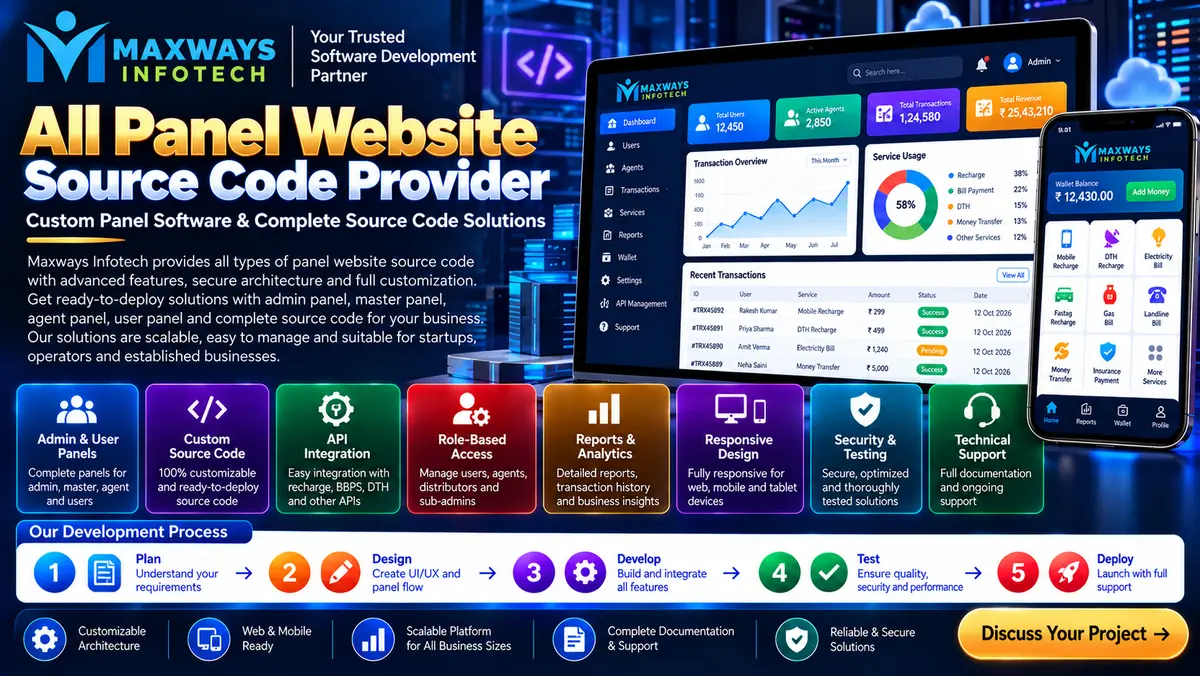
An All Panel Website Source Code Provider helps businesses explore software code, administrative dashboards, API integrations, and custom website development for their intended digital platform. Before choosing a provider, businesses should understand what the source code includes, how it can be customised, who owns the intellectual property, and what support is available after delivery.
Buying or commissioning source code is not simply about receiving a collection of files. The software must be understandable, maintainable, secure, and suitable for the intended use. A poorly documented project can become expensive to update, even when its initial price appears attractive.
This guide explains how to evaluate source-code providers, compare ready-made software with custom development, and prepare for a reliable technical handover.
What Is an All Panel Website Source Code Provider?
A source-code provider supplies software files or development services for building and managing a website or application. Depending on the project, the deliverables may include frontend code, backend logic, database structures, administrative interfaces, API connections, and technical documentation.
The phrase “all panel” can mean different things to different buyers. It may refer to a platform with several administration modules, a collection of connected dashboards, or a custom software package. Businesses should define the exact functionality they need rather than relying on the phrase alone.
A project specification may include:
-
Website and dashboard interfaces.
-
User and permission management.
-
Administrative settings.
-
Reporting and analytics.
-
Database structure and migration scripts.
-
API integration modules.
-
Authentication and security controls.
-
Installation and deployment instructions.
-
Testing documentation.
-
Maintenance and support arrangements.
The actual deliverables should be listed in the proposal and contract.
Ready-Made Source Code vs Custom Development
One of the first decisions is whether to purchase an existing codebase or commission a new solution.
Ready-Made Source Code
Ready-made software may be suitable when the required features closely match an existing product. It can reduce the initial development effort, provided the code is well maintained and its licence permits the intended use.
Before purchasing, review the code structure, supported dependencies, installation process, documentation, and any restrictions on modification or redistribution.
A ready-made solution may still require configuration, security updates, and customisation before it fits a particular business.
Custom Website Development
Custom development starts with the project's specific requirements. The development team designs and builds the features needed for the intended workflow.
This approach can provide greater control over the architecture and user experience, but it usually requires more planning, implementation, testing, and ongoing maintenance.
Custom development is often worth considering when the required workflows cannot be handled reliably by an existing product.
How to Decide
Compare both approaches against the same requirements:
-
Which required features are already available?
-
How much customisation is needed?
-
Can the code be maintained by another developer?
-
Are third-party licences clearly documented?
-
What are the initial and recurring costs?
-
Does the software fit the intended legal and operational use?
The best option is the one that meets the actual requirements without creating unnecessary technical or commercial risk.
What Should Be Included in a Source-Code Package?
A source-code delivery should contain more than the main application files. The receiving team needs enough information to install, understand, test, and maintain the software.
Frontend Source Code
The frontend includes the interface elements users interact with. Its quality affects usability, accessibility, responsive behaviour, and future design changes.
Check whether the code is organised into understandable components and whether it supports the intended browsers and screen sizes.
Backend Source Code
The backend implements application logic, permissions, data processing, and communication with external services where applicable.
The provider should explain the framework, configuration requirements, and supported runtime environment.
Database Structure
Database scripts, schemas, and migration instructions help the receiving team understand how application data is organised.
The handover should clarify how the database is created, updated, backed up, and restored.
Configuration and Environment Files
The software may depend on environment variables, API credentials, server settings, or other configuration values.
Sensitive credentials should not be embedded in the delivered code. The provider should explain how secrets are configured securely in each environment.
Documentation and Deployment Instructions
Installation instructions should explain prerequisites, dependencies, environment configuration, database setup, and the deployment process.
A handover that relies entirely on verbal explanations creates unnecessary dependence on the original developer.
How to Check Source-Code Quality
A working demonstration does not prove that the underlying code is reliable. Buyers should arrange a technical review before committing to a large project or accepting final delivery.
Code Structure and Readability
The code should be organised logically, with understandable names and clear separation between major responsibilities. Readable code is easier to debug and extend.
Dependency Management
The provider should identify the frameworks and third-party packages the application uses. Check whether those dependencies are supported and whether any licensing obligations apply.
Error Handling
The software should handle expected failures without exposing sensitive internal information. For example, an unavailable API should produce a controlled error rather than leaving the application in an inconsistent state.
Testing
Ask what automated and manual tests exist. Testing should cover important workflows, permissions, data validation, and error conditions.
Security Review
Review authentication, access control, input validation, credential storage, and data handling. A security review should be proportionate to the sensitivity and purpose of the application.
Maintainability
Ask whether another qualified developer can install the project, run the tests, understand the architecture, and make a small change using the supplied documentation.
That practical test can reveal handover problems that a sales demonstration will not show.
Intellectual Property and Source-Code Ownership
Source-code ownership is a separate issue from simply receiving access to the files.
A contract should specify whether the customer receives ownership of the custom code, a licence to use it, or another defined set of rights. It should also explain any restrictions on modification, commercial use, redistribution, or transfer to another developer.
Important questions include:
-
Who owns the custom code created for the project?
-
Which components belong to the provider already?
-
Are third-party libraries or templates included?
-
Can the customer modify the software?
-
Can another developer maintain it?
-
What happens when the service agreement ends?
-
Are source-code updates included in the contract?
Reusable frameworks and third-party components may have different ownership or licensing conditions from newly written code. The agreement should distinguish between them clearly.
For businesses exploring digital software services, Maxways Infotech is a starting point for reviewing the company's software development offerings. Any proposed source-code ownership or licensing arrangement should be confirmed directly in the project agreement.
Customisation and Future Expansion
A source-code package should be evaluated against the changes the business may need later.
Possible customisation requirements include branding, interface changes, user roles, reporting, language support, API connections, and workflow adjustments.
Before making changes, developers should understand the existing architecture and identify any components that depend on one another.
Modular Design
A modular structure separates major functions into components with clear responsibilities. This can make updates easier, provided the boundaries are designed sensibly.
Configuration Instead of Hard-Coding
Where practical, configurable settings can make it easier to adjust ordinary business options without modifying the core code.
API Documentation
If the platform connects to external services, the integration should be documented. The receiving team needs to know how authentication, requests, responses, and errors are handled.
Version Control
A source-code repository and a documented change history help developers review modifications, collaborate, and restore earlier versions when necessary.
Customisation should be tested after each meaningful change to reduce the risk of breaking existing functionality.
Security Requirements for Website Source Code
Security should be considered throughout development and maintenance. Receiving the source code does not automatically make an application secure.
Important safeguards include:
Authentication and permissions: Ensure that sensitive functions are restricted to authorised users and that administrative permissions are not excessive.
Input validation: Validate data received from forms, APIs, and other external sources.
Credential protection: Keep API keys, passwords, and private credentials out of public repositories and ordinary logs.
Secure communication: Protect sensitive data sent between the application and its services.
Dependency updates: Track third-party packages and address relevant security updates.
Audit logs: Record important administrative actions where appropriate, with access limited to authorised personnel.
Backup and recovery: Document how data and configuration can be restored after an incident.
Security testing: Test the application before release and repeat relevant checks when important components change.
Security requirements should match the application’s real purpose, the data it processes, and its deployment environment.
API Integration and Third-Party Dependencies
Modern websites often rely on external services. These might include authentication systems, communication services, analytics tools, data providers, or other permitted business integrations.
An integration should be evaluated as part of the source-code package rather than treated as an automatic feature.
Ask the provider:
-
Which external services are supported?
-
Are API credentials included or supplied separately?
-
What happens when an external service changes its API?
-
How are rate limits and errors handled?
-
Is a test environment available?
-
Who maintains the integration after handover?
-
Are additional licences or usage fees required?
The source code should not contain secret credentials belonging to the provider or another customer. Each deployment should use properly authorised credentials and configuration.
Businesses comparing related software engineering services can also review Maxways Infotech's fintech page. This is a related software-services resource; it does not imply that every source-code package includes fintech or payment functionality.
Understanding the Total Cost
The purchase price is only one part of the cost of acquiring and maintaining source code.
Initial Acquisition or Development
This may cover the existing software licence, custom development, configuration, documentation, and initial deployment.
Hosting and Infrastructure
The application may require a server, database, storage, backups, monitoring, and other infrastructure.
Third-Party Licences
Some frameworks, themes, plugins, APIs, or commercial services may require separate licences or recurring payments.
Customisation
Changing the original design, adding features, or adapting the software to a new workflow may require additional engineering work.
Maintenance and Support
Bug fixes, dependency upgrades, security patches, compatibility updates, and technical support create ongoing responsibilities.
Request a written estimate that separates one-time costs from recurring expenses. Confirm what is included, what is excluded, and how additional work will be charged.
Questions to Ask Before Choosing a Provider
A structured evaluation helps buyers compare providers using the same criteria.
Can I review the source code? Ask whether a code review or technical demonstration is available before the final purchase.
What exactly will be delivered? Request a list of repositories, modules, assets, documentation, and deployment files.
Who owns the code? Clarify the ownership and licensing terms in writing.
Can another developer maintain it? Ask for installation instructions, dependency details, and architecture documentation.
What testing has been completed? Review the available test evidence and identify any known limitations.
How are updates handled? Confirm whether maintenance, security updates, and support are included.
Are there third-party dependencies? Request a list of libraries, services, licences, and recurring fees.
What are the acceptance criteria? Agree on how the delivered software will be checked before final acceptance.
A provider should be willing to explain these points clearly rather than relying only on a feature list or sales presentation.
Conclusion
An All Panel Website Source Code Provider should be evaluated on the quality and completeness of its deliverables, not simply on the number of features advertised.
Buyers should review code quality, documentation, ownership rights, third-party dependencies, security, customisation options, and the cost of long-term maintenance. A practical technical review can help establish whether the software is suitable for the intended purpose and whether another developer can maintain it after delivery.
The strongest source-code arrangement is one in which both parties understand what is being delivered, what rights are granted, which responsibilities remain with the customer, and how future changes will be managed.
For more articles about software development and digital technology, visit the Maxways Infotech blog.