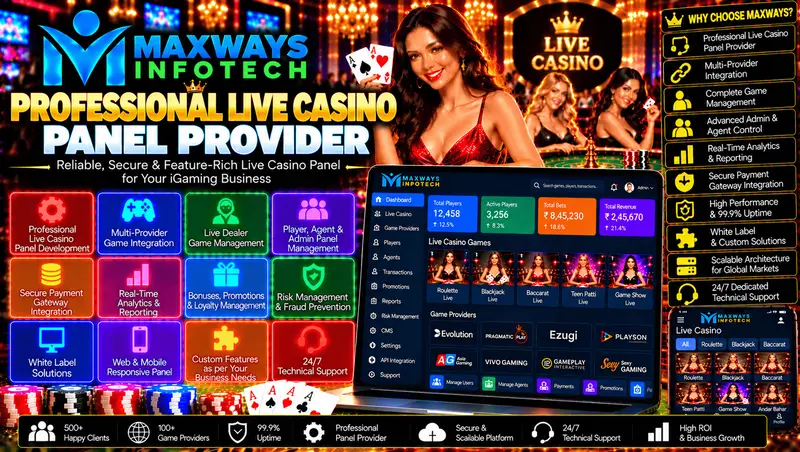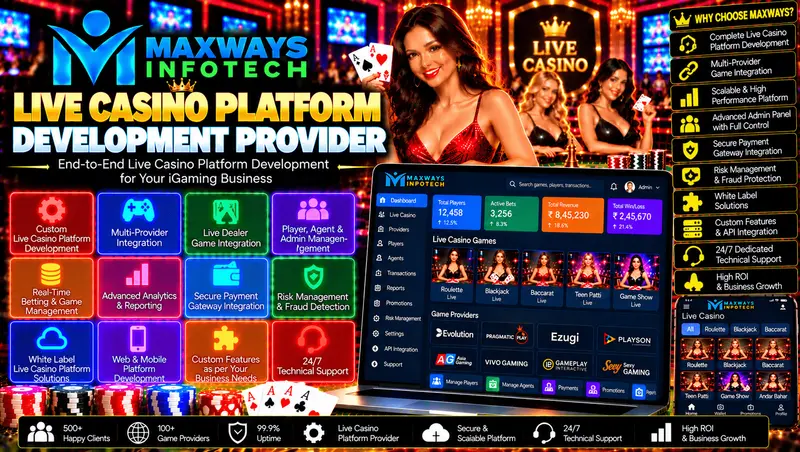
Looking for the best live casino website developers? Explore custom website development, API integration, responsive design, secure administration, and software maintenance.
Best Live Casino Website Developers: Features, Services, and How to Choose
Introduction
Building a live casino website requires more than an attractive design. Businesses need a responsive interface, reliable backend software, secure administration, suitable third-party integrations, and a clear maintenance strategy. Best Live Casino Website Developers understand how these components work together to create a maintainable web platform.
Choosing a development partner involves evaluating technical experience, software architecture, integration capabilities, security practices, and long-term support. A well-planned project begins with clear requirements and realistic expectations about cost, delivery, and compliance.
Businesses exploring software and web development services can visit Maxways Infotech to learn more about its digital development capabilities.
What Do Live Casino Website Developers Do?
Live casino website developers design, build, test, and maintain the software components that support a live casino website. Their responsibilities depend on the project scope and may include frontend development, backend engineering, administration dashboards, API integration, quality assurance, and deployment.
A website development project may include:
-
Responsive website design and frontend development.
-
Backend application logic and database integration.
-
Administrative dashboards and access controls.
-
Integration with authorised third-party services.
-
Website performance optimisation.
-
Security testing and quality assurance.
-
Monitoring, technical documentation, and maintenance.
-
Search engine optimisation and technical SEO foundations.
Not every development company provides all these services. Businesses should confirm the exact deliverables before signing a contract.
What Makes a Live Casino Website Development Company a Good Choice?
1. Relevant Technical Experience
A suitable development team should understand responsive web applications, backend architecture, database management, and third-party integrations. It should also be able to explain how it approaches testing, security, deployment, and ongoing maintenance.
Ask prospective developers about their process and request relevant examples where they are permitted to share them.
2. Custom Website Design
A professional website should reflect the intended brand and make navigation straightforward. Clear layouts, readable typography, accessible controls, and responsive components help create a consistent experience across supported devices.
Custom design should also consider loading states, unavailable services, and error messages instead of focusing only on the appearance of the homepage.
3. Reliable Backend Architecture
The backend manages application logic, data processing, authentication, and communication with external services. A maintainable architecture separates responsibilities so that updates to one component are less likely to disrupt unrelated functions.
The development team should document system responsibilities, data ownership, error handling, and recovery procedures.
4. API Integration Capabilities
A live casino website may need to connect with authorised game providers or other supported software services. API integration requires documented endpoints, secure authentication, compatible data formats, and appropriate handling of failed requests.
For related technical information, explore the iGaming Platform API guide.
5. Security and Maintenance
Security should be considered throughout the project rather than added only before launch. Authentication, access control, secure credential storage, dependency updates, testing, and monitoring are all important parts of the development process.
A good provider should also explain who will handle defects, updates, and technical issues after the website goes live.
Essential Features of a Live Casino Website
Responsive Frontend
The frontend is the part of the website visitors interact with. It should adapt to supported screen sizes and browsers while maintaining a consistent navigation structure.
Important considerations include:
-
Mobile-friendly page layouts.
-
Clear navigation and content hierarchy.
-
Accessible interface controls.
-
Efficient loading of images and other assets.
-
Helpful error and loading states.
-
Consistent branding across pages.
Backend and Database Integration
Backend software handles the logic that connects website components and manages application data. Database design should account for data consistency, appropriate access permissions, backup procedures, and recovery needs.
Sensitive operations should be validated on the server rather than relying only on frontend restrictions.
Administration Dashboard
An administration dashboard can help authorised staff manage approved settings, review reports, monitor integration status, and investigate technical issues.
Role-based access should ensure that each staff member can use only the functions required for their responsibilities. Important administrative actions should be recorded in appropriate audit logs.
API and Third-Party Connectivity
APIs allow separate applications to exchange information through defined interfaces. Depending on the approved scope, a website may integrate with supported game services, reporting tools, or other external systems.
For an example of casino-related integration concepts, read the Diamond Casino API guide.
Before integration, confirm provider documentation, permitted usage, technical compatibility, authentication requirements, and the responsibilities of each party.
Performance Monitoring
Monitoring can help teams identify slow responses, application errors, unavailable services, and infrastructure problems.
A practical monitoring plan should define important metrics, alert thresholds, escalation procedures, and responsibilities for investigating incidents.
Technical SEO Foundations
Website development should include technical SEO considerations from the beginning. These may include descriptive page titles, logical heading structures, crawlable navigation, appropriate canonical URLs, XML sitemap configuration, mobile usability, and efficient page loading.
Each page should offer useful information for its intended audience. Publishing multiple near-identical pages simply to target slightly different keywords may provide little value.
Technologies Used in Live Casino Website Development
The technology stack should match the project's requirements, existing infrastructure, and long-term maintenance capabilities.
Frontend technologies: HTML, CSS, JavaScript, and frameworks such as React can support responsive layouts and interactive interfaces.
Backend technologies: Node.js or PHP may be suitable for application logic, API communication, and server-side processing.
Database technologies: MySQL or MongoDB may be appropriate depending on the data model and consistency requirements.
API integration: A dedicated integration layer can separate provider-specific communication from the main application and help standardise error handling.
Hosting and monitoring: The deployment environment should support suitable security controls, backups, logging, and performance monitoring.
There is no single technology stack that suits every project. A development team should explain its choices and the trade-offs involving performance, complexity, security, and maintenance.
The Live Casino Website Development Process
Step 1: Requirements Analysis
Define the business objectives, intended users, required pages, technical features, integrations, security expectations, and applicable compliance requirements.
Step 2: UI/UX Design
Prepare wireframes and visual designs for the main pages, navigation, responsive layouts, and administrative screens. Review the proposed user experience before implementation begins.
Step 3: Architecture Planning
Document frontend and backend responsibilities, database structures, integration requirements, hosting needs, and security controls.
Step 4: Development
Build the agreed functionality in manageable stages. Use version control, appropriate code reviews, and documented development practices.
Step 5: Integration and Testing
Verify that approved integrations work as expected. Test forms, permissions, error handling, browser compatibility, responsive layouts, and data consistency.
Step 6: Security and Quality Assurance
Review authentication, access controls, credentials, software dependencies, logging, and recovery procedures. Resolve identified issues before production release.
Step 7: Deployment
Deploy through a controlled process, configure monitoring, and prepare the agreed technical documentation and handover.
Step 8: Ongoing Maintenance
Plan for bug fixes, security updates, compatibility changes, integration maintenance, and future improvements.
How to Choose the Best Live Casino Website Developers
Review Their Portfolio and Process
Look for relevant experience with custom websites, dashboards, backend systems, and API integrations. Ask how the team handles testing, documentation, and production issues.
Define the Project Scope
A written proposal should list features, exclusions, integrations, milestones, deliverables, and acceptance criteria. This helps both parties understand what the development agreement covers.
Evaluate Security Practices
Discuss administrator authentication, role-based permissions, credential storage, security testing, backup procedures, and responsibility for updates.
Confirm Ownership and Documentation
Clarify ownership or licensing rights for custom code, designs, and project assets. Confirm who will control source-code repositories, hosting accounts, and deployment documentation.
Understand Support Arrangements
Ask about support hours, incident escalation, maintenance coverage, response targets, and additional charges for work outside the agreed scope.
Best Live Casino Website Developers | Maxways Infotech
How Much Does Live Casino Website Development Cost?
The total cost depends on the website's complexity, design requirements, backend features, integrations, testing scope, infrastructure, and maintenance arrangements.
Common cost factors include:
-
Requirements analysis and interface design.
-
Frontend and backend development.
-
Database and API integration.
-
Administration and reporting features.
-
Security testing and quality assurance.
-
Hosting and deployment.
-
Documentation and technical handover.
-
Ongoing maintenance and updates.
Request an itemised proposal that explains deliverables, exclusions, milestones, recurring charges, and assumptions. Comparing the actual scope of each proposal is more useful than comparing prices alone.
Common Challenges in Live Casino Website Development
Integration Compatibility
External providers may use different data formats, authentication methods, and response codes. Developers should document these differences and test integrations against the provider's specifications.
Website Performance
Slow page loading can result from oversized assets, inefficient application code, database bottlenecks, or external dependencies. Performance testing helps identify the underlying causes.
Security Risks
Weak access controls, exposed credentials, and outdated dependencies can create avoidable risks. Security reviews should be part of the full development lifecycle.
Changing Requirements
New features can affect timelines, budgets, and architecture. A change-control process helps stakeholders assess the impact before approving additional work.
Unclear Maintenance Responsibilities
When multiple vendors support a platform, responsibilities should be documented. Define who manages hosting, application defects, integrations, monitoring, and security updates.
Frequently Asked Questions
What do live casino website developers do?
They design and develop website interfaces, backend services, administration tools, integrations, and supporting software according to the agreed project scope.
What should businesses look for in a development company?
Evaluate relevant technical experience, development processes, security practices, documentation, integration capabilities, and post-launch support.
Can a live casino website use third-party APIs?
Yes, where the provider supports the intended integration and the use is authorised. Compatibility, documentation, security, and commercial permissions should be confirmed before development.
How long does website development take?
The timeline depends on the feature list, design complexity, integrations, testing requirements, and availability of technical information. A reliable estimate follows a requirements review.
Does a live casino website need ongoing maintenance?
Yes. Software requires bug fixes, security updates, compatibility testing, monitoring, and integration maintenance after launch.
How can businesses prepare for a development project?
Prepare the feature list, page structure, user roles, integration requirements, security expectations, budget, timeline, and maintenance needs.
Conclusion
Choosing the Best Live Casino Website Developers means finding a team that can deliver more than an attractive website. A strong development process combines responsive design, reliable backend architecture, authorised API integrations, security testing, technical SEO, and long-term maintenance.
By defining the project scope, evaluating technical capabilities, and confirming ownership and support responsibilities, businesses can make informed decisions about their website development investment.Best Live Casino Panel Providers | Maxways Infotech
Compliance note: Live casino products and related services should be developed and operated only where legally permitted, with appropriate licences, age safeguards, privacy protections, responsible-use measures, and compliance with applicable regulations.