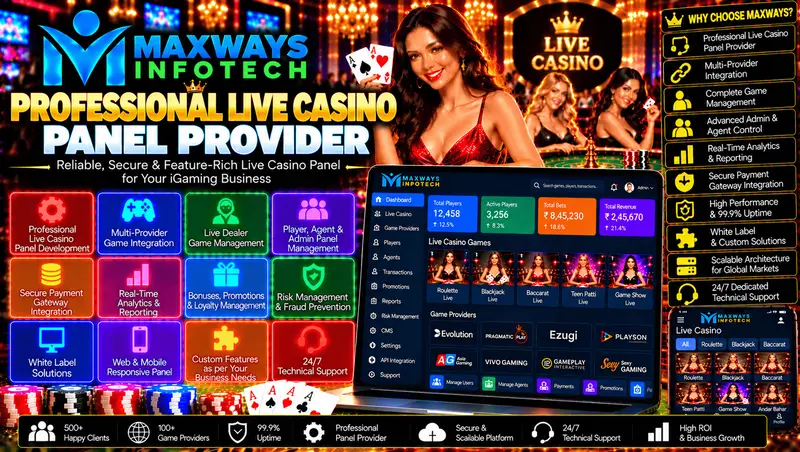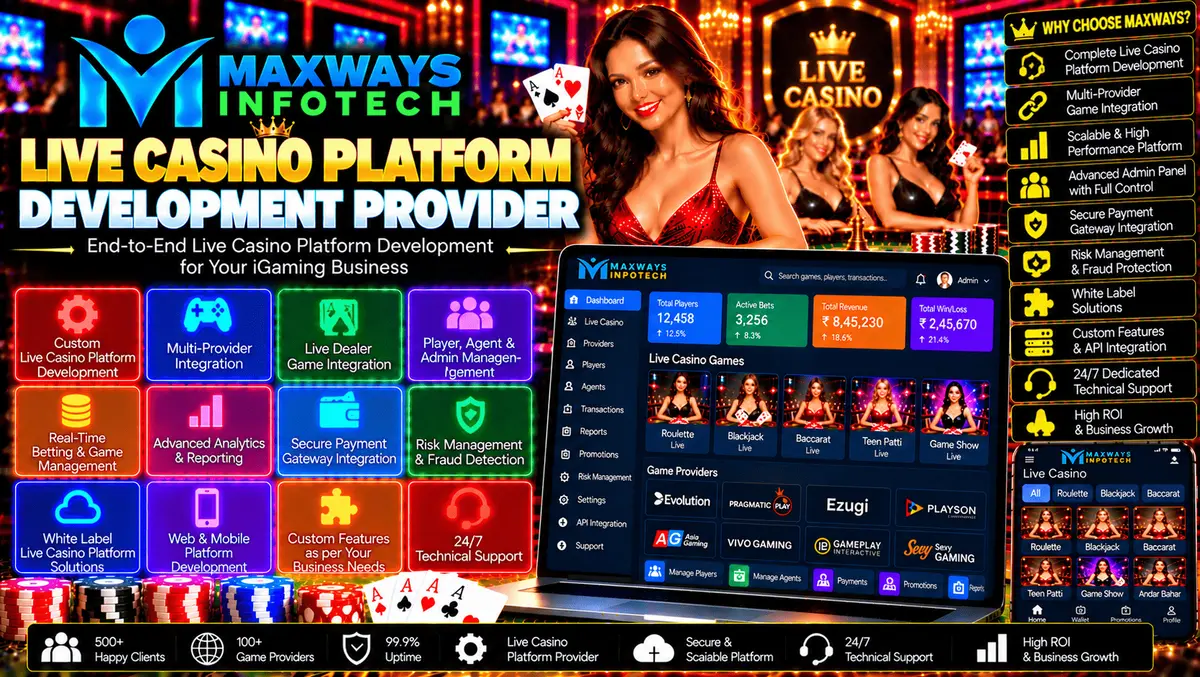
Live Casino Platform Development Provider, responsive interfaces, API integrations, secure administration, testing, and ongoing maintenance.
Live Casino Platform Development Provider: Custom Software, Features, and Integration
Introduction
Building a live casino platform involves more than creating a website or an attractive interface. A complete software project may require frontend development, backend architecture, API connectivity, administration tools, data management, security testing, and ongoing technical maintenance. A Live Casino Platform Development Provider helps businesses plan and implement these components according to their defined technical requirements.
The right development approach starts with a clear project scope. Teams need to understand which components must be built from scratch, which existing services can be integrated, and which features require external providers or additional approvals.
Businesses exploring software and game development can visit Maxways Infotech to learn about its technology services.
What Is a Live Casino Platform Development Provider?
A live casino platform development provider offers software development or integration services for the components that support a live gaming platform. Depending on the agreed scope, this can include website development, backend systems, administrative dashboards, API integrations, monitoring, testing, and maintenance.
A development provider and an API provider are not necessarily the same. An API provider generally supplies connectivity to a particular service, while a platform development team may build the wider application that uses that connection.
A project may include:
-
Responsive web interfaces and application screens.
-
Backend services and database architecture.
-
Administration dashboards and access controls.
-
Integration with authorised third-party services.
-
Reporting and operational monitoring.
-
Security testing and quality assurance.
-
Deployment planning and technical documentation.
-
Post-launch maintenance and support.
The precise deliverables should be confirmed in writing before development begins.Custom Live Casino API Development | Maxways Infotech
Why Platform Development Requires Careful Planning
1. A Clear Software Architecture
A platform may contain several connected components, including the frontend, backend, database, administration panel, and external integrations. A documented architecture defines how these components communicate and which system is responsible for each function.
This separation can make the software easier to test, maintain, and expand as requirements change.
2. A Consistent User Interface
The interface should be designed around the intended users and supported devices. Clear navigation, responsive layouts, accessible controls, and helpful error messages improve usability.
Designers should also account for loading states, unavailable services, and unexpected responses so the application communicates problems clearly.
3. Reliable API Connectivity
APIs enable different software systems to exchange information through defined interfaces. Proper integration requires authentication, request validation, response handling, error recovery, and compatibility testing.
For additional technical context, explore the live-casino-website-development-solutions.
4. Secure Administration
Administrative tools may provide access to important settings and operational information. Role-based permissions, secure authentication, audit logs, and server-side validation help ensure that users can access only the functions they are authorised to use.
5. Long-Term Maintainability
A platform needs more than an initial launch. Software dependencies change, integrations evolve, and operational requirements may grow. Documentation, version control, testing, and planned maintenance help teams manage these changes responsibly.
Essential Components of a Live Casino Platform
Frontend Development
The frontend provides the interface users see and interact with. Depending on the project, it may include navigation, content pages, responsive layouts, supported application screens, and integration with approved game interfaces.
Frontend development should prioritise performance, accessibility, browser compatibility, and a consistent visual design.
Backend Development
The backend implements application logic, permissions, data processing, and communication with connected services. Sensitive operations should be handled on the server, where requests and user permissions can be validated.
A well-structured backend should also define how errors are handled and how important operations are recorded.
Database Architecture
Databases store the information required by the application. The design should consider data relationships, access restrictions, consistency requirements, backups, and recovery procedures.
Data retention and access policies should be defined according to the information being processed and the applicable privacy requirements.
Administration Panel
An administration panel can help authorised staff review configurations, system status, reports, and support incidents.
For a related development topic, read the live-casino-gaming-platform-developers, which discusses the software components and integration considerations involved in casino-style applications.
API and Third-Party Integration
A platform may need to connect to external services through documented APIs. The development team should confirm the available endpoints, authentication methods, usage limits, data formats, and commercial permissions before implementation.
For example, the Diamond Casino API guide provides related reading on API connectivity and integration planning.
Not every provider offers the same functions, so technical capabilities should be verified instead of assumed.
Monitoring and Reporting
Monitoring helps teams identify application errors, unavailable services, high response times, and other operational problems. Reporting tools can summarise relevant information for authorised users.
Monitoring should be configured to provide useful alerts while avoiding unnecessary exposure of personal information or confidential credentials.
The Live Casino Platform Development Process
A structured process helps businesses control scope, review progress, and identify technical risks early.
Step 1: Requirements discovery
Define the project objectives, intended users, feature requirements, supported platforms, integration needs, security expectations, and applicable legal obligations.
Step 2: Architecture and planning
Document the system components, technology choices, data model, API dependencies, hosting requirements, and responsibilities of external providers.
Step 3: UI/UX design
Create wireframes and interface designs for the website, application screens, and administration panel. Review the designs before development starts.
Step 4: Software implementation
Build the approved frontend, backend, database components, and administration tools in manageable stages. Use version control and documented development practices.
Step 5: Integration and testing
Test API communication, input validation, permission checks, data consistency, error handling, and compatibility with supported services.
Step 6: Security and quality assurance
Review authentication, access controls, software dependencies, logging, backup procedures, and expected system behaviour under failure conditions.
Step 7: Deployment and handover
Deploy through a controlled process, configure monitoring, and provide the agreed documentation, source-code access, and operational handover.
Step 8: Maintenance and improvements
Plan for defect fixes, security updates, dependency changes, integration maintenance, and future enhancements.
How to Choose the Right Development Provider
Review Technical Experience
Ask potential providers how they approach frontend and backend development, database design, API integration, security testing, and production maintenance.
Request examples of relevant work where the provider is permitted to share them, and assess the explanation of the technical approach rather than relying only on marketing claims.
Confirm the Project Scope
A proposal should clearly identify included features, excluded work, integrations, milestones, deliverables, and acceptance criteria.
This helps avoid confusion about whether the provider is responsible for building the full platform, integrating a specific service, or maintaining existing software.
Evaluate Security Practices
Discuss authentication, role-based permissions, credential storage, vulnerability testing, logging, backups, and responsibility for security updates.
The provider should explain how sensitive access is controlled during development and after launch.
Check Documentation and Ownership
Clarify ownership or licensing rights for custom code, designs, and project assets. Confirm what documentation will be delivered and who will control repositories, hosting accounts, and deployment access.
Understand Support Arrangements
Ask about support hours, incident escalation, maintenance coverage, response targets, and additional charges for work outside the agreed scope.
A written service agreement makes these expectations easier to manage.
For more information about the company's broader development services, visit the Maxways Infotech homepage or browse the Maxways Infotech blog.
Common Development Challenges
Integration Compatibility
External APIs may use different authentication methods, data formats, or error codes. A documented integration layer helps standardise communication and makes changes easier to manage.
Performance and Scalability
Application performance depends on the architecture, database queries, infrastructure capacity, and external dependencies. Performance testing can identify bottlenecks before deployment.
Security Risks
Weak permissions, exposed credentials, outdated dependencies, and inadequate logging can create avoidable risks. Security should be reviewed throughout the development lifecycle.
Changing Requirements
New features can affect the schedule, budget, and technical architecture. A change-control process helps stakeholders assess the impact before approving additional work.
Unclear Vendor Responsibilities
When multiple service providers are involved, it can be difficult to identify who is responsible for a particular issue. Document component ownership, escalation paths, and integration responsibilities before launch.
How Much Does Live Casino Platform Development Cost?
The cost depends on the project's complexity, the number of features, the integration requirements, the testing scope, and the level of ongoing support.
Common cost factors include:
-
Requirements analysis and interface design.
-
Frontend and backend development.
-
Database and API integration.
-
Administration and reporting features.
-
Security testing and quality assurance.
-
Hosting and deployment.
-
Documentation and technical handover.
-
Maintenance and future enhancements.
Request an itemised proposal with milestones, assumptions, exclusions, and recurring charges. Comparing proposals by their actual deliverables is more useful than comparing headline prices alone.Live Casino Platform Development Services | Maxways Infotech
Frequently Asked Questions
What does a live casino platform development provider do?
A provider may build or integrate software components such as websites, backend services, administration panels, APIs, databases, reporting tools, and monitoring systems. The exact responsibilities depend on the contract.
What is the difference between a platform provider and an API provider?
An API provider generally supplies a connection to a particular service. A platform development provider may build the wider software environment, including its interface, backend, administration tools, and integrations.
Can a custom platform connect with existing services?
Yes, if compatible interfaces are available and the intended integration is authorised. Developers should verify documentation, authentication requirements, technical compatibility, and usage permissions.
How long does platform development take?
The timeline depends on the feature list, architecture, integrations, testing requirements, and availability of technical documentation. A reliable estimate follows a requirements review.
Does a platform require maintenance after launch?
Yes. Maintenance can include bug fixes, dependency updates, security reviews, monitoring, integration changes, and future enhancements.
What should businesses prepare before contacting a provider?
Prepare the project requirements, user roles, feature list, preferred platforms, integration needs, security expectations, budget range, timeline, and maintenance requirements.
Conclusion
Choosing a suitable Live Casino Platform Development Provider requires evaluating the complete technical scope, not just the visible interface. A successful project combines documented architecture, secure administration, reliable integrations, thorough testing, and a practical maintenance plan.
By defining requirements early and selecting a provider with a transparent development process, businesses can make informed decisions about their software architecture, budget, and long-term technical responsibilities.
Compliance note: Live casino software and related services may be subject to strict legal and licensing requirements. Development and operation should proceed only where legally permitted, with appropriate licences, age safeguards, privacy protections, responsible-use measures, and compliance with applicable regulations.