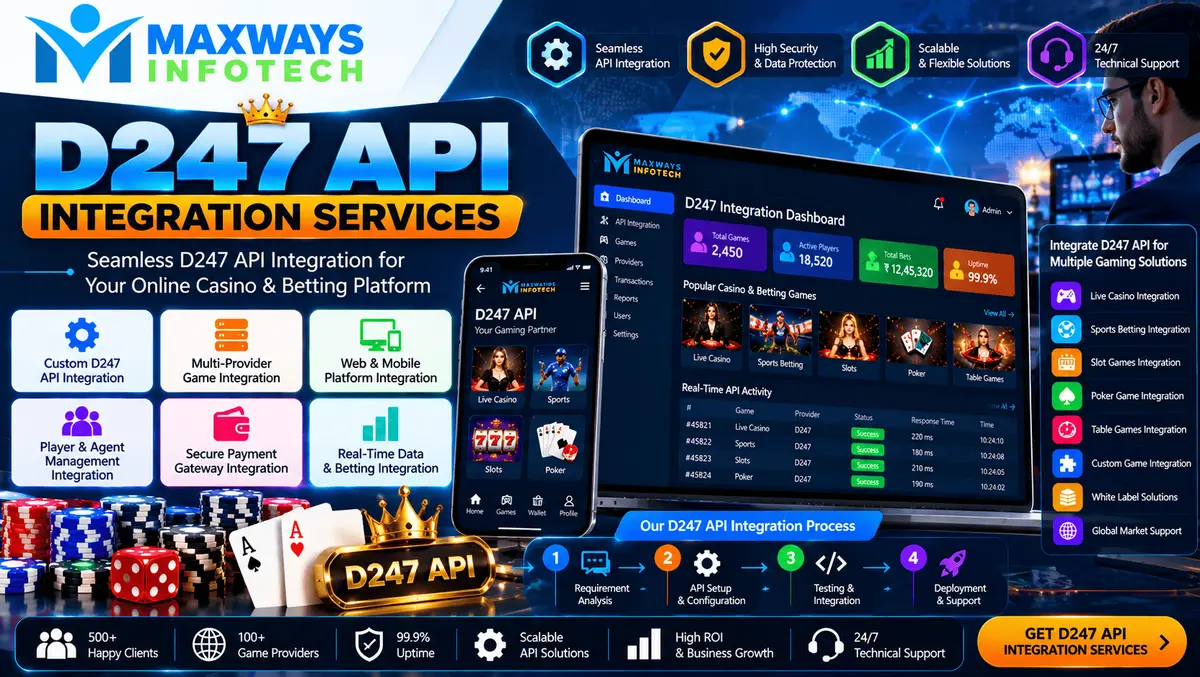
Explore D247 API integration services for secure connectivity, data mapping, authentication, compatibility testing, monitoring, and technical support.
D247 API Integration Services: Secure Connectivity, Data Exchange, and Technical Support
Modern digital platforms often rely on multiple applications to exchange information and perform connected tasks. Application programming interfaces (APIs) make this possible by defining how software systems communicate, share data, and access approved functionality. D247 API Integration Services can help businesses evaluate compatible systems, configure authorized API connections, and maintain reliable communication between applications.
A successful integration requires more than connecting two endpoints. It involves secure authentication, accurate data mapping, error handling, compatibility testing, and ongoing maintenance.
At MaxWays Infotech, businesses can explore information about software development and digital platform solutions. This guide explains the key features, benefits, and considerations involved in selecting API integration services for a D247-related software project.
What Are D247 API Integration Services?
D247 API integration services involve connecting compatible software applications through documented interfaces and authorized access methods.
Depending on the software and project requirements, integration work may include connecting a panel to a website, linking backend applications, synchronizing approved data, or configuring communication with an external service.
Common integration activities include:
-
Reviewing API documentation and compatibility.
-
Configuring authentication and access permissions.
-
Mapping data fields between applications.
-
Validating requests and responses.
-
Implementing error handling and monitoring.
-
Testing integrations before deployment.
-
Maintaining connections as software changes.
The exact features available depend on the specific D247 product, supported endpoints, technical documentation, and provider permissions. Businesses should verify these details before starting development.D247 API Integration Provider | Maxways Infotech
Key Features of API Integration Services
1. API Compatibility Assessment
Before implementation, developers should confirm that the required applications can communicate through supported interfaces.
A compatibility assessment may examine API versions, endpoint availability, authentication methods, request formats, response structures, and usage limits.
This step helps identify missing functionality or third-party restrictions before they create unexpected costs.
2. Secure Authentication
APIs often require credentials, access tokens, or other authentication mechanisms to verify requests.
A secure integration should protect credentials, limit permissions to necessary operations, and use appropriate methods for storing and renewing secrets. Private API keys should never be exposed in public-facing website code.
3. Data Mapping and Synchronization
Connected systems may use different formats to represent the same information. Data mapping defines how fields from one application correspond to fields in another.
Developers should validate data types, required fields, timestamps, and identifiers. Depending on the API's capabilities, synchronization may happen through scheduled requests, event notifications, or other supported methods.
4. Error Handling and Recovery
API requests can fail because of network interruptions, invalid parameters, expired credentials, rate limits, or external service outages.
Reliable integrations use appropriate timeouts, structured error logging, and controlled retry mechanisms. Operations that could create duplicate records should use suitable duplicate-prevention controls where supported.
5. Monitoring and Performance
Monitoring helps technical teams identify failed requests, unusual response times, and recurring errors.
Useful monitoring may include request status, response latency, error rates, and service availability. Logging should avoid exposing passwords, access tokens, or unnecessary personal information.
6. Technical Documentation
Documentation helps developers understand and maintain the integration after deployment.
It should explain authentication, endpoints, request and response formats, error codes, usage limits, dependencies, and troubleshooting procedures.
For more information about connected software platforms, explore the iGaming API Integration | Maxways Infotech
Benefits of Professional D247 API Integration Services
Improved Application Connectivity
Connecting compatible systems through documented APIs can reduce repetitive manual data transfers and support more consistent workflows.
Better Data Consistency
Validation rules and clearly defined field mappings help reduce discrepancies between applications. Data quality still depends on the reliability of the source systems.
More Efficient Troubleshooting
Monitoring and structured logs make it easier to identify failed requests and investigate unexpected behaviour.
Easier Software Maintenance
A well-organized integration layer can help developers update connections without making unnecessary changes to the entire application.
Greater Visibility Into System Performance
Where monitoring and reporting are supported, teams can review integration health and identify problems before they significantly disrupt operations.
Businesses researching related API models can also explore the White Label iGaming API resource.
How the D247 API Integration Process Works
A structured integration process helps ensure that the solution meets the agreed requirements.
Step 1: Define the Requirements
Identify the applications that need to communicate, the information to be exchanged, and the expected outcome.
Document essential functionality, security requirements, data ownership, and any operational constraints.
Step 2: Review API Documentation
Obtain the official documentation and confirm that the required endpoints are available and authorized for the intended use.
Review authentication, data formats, rate limits, version compatibility, and error responses.
Step 3: Design the Integration
Define the data flow between systems and determine how authentication, validation, error handling, and monitoring will work.
The design should specify which application controls each important data field and how conflicting updates are handled.
Step 4: Configure and Develop
Implement the approved API connections, data mapping, request validation, and response processing.
Use test credentials and a sandbox environment where available. Keep sensitive credentials out of source code and public repositories.
Step 5: Test the Integration
Test successful requests, invalid inputs, permission failures, timeouts, rate limits, and recovery behaviour.
Confirm that the integration handles repeated requests safely and does not expose sensitive information in error messages.
Step 6: Deploy and Maintain
Deploy the approved integration to the intended environment. Monitor its behaviour and establish a process for updates, troubleshooting, and compatibility changes.
Security Best Practices for API Integration
Security should be part of the integration design rather than an afterthought.
-
Protect credentials: Store secrets securely and rotate them when required.
-
Restrict permissions: Grant only the access needed for the intended functions.
-
Validate inputs: Check incoming data against expected formats and rules.
-
Use encrypted communication: Protect data in transit through supported secure connections.
-
Monitor activity: Review relevant errors and access events.
-
Manage dependencies: Keep supported libraries and integration components updated.
-
Protect personal information: Exchange only the data necessary for the approved purpose.
Businesses should also establish clear responsibilities for security incidents, data retention, and access management between the development provider and connected service operators.
How to Choose the Right API Integration Provider
Selecting a provider involves reviewing technical capabilities, project transparency, and long-term support.
Check Technical Experience
Ask about experience with APIs, backend development, authentication, databases, data transformation, and automated testing.
A capable provider should be able to explain the proposed approach and identify technical limitations.
Verify Compatibility and Authorization
Confirm that the required API documentation and access permissions are available. Third-party connections must comply with the service provider's terms and applicable laws.
Review Testing and Documentation
Ask what tests will be performed and what documentation will be delivered. Define acceptance criteria so that the completed integration can be evaluated against measurable requirements.
Understand the Cost
Integration costs may include initial development, third-party subscriptions, hosting, monitoring, maintenance, and future modifications.
Request an itemized quotation that separates included work from optional services.
Confirm Maintenance Responsibilities
Clarify who will monitor the integration, handle API version changes, renew credentials, and resolve technical issues after launch.
For broader software development considerations,
Common API Integration Challenges
Even carefully planned integrations can encounter problems.
Incompatible data formats: Define data contracts and validate fields before exchanging information.
Authentication failures: Verify credential configuration and implement secure renewal procedures.
Rate limits: Follow documented usage limits and schedule requests appropriately.
Duplicate requests: Use idempotency mechanisms where supported and appropriate.
API version changes: Monitor provider announcements and test updates before migrating production systems.
Network interruptions: Configure appropriate timeouts, controlled retries, and recovery procedures.
Insufficient documentation: Record configuration settings, dependencies, error handling, and troubleshooting steps.
A documented maintenance process helps technical teams respond consistently when these issues occur.
API Integration for Panel and Website Projects
Panel-based applications may need to exchange information with websites, backend systems, reporting tools, or other authorized services. The required architecture depends on the available APIs and the intended workflow.
Businesses researching specialized data connections can also read the Diamond Exchange API overview. Always verify the documentation, supported data, permissions, and commercial terms of any third-party service before integrating it.
Why Explore MaxWays Infotech?
Businesses researching API connectivity and software development can visit MaxWays Infotech to explore available company information and related technology topics.
Before selecting an integration provider, prepare a clear requirements document, verify the supported APIs, and review the proposed security, testing, deployment, and maintenance arrangements.
Frequently Asked Questions
What are D247 API Integration Services?
They involve connecting compatible applications through documented APIs, configuring authorized access, mapping data, testing communication, and maintaining supported integrations.
Can a D247 panel connect to other applications?
That depends on the specific panel, its supported endpoints, technical documentation, and provider permissions. Compatibility should be verified before development begins.
Is API integration secure?
It can be implemented securely using appropriate authentication, restricted permissions, protected credentials, input validation, encrypted communication, and monitoring.
How long does API integration take?
The timeline depends on the number of systems, API complexity, documentation quality, existing architecture, testing requirements, and third-party dependencies.
Does API integration require ongoing maintenance?
Often, yes. Credentials, API versions, dependencies, and external services may change. Maintenance helps preserve compatibility and reliability.
What should I ask an API integration provider?
Ask about compatibility, authorization, technical experience, security practices, testing, documentation, total cost, and post-deployment support.
Conclusion
Choosing suitable D247 API Integration Services requires evaluating API compatibility, secure authentication, data mapping, error handling, testing, monitoring, and ongoing maintenance. A clear project scope and documented responsibilities help businesses connect compatible applications more reliably.
Visit MaxWays Infotech to explore related software development information and plan your integration requirements.
Compliance note: Any betting, casino, or gaming-related software must be developed and operated only where legally permitted and with all required licences and authorizations. Applicable age restrictions, responsible-use safeguards, privacy requirements, and data-protection obligations must also be followed.D247 Panel Integration Services | Maxways Infotech