Explore diamond API providers, platform integration, technical features, security, scalability, and key considerations for choosing a suitable solution.
Diamond API Provider: Features, Integration, and Platform Development
Useful Links:
What Is a Diamond API Provider?
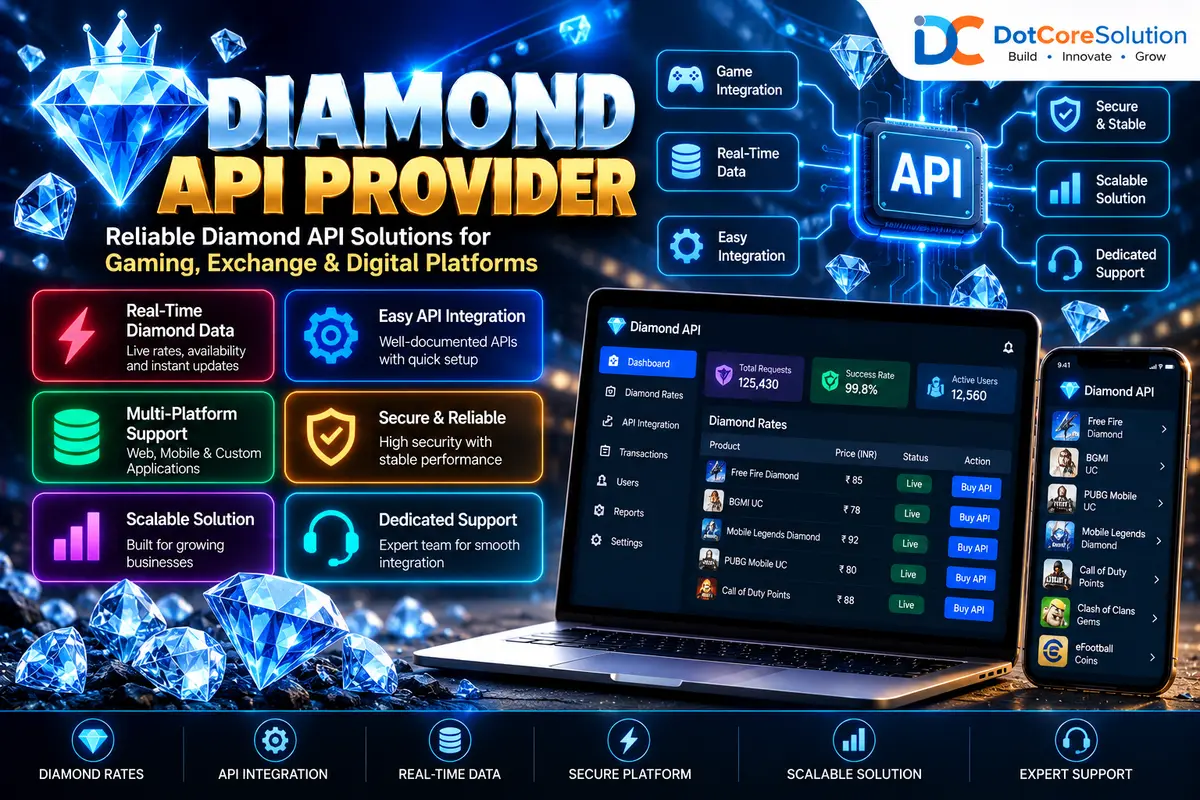
A diamond API provider offers application programming interfaces (APIs) that help digital platforms connect with supported diamond-related gaming systems, game content, or exchange-style platform functionality, depending on the provider's services.
Businesses exploring diamond gaming or exchange-style platforms should first clarify the type of API they need. Some APIs focus on diamond pricing and inventory data, while others may relate to gaming content, exchange interfaces, or platform integration.
Selecting the right provider involves evaluating technical compatibility, API documentation, security, data reliability, pricing, and applicable legal requirements.
Key Features of a Diamond API Provider
When evaluating a diamond API provider, consider the following capabilities:
-
API integration: Connect supported third-party services with an existing website or application.
-
Platform compatibility: Support the intended frontend, backend, and database architecture.
-
Data exchange: Transfer supported information between connected systems.
-
User management: Integrate account-related workflows where available.
-
Administrative dashboard: Manage supported platform settings and operational functions.
-
Reporting tools: Review available activity records and operational information.
-
Security controls: Implement secure authentication, access management, and appropriate data protection.
-
Scalable architecture: Accommodate changing technical requirements as the business grows.
-
Technical support: Obtain assistance with integration, troubleshooting, and maintenance.
The exact capabilities depend on the API provider and the intended application. Businesses should review the technical documentation and confirm all included features before making a decision.
Benefits of Choosing a Suitable Diamond API Provider
Simplified Integration
A documented API can help developers connect compatible services without building every component independently.
Flexible Platform Development
API-based architecture can support websites, mobile applications, dashboards, and other digital interfaces.
Improved Data Management
A structured integration can help applications exchange information consistently and reduce repetitive manual processing.
Easier Maintenance
Modular software components can simplify testing, troubleshooting, and future updates.
Scalable Technology
A well-designed integration can accommodate changing business requirements and additional compatible services.
These benefits depend on the quality of the provider's API, the software architecture, and the implementation process.
How to Choose the Right Diamond API Provider
Before selecting a provider, evaluate these important factors.
1. Define your API requirements
Determine whether you need diamond pricing data, inventory integration, gaming functionality, or exchange-platform connectivity.
2. Review technical documentation
Check supported endpoints, authentication methods, response formats, testing environments, and integration instructions.
3. Evaluate security
Review credential management, access controls, secure communications, and relevant data-protection practices.
4. Check reliability
Understand service availability, monitoring capabilities, maintenance procedures, and incident-response processes.
5. Compare pricing
Review setup costs, subscription fees, usage limits, and any additional integration charges.
6. Assess technical support
Confirm the availability of implementation assistance, troubleshooting, and ongoing maintenance.
7. Verify legal requirements
Ensure that the provider, data usage, and intended platform operations comply with applicable laws and licensing requirements in your target jurisdiction.
Why Software Development Matters for API Integration
Successful API integration requires more than connecting endpoints. Developers must consider authentication, data validation, error handling, database management, performance monitoring, and ongoing maintenance.
A modular architecture can help keep integrations maintainable and allow individual components to be updated without unnecessarily disrupting the entire platform.
Businesses exploring software architecture and development services can learn more about fintech software development and broader technology solutions.
Explore Technology Resources with DotCoreSolution
Businesses researching software development and API integration can visit DotCoreSolution to learn more about the company and its services.
For additional technology insights and software-related articles, explore the DotCoreSolution Blog.
Before implementing a diamond API, define your business requirements, review the provider's documentation, and verify the relevant commercial, security, and regulatory conditions.
Conclusion
Choosing the right diamond API provider starts with understanding the specific functionality your business needs. Compare providers based on technical compatibility, security, reliability, documentation, pricing, and ongoing support.
A carefully planned integration can help establish a maintainable digital platform that aligns with your technical requirements and business objectives.