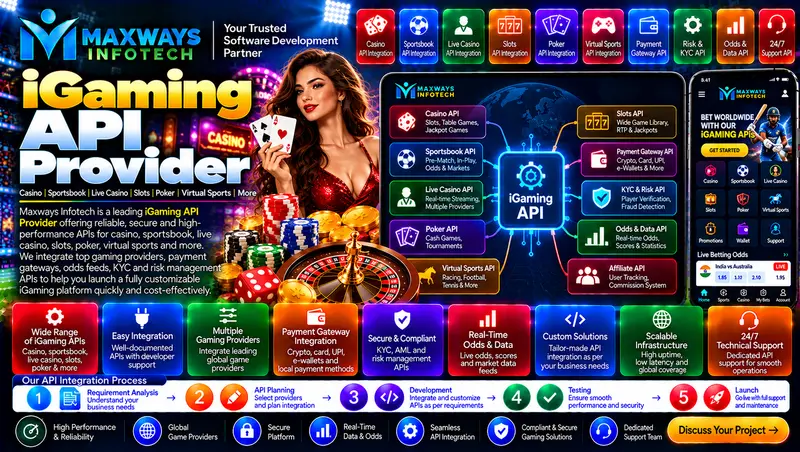
Learn about iGaming Platform Development, from software architecture and integrations to administration, security, testing, scalability, and compliance planning.
iGaming Platform Development: Architecture, Customisation, and Long-Term Growth
iGaming Platform Development is the process of creating the software infrastructure behind online gaming products, including casino entertainment, gaming content management, user accounts, reporting systems, and supporting operational tools. A successful platform must bring these components together in a way that is maintainable, secure, and adaptable to changing business requirements.
The main challenge is not simply launching a website with an attractive interface. It is deciding how the different systems should communicate, which components need to be customised, how operational teams will manage the product, and how the software can evolve without requiring a complete rebuild.
Businesses researching software development options can visit Maxways Infotech to review the company's published information. The right platform design depends on the intended product, integration requirements, available resources, and applicable legal permissions.
What Is iGaming Platform Development?
iGaming platform development covers the planning, design, engineering, testing, deployment, and maintenance of software used for online gaming products.
Depending on the project, a platform may include a player-facing website, a content catalogue, account management, third-party integrations, administrative dashboards, reporting, and technical monitoring.
Unlike a simple informational website, a platform often needs several independent components to work together. Changes to one component can affect other areas, which makes clear architecture and documented interfaces particularly important.
Typical platform elements include:
-
User interface and website presentation.
-
Account and access management.
-
Gaming content integration.
-
Administrative and reporting tools.
-
Data storage and audit records.
-
Security and privacy controls.
-
Monitoring, maintenance, and deployment systems.
Not every project needs every component. A clear scope helps avoid paying to develop features that are unnecessary for the intended product.
1. Choose the Right Platform Architecture
Architecture defines how the software is divided into components and how those components exchange information.
Three common approaches are worth considering.
Monolithic architecture
A monolithic application keeps much of its functionality within a single deployable system. This can make an initial product easier to develop and operate when the scope is relatively small.
However, as the platform grows, tightly connected components can make individual changes harder to test and release independently.
Modular architecture
A modular application separates major responsibilities into distinct components while maintaining clear interfaces between them. For example, content management, user accounts, reporting, and third-party integrations can have defined boundaries.
This approach can improve maintainability without requiring every component to run as a separate service.
Microservices architecture
Microservices divide functionality into independently deployable services. This can be useful when different components have distinct scaling, availability, or release requirements.
The trade-off is greater operational complexity, including service communication, monitoring, deployment coordination, and distributed failure handling.
The best architecture is not necessarily the most complex one. Choose based on the project's actual scale, team capabilities, and expected maintenance requirements.
2. Define the Platform's Core Business Domains
Before selecting technologies, establish which component owns each important function and its associated data.
A typical domain map may include:
Clear ownership prevents different components from independently maintaining conflicting versions of the same information.
For example, the content service should define the authoritative status of a catalogue entry, while the reporting system should consume that information rather than inventing its own availability rules.
A domain map also helps teams estimate the project because each responsibility can be assessed separately.
3. Plan Third-Party Integration Boundaries
External providers can supply services that would otherwise require substantial development. However, integrating several vendors without a consistent strategy can create a difficult-to-maintain system.
An integration layer can standardise how the platform communicates with external services. It can translate provider-specific responses into internal formats, validate incoming information, handle timeouts, and record useful diagnostic information.
Before selecting an integration, review:
-
Supported functionality and technical documentation.
-
Authentication and permission requirements.
-
Rate limits and usage restrictions.
-
Error responses and recovery procedures.
-
Data ownership and retention conditions.
-
Versioning and change-notification policies.
-
Commercial terms and support arrangements.
Avoid connecting every platform component directly to every external vendor. A consistent integration boundary can reduce the impact of future provider changes.
The same principle applies when replacing a vendor. Well-defined interfaces make it easier to assess whether a new provider can meet the existing contract without changing unrelated parts of the application.
4. Design Administration for Real Operational Work
An administrative dashboard should be designed around the tasks staff actually perform, not simply the information developers find easy to display.
Depending on the platform, authorised staff may need to manage content, review system errors, update approved configuration, investigate support requests, or generate reports.
A useful administration design includes:
Role-based permissions: Each staff member receives access only to the functions needed for their responsibilities.
Search and filtering: Large catalogues and operational records can be narrowed down efficiently.
Change history: Important modifications can be traced to an authorised user and timestamp.
Approval workflows: Sensitive changes can require review before publication.
Clear status indicators: Staff can distinguish successful operations, pending tasks, and unresolved errors.
Safe error handling: Failed actions should explain what happened without exposing credentials or internal secrets.
Administrative actions should be tested as carefully as the public interface because configuration mistakes can affect multiple parts of a platform.
5. Build a Reporting System That Supports Decisions
Reporting helps technical and business teams understand how the platform is operating.
Rather than putting every available metric on one dashboard, organise reports around specific questions.
For example:
-
Is the website responding within its expected performance range?
-
Which third-party integrations are generating errors?
-
Are content updates being published successfully?
-
How many support issues remain unresolved?
-
Which software releases introduced new defects?
-
Are backups and scheduled jobs completing successfully?
A good reporting system should define each metric clearly. Teams should know its data source, calculation method, reporting period, and limitations.
For technical monitoring, combine application logs, performance metrics, and alerts. Logs explain individual events, metrics show trends, and alerts identify conditions that need attention.
For business reporting, use validated data and clearly document any exclusions or incomplete records.
6. Treat Security as a Platform-Wide Requirement
Security should be designed into the platform's architecture and development process.
Start by identifying sensitive information, privileged actions, external dependencies, and possible entry points. Then apply controls appropriate to each risk.
Important practices include:
-
Secure authentication and session management.
-
Multi-factor authentication for privileged access where appropriate.
-
Least-privilege permissions.
-
Encrypted connections.
-
Secure storage of credentials and API keys.
-
Input validation and output handling.
-
Dependency and vulnerability management.
-
Audit records for sensitive actions.
-
Tested backup and recovery procedures.
Security reviews should cover the application, infrastructure, administrative tools, and third-party integrations. A secure homepage does not compensate for an exposed administrative endpoint or an improperly configured integration.
Projects that include financial information may need additional safeguards for transaction records, reconciliation, and access to sensitive data. Related software development information is available through Maxways Infotech's fintech page.
7. Improve Maintainability Through Automated Testing
Platform changes can have effects beyond the component being edited. A change to authentication, for example, may affect the account area, administrative access, and third-party integrations.
Automated testing helps teams identify these problems before a release reaches production.
A useful testing strategy includes several layers:
Not every test needs to run at the same stage. Fast checks can run during development, while broader integration and load tests can be part of the release process.
The team should also maintain a staging environment that resembles production closely enough to identify configuration and integration issues before deployment.
8. Create a Release and Deployment Strategy
A platform's maintenance costs depend partly on how safely changes can be released.
A documented deployment process should specify how code is reviewed, how automated tests run, how configuration is managed, and how the team responds if a release fails.
Useful practices include version control, automated build pipelines, environment-specific configuration, database migration planning, and release monitoring.
For higher-risk changes, a staged rollout may reduce the number of users affected if a defect appears. A rollback plan should also explain which changes can be reversed and which require a separate recovery procedure.
Database changes need special attention. Rolling back application code may not restore the previous data structure or undo changes already written to the database.
A dependable release process makes maintenance more predictable and helps the team deliver improvements without unnecessary disruption.
9. Plan Scalability Around Measured Demand
Scalability means that the platform can accommodate changing workloads while continuing to meet its performance and reliability requirements.
It does not always mean adding more servers. The first step is identifying which resource becomes constrained under load.
Potential bottlenecks include slow database queries, inefficient application code, external API limits, large media assets, and excessive requests for the same information.
A practical optimisation process is:
-
Establish baseline performance measurements.
-
Reproduce the workload that causes a slowdown.
-
Identify the limiting component.
-
Apply the smallest suitable improvement.
-
Repeat the tests and compare results.
-
Monitor the system after deployment.
Caching, database indexing, asynchronous processing, and additional application instances can all help in suitable circumstances. Their value should be confirmed through measurement rather than assumed.
For many projects, a simple and well-monitored architecture is more useful than a complex system that the development team cannot operate confidently.
10. Compare Development Costs and Ownership
The total cost of iGaming platform development includes more than the initial programming work.
A realistic project estimate should account for discovery, design, implementation, integrations, testing, infrastructure, security reviews, documentation, and ongoing support.
When comparing proposals, ask which deliverables are included, which costs recur, and what happens when the agreement ends.
Also clarify who owns custom code, whether the project can be maintained by another team, and whether documentation and deployment instructions are included.
The lowest initial quote is not necessarily the lowest long-term cost.
11. Make Compliance Part of the Development Plan
The regulatory requirements for an iGaming product depend on the services offered and the jurisdictions involved.
Before development proceeds, identify the activities the platform will support and obtain qualified advice on applicable licences, age and identity requirements, data protection, payment rules, game-related obligations, and responsible-gaming controls where relevant.
Where regulated real-money gaming is permitted, compliance requirements should be translated into testable technical controls and documented operational procedures. They should not be treated as a checklist added only before launch.
For businesses targeting India, seek current legal advice concerning online money gaming and related activities. A software platform or third-party integration does not itself establish legal permission to offer a particular service.
Frequently Asked Questions
What is included in iGaming Platform Development?
It can include architecture planning, frontend and backend development, content management, account systems, third-party integrations, administration, reporting, security, testing, deployment, and maintenance. The precise scope depends on the product.
Should an iGaming platform use microservices?
Not necessarily. Microservices can support independent deployment and scaling, but they introduce additional operational complexity. A modular application may be a better starting point for a smaller project.
Why is an integration layer useful?
It isolates external provider-specific behaviour from the rest of the platform. This can simplify error handling, standardise data formats, and reduce the changes required when a provider is updated or replaced.
How can platform maintenance costs be reduced?
Use clear component boundaries, automated tests, documented interfaces, dependency management, monitoring, and a controlled release process. These practices help reduce avoidable defects and make future changes easier to estimate.
What should be checked before launch?
Review functionality, security, performance, accessibility, recovery procedures, third-party integrations, documentation, and all applicable legal and regulatory requirements.
Conclusion
iGaming Platform Development is a long-term engineering project that combines architecture, integrations, administration, reporting, security, and ongoing maintenance. The strongest approach is to define the platform's responsibilities clearly and choose technologies that the team can support over time.
Start with the essential requirements, establish clean boundaries between components, automate important tests, and measure performance before adding complexity. Clarify ownership and recurring costs early, and ensure that any regulated functionality is reviewed for legal compliance before launch.
For more software development guides and technology insights, visit the Maxways Infotech blog.