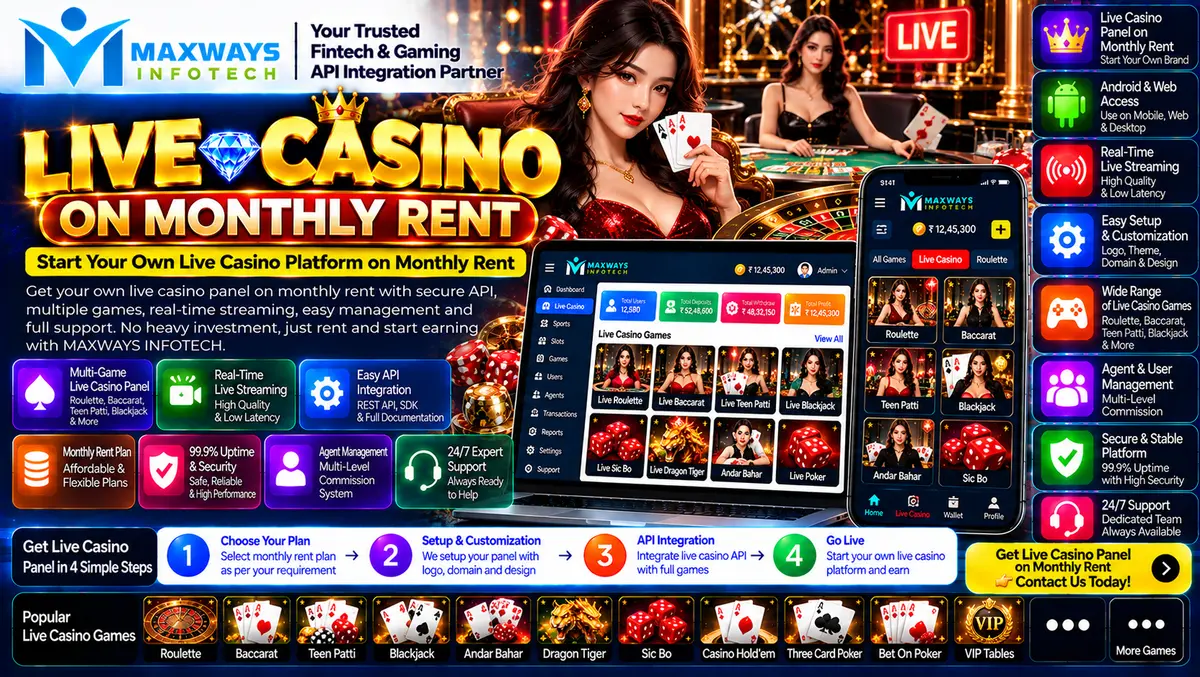
Live Casino on Monthly Rent: Costs and Platform Guide
Live Casino on Monthly Rent: Subscription Costs, Platform Features and Vendor Evaluation
Searching for Live Casino on Monthly Rent usually means looking for a software platform or service offered through recurring payments instead of a large upfront purchase. Before evaluating an offer, businesses should understand what the subscription includes, how the live-streaming infrastructure is managed, what support is available, and which legal requirements apply to the intended use.
A monthly subscription is not simply a price arrangement. It can also determine who manages hosting, software updates, technical incidents, data protection, and ongoing maintenance. These responsibilities should be clear before any agreement is signed.
This guide explores subscription budgeting, streaming performance, vendor contracts, security, and the factors that influence the long-term cost of a live-streaming platform.
What Does Live Casino on Monthly Rent Mean?
The phrase generally describes access to a live-casino-style software platform or related service through recurring payments. The exact package depends on the provider and may involve different combinations of interface software, hosting, streaming technology, administration tools, and technical support.
The term “Live Casino” does not identify a specific vendor or guarantee that a particular feature is included. Ask the supplier to confirm its legal identity, product scope, service permissions, and written technical specifications.
For any proposed project, establish whether the service is intended for lawful streaming or entertainment use and review the applicable requirements before entering into a commercial arrangement.
Features to Review Before Choosing a Subscription
1. Live-Streaming Quality
Video quality can strongly affect the viewing experience. Important considerations include resolution, playback stability, start-up time, buffering frequency, and compatibility with supported devices.
Ask the provider which streaming formats and playback environments are supported. Request performance information for the expected audience size and geographic coverage instead of relying on general claims about video quality.
For a streaming service, content delivery networks and appropriate infrastructure can help distribute video efficiently to viewers in different locations. Google Cloud’s media-delivery guidance discusses how content delivery networks can reduce latency and improve bandwidth efficiency. <Cite refs={["turn193818search12"]}/>
2. Platform Compatibility
A platform should be tested on the devices and browsers that its intended audience uses. Responsive layouts, clear navigation, readable text, and predictable playback controls contribute to a consistent experience.
Check whether the vendor supports the required desktop and mobile environments. Confirm how software updates and browser changes are handled, especially if the subscription includes ongoing maintenance.
3. Administration and Monitoring
Administrative tools help authorised staff understand system status and investigate technical problems.
Depending on the product, useful capabilities may include service-health dashboards, error reports, access management, configuration history, and alerts for streaming interruptions.
Ask which monitoring tools are included and whether the provider or customer is responsible for responding to alerts. A monitoring dashboard is useful only when responsibility for investigating and resolving incidents is clearly assigned.
4. Technical Support
Support quality matters when a streaming service experiences interruptions or configuration problems.
Before subscribing, establish the support hours, communication channels, escalation process, maintenance schedule, and any documented service-level commitments.
Also clarify whether assistance with integration, configuration changes, and software upgrades is included in the recurring fee or charged separately.
Understanding the Monthly Subscription Cost
The advertised monthly price may not represent the complete cost of operating a platform.
Depending on the agreement, additional expenses may include:
-
Initial setup and configuration
-
Hosting and video delivery
-
Additional development or branding changes
-
Technical support outside the included package
-
Third-party software or infrastructure
-
Applicable taxes and contractual fees
Request a written cost breakdown before comparing vendors. This makes it easier to identify which expenses recur every month and which are one-time charges.
Example of a First-Year Cost Calculation
These figures are examples for budgeting purposes only. They are not verified prices for a Live Casino product or a quote from any provider.
When comparing subscription offers, calculate the total cost over the same period and include optional services, infrastructure expenses, and minimum contract commitments.
Why Streaming Infrastructure Matters
Live video services depend on several components working together, including the video source, encoding process, delivery infrastructure, network connections, and playback software.
A problem in any one of these components can affect the viewer experience. For example, a healthy application server does not necessarily mean that the video stream is available or playing smoothly.
During a vendor assessment, ask how the service measures:
-
Playback start time and buffering
-
Streaming availability and interruption frequency
-
Network and delivery performance
-
Error rates across supported devices
-
Capacity during periods of increased traffic
-
Incident detection and recovery
The provider should explain its monitoring methods and any documented performance commitments. Avoid assuming that a platform guarantees uninterrupted streaming unless the relevant agreement explicitly defines the commitment and its limitations.
Security and Data Protection
Security should be included in the subscription evaluation rather than treated as a separate issue after purchase.
Review how the provider protects administrator accounts, stores credentials, manages software updates, and controls access to operational data. Confirm whether backups are maintained and how recovery is tested.
If the platform processes personal information, ask what information is collected, where it is stored, who can access it, and how long it is retained. The agreement should identify the responsibilities of the provider and customer for data handling and incident response.
Sensitive credentials should not be exposed in public-facing application code. Administrative permissions should be limited to authorised users, and important changes should be recorded for troubleshooting and accountability.
Contract Terms to Check Before Paying
Monthly billing can appear flexible, but the contract may include conditions that affect the actual commitment.
Minimum subscription period: Check whether the agreement requires a minimum number of months.
Automatic renewal: Confirm when the subscription renews and how much notice is required to cancel.
Support coverage: Identify which incidents and technical services are included.
Maintenance responsibilities: Establish who manages updates, hosting, and infrastructure changes.
Data ownership: Determine whether records and configuration can be exported when the agreement ends.
Service interruptions: Review how outages are reported and which remedies, if any, are documented.
Additional charges: Clarify the cost of extra features, integration work, or support outside the standard package.
Termination: Understand what happens to accounts, data, and access after the agreement expires.
Keep the written agreement and any approved service specifications for future reference.
How to Compare Monthly Subscription Providers
A structured evaluation is more reliable than choosing a service based on its advertised price.
Step 1: Define the Intended Use
Document the project's purpose, intended audience, supported devices, streaming requirements, and administrative needs. Establish legal suitability before proceeding with any regulated activity.
Step 2: Request a Product Demonstration
Review the actual interface, supported playback environments, monitoring tools, and documented capabilities. Ask the provider to explain any limitations.
Step 3: Compare the Complete Cost
Include setup charges, monthly fees, infrastructure, optional services, and applicable taxes. Compare the total cost over the same period for each offer.
Step 4: Review Security and Support
Confirm access controls, data-handling practices, update procedures, support availability, and incident escalation responsibilities.
Step 5: Examine the Contract
Check renewal, cancellation, data export, service commitments, and the division of responsibilities between the vendor and customer.
Step 6: Validate the Legal Requirements
Obtain qualified legal advice about the proposed product and its intended use before entering into a contract or launching a service.
Legal Considerations for India
Businesses evaluating live-casino-style services for India should carefully assess the intended activity under the applicable legal framework.
India’s Promotion and Regulation of Online Gaming Act, 2025, and the associated Rules notified in April 2026 establish a framework addressing online money games and related promotion and facilitation. The Act prohibits offering, operating, facilitating, advertising, promoting, and participating in online money games through computer resources, mobile devices, or the internet. Review the official government materials and obtain qualified legal advice before proceeding.
A monthly software subscription, an overseas supplier, or a white-label arrangement does not itself establish that an activity is lawful. The intended product, business model, market, and responsibilities of each party must be assessed before implementation.
Technology Resources from Maxways Infotech
Businesses researching software architecture and digital platform requirements can visit the Maxways Infotech website for company information.
For projects involving legitimate payment-related or financial software requirements, the Fintech page may provide useful background on related technology topics.
Additional educational content and software articles are available through the Maxways Infotech blog.
Confirm the availability of any specific product, subscription, or technical service directly with the relevant organisation. Verify its documented features, costs, and legal permissions before making a commitment.
Frequently Asked Questions
What does Live Casino on Monthly Rent mean?
It generally refers to access to a live-casino-style platform or related software service through recurring payments. The exact features and service arrangements depend on the provider.
Does the monthly fee include hosting and streaming?
Not always. Hosting, video delivery, setup, support, and additional services may be included or charged separately. Check the written package details.
What should I check about streaming quality?
Review supported devices, playback stability, buffering, monitoring, expected audience capacity, and documented service commitments.
Is a monthly subscription cheaper than an upfront purchase?
It may reduce the initial payment, but the total cost depends on the monthly fee, minimum term, optional services, and maintenance charges.
Is a live-casino platform automatically legal to operate in India?
No. Legal suitability depends on the intended activity and applicable law. Obtain qualified legal advice before proceeding with a live-casino or money-gaming service.
Conclusion
Choosing Live Casino on Monthly Rent requires a careful assessment of the subscription terms, streaming infrastructure, security practices, technical support, and total cost of ownership.
A low monthly fee does not automatically mean better value. Review the complete contract, verify the provider's documented capabilities, and establish the legal suitability of the intended use before making a decision.
A structured evaluation helps businesses understand their financial commitments, technical responsibilities, and operational risks before committing to a long-term software arrangement.


