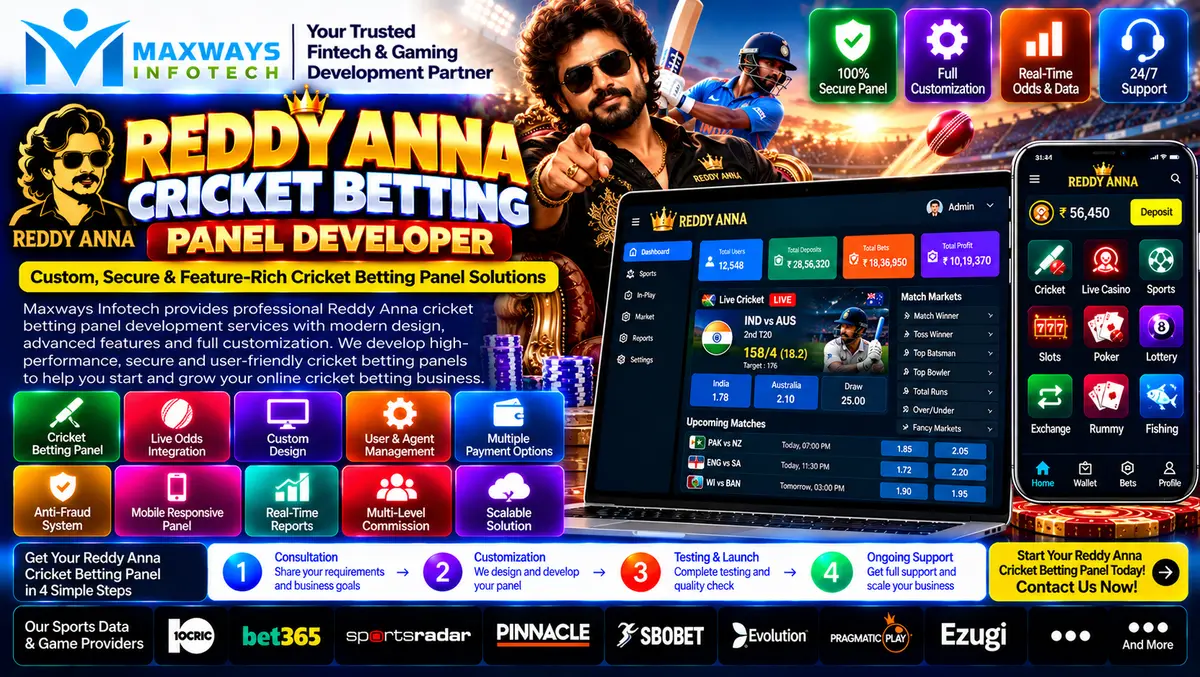
Learn how to evaluate a Reddy Anna cricket betting panel developer, including cricket data APIs, dashboard reliability, security, maintenance, and compliance.
Reddy Anna Cricket Betting Panel Developer: A Technical Evaluation Guide
Cricket-related software platforms can involve several connected components, including match information, live score feeds, administrative dashboards, reporting tools, and external data services. When researching a Reddy Anna cricket betting panel developer, it is important to understand what the software actually includes, where its data comes from, and how its technical performance and legal requirements are assessed.
A product name alone does not establish the identity of its developer, the reliability of its data, or the rights available to a customer. Businesses should verify the provider, obtain written technical documentation, and evaluate the proposed use before committing to a software agreement.
This guide explains the technical considerations involved in evaluating cricket-data dashboards and related sports software, with an emphasis on data quality, system reliability, documentation, and responsible project planning.
Understanding a Cricket Panel's Technical Structure
A cricket-focused software platform may combine several services to display match information and organize operational data. The exact features depend on the product and its permitted use.
Common technical components include:
-
Data ingestion: Receiving information from authorized cricket-data providers.
-
Data processing: Validating incoming records and converting them into a consistent format.
-
Dashboard interface: Displaying match details, status information, and permitted reports.
-
Administrative controls: Managing authorized users, configuration, and system settings.
-
Monitoring tools: Tracking data delays, failed requests, and application errors.
-
Reporting: Presenting historical or operational information in a structured format.
These components have different responsibilities. Separating them can make it easier to identify problems, maintain integrations, and update individual features without unnecessarily changing the entire application.
For general information about the company and its online presence, visit Maxways Infotech.
Why Cricket Data Accuracy Matters
Cricket information can change rapidly during a match. Score updates, wickets, overs, match status, and other statistics may be supplied by external data services and then displayed in a website or dashboard.
A reliable software design should not assume that every incoming update is complete, correctly ordered, or delivered immediately.
Validate incoming records
The application should check required fields, data types, timestamps, and other relevant constraints before accepting an update.
Handle delayed information
Network issues or upstream service interruptions may delay updates. The interface should communicate when information was last updated instead of presenting stale data as unquestionably current.
Prevent duplicate processing
Where the provider supplies event identifiers or sequence information, the application can use them to help avoid processing the same event more than once.
Keep data consistent
Related records should be updated using suitable application and database rules. This helps prevent conflicting information from appearing in different parts of the dashboard.
Maintain a traceable history
Appropriate technical logs can help developers investigate missing updates, unexpected values, and integration failures. Logs should avoid storing unnecessary sensitive information.
These practices are useful for lawful sports-information products and other applications that depend on changing external data.
Evaluating Sports Data APIs
If a platform depends on a third-party cricket-data API, its quality depends partly on the upstream provider and partly on the integration implementation.
Before approving an API connection, request documentation that explains:
-
Available endpoints and the information they return.
-
Authentication and credential-management requirements.
-
Update frequency and timestamp conventions.
-
Rate limits and permitted request volumes.
-
Error codes and timeout behaviour.
-
Data licensing and permitted uses.
-
Versioning and deprecation procedures.
-
Support arrangements for data-related incidents.
An API demonstration may show a successful response, but it does not establish that every match, competition, or data field is covered. Confirm the specific coverage and service commitments in writing.
For related software and digital business information, explore the Maxways Infotech fintech page.
Dashboard Design for Match Information
A useful cricket dashboard should present information in a way that makes it easy to understand. Adding more data to a screen is not always an improvement.
Establish a clear information hierarchy
Prioritize the information users need most often. Supporting statistics and historical details can appear in separate sections rather than competing for attention on the main screen.
Display timestamps
Showing when a record was last updated helps users distinguish current information from delayed data.
Use consistent labels
Terms such as scheduled, in progress, completed, and delayed should have clear definitions and be used consistently across the application.
Design for different screens
Responsive layouts can make tables, match cards, filters, and navigation easier to use on phones, tablets, and desktop computers.
Communicate errors clearly
If a data feed is unavailable, the interface should explain that information may be incomplete or temporarily unavailable. Clear status messages are better than silently displaying outdated records.
Monitoring and System Reliability
A dashboard may appear to work correctly under light testing but behave differently when data requests increase or an external service becomes unreliable.
A technical evaluation should therefore consider how the application detects and responds to problems.
API monitoring: Measure response times, unsuccessful requests, and timeouts.
Data freshness checks: Compare the most recent received update with the expected update pattern documented by the provider.
Application monitoring: Track errors, slow operations, and infrastructure resource usage.
Recovery procedures: Document how the system should respond to interrupted connections or unavailable dependencies.
Alerting: Configure appropriate alerts for significant technical problems rather than sending notifications for every minor event.
Monitoring should help the responsible team identify the cause of a problem, whether it originates in the application, its infrastructure, or an external provider.
Security and Access Control
Sports-information applications may include administrator accounts, configuration tools, reporting functions, and integrations with external services. Each component should have appropriate access controls.
The development team should explain how authentication is implemented, how permissions are enforced on the server, and how API credentials are protected.
Important practices include encrypted network communication, input validation, secure configuration, dependency updates, appropriate audit records, and regular security testing.
If different users have different responsibilities, the application should restrict their access accordingly. Hiding a button in the interface is not enough; the backend must also reject unauthorized requests.
A documented security review before release can help identify weaknesses that might otherwise be missed during ordinary functional testing.
How to Assess a Developer's Experience
When evaluating a Reddy Anna cricket betting panel developer, avoid relying exclusively on a product name or marketing claims. Assess the actual team and the particular software offering.
Ask for:
-
The legal identity of the business supplying the software.
-
A documented description of the product and its included features.
-
Evidence of experience with data-driven web applications.
-
Technical documentation for any proposed integrations.
-
An explanation of how data quality and delays are handled.
-
Details of security testing and system monitoring.
-
A written support and maintenance agreement.
-
Clear ownership and licensing terms.
Where confidentiality prevents a developer from sharing client information, request an appropriate demonstration or a description of the team's relevant technical work.
For more software and technology articles, visit the Maxways Infotech blog.
Project Scope, Costs, and Maintenance
Development costs depend on the number of dashboards, complexity of data processing, integration requirements, infrastructure, security needs, and support arrangements.
Before requesting a quotation, prepare a feature list that separates essential requirements from optional enhancements.
Ask the provider to distinguish one-time costs from recurring fees. External data access, hosting, and maintenance may be billed separately.
A written scope should also identify acceptance criteria, excluded features, delivery milestones, and the process for approving additional work.
Legal and Regulatory Considerations in India
The legal status of a cricket-related application depends on its actual functionality and intended use. A technical panel or data integration should not be assumed to authorize activities that are otherwise restricted.
India's Promotion and Regulation of Online Gaming Act, 2025 prohibits online money games and related activities. The associated Promotion and Regulation of Online Gaming Rules, 2026 came into force on May 1, 2026, according to the government's published announcement.
Compliance should be assessed before committing to software development, licensing, or promotional activities.
Conclusion
Evaluating a Reddy Anna cricket betting panel developer requires a careful review of data quality, API documentation, dashboard usability, system monitoring, security, pricing, and technical support. A product label or demonstration alone cannot establish whether a software offering is reliable or suitable.
Verify the provider, define the requirements, confirm the permitted use of external data, and establish written responsibilities for maintenance and incident response. A structured evaluation makes it easier to compare software proposals and understand their technical and commercial limitations.