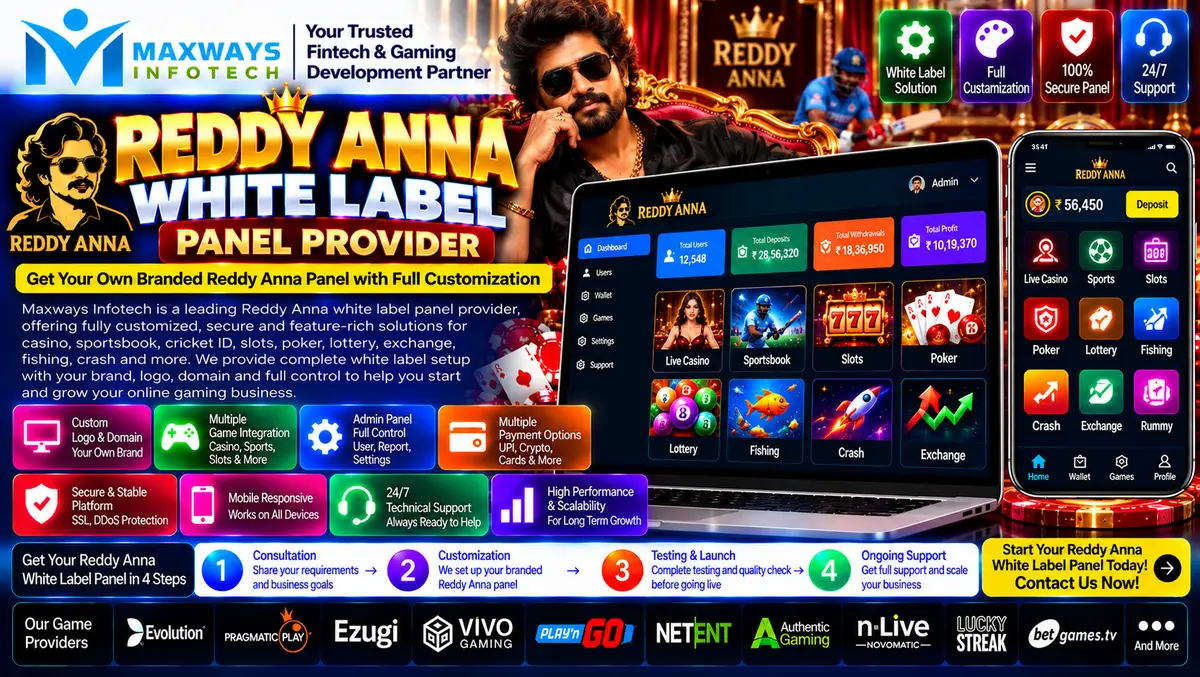
Learn how to evaluate a Reddy Anna white label panel provider, including authorization, branding rights, software licensing, support, and legal considerations.
Reddy Anna White Label Panel Provider: A Guide to Software Evaluation and Business Planning
When researching a Reddy Anna white label panel provider, businesses should look beyond a product name or branded demonstration. It is important to understand what software is being offered, which customization rights are available, who maintains the technology, and what contractual and regulatory requirements apply.
A white-label software arrangement generally allows an organization to use an existing product under agreed branding terms. Depending on the product, it may include a customized interface, administrative tools, reporting capabilities, technical support, and documented integration options. The actual features and permissions vary by provider, so they should always be verified in writing.
This guide explains how to evaluate a white-label software offering, compare vendors, understand commercial terms, and plan for long-term software ownership.
What Does a White Label Panel Provider Offer?
A white-label panel provider supplies software that can be configured for an organization's permitted use and brand identity. Rather than commissioning every component from scratch, a customer may be able to use existing software under a licensing agreement.
A typical software package may include several components:
-
Branded interface: Approved changes to the product's appearance, terminology, and visual identity.
-
Administrative dashboard: Tools for authorized personnel to manage permitted settings and review system information.
-
User management: Account administration and role-based permissions, depending on the product.
-
Reporting tools: Views and exports for information the customer is authorized to access.
-
Technical documentation: Instructions for configuration, supported features, and maintenance.
-
Support arrangements: Defined procedures for reporting issues and receiving technical assistance.
These features should not be assumed to come with every white-label package. Request a complete specification before comparing products or agreeing to a purchase.
For general company information, visit the Maxways Infotech website.
Verify the Provider Before Making a Commitment
A recognizable product name does not automatically establish who owns the software or who has the right to license it. The first step is to verify the legal entity behind the offer and establish whether it is authorized to provide the specific product and branding being advertised.
Before signing an agreement, check the following:
Business identity
Request the provider's legal business name, official contact details, and the identity of the party that will sign the contract. Ensure that payment instructions and contractual details correspond to the verified business relationship.
Product ownership and authorization
Ask who owns the underlying software, whether the provider has the right to offer it under a white-label arrangement, and whether the proposed brand use is authorized.
Product demonstration
Request a demonstration of the actual software. Ask the provider to distinguish features available in the current product from features that would require additional development.
Written specifications
Obtain a description of included modules, supported environments, customization limits, technical dependencies, and known limitations.
Contractual accountability
The agreement should identify the responsible parties, delivery obligations, support commitments, payment terms, and procedures for resolving disputes.
These checks help distinguish a documented software offering from an informal promise.
Customization and Brand Management
Branding is often a central reason for considering a white-label solution. However, the level of customization available depends on the software licence and the provider's technical capabilities.
A customization brief should identify which elements can be changed and who must approve those changes.
Potential areas to document include:
-
Logo and approved brand assets.
-
Colours, typography, and interface terminology.
-
Domain and environment configuration, where supported.
-
Language and responsive-design requirements.
-
Administrative interface preferences.
-
Custom reports and other agreed software changes.
Also clarify whether design changes are included in the initial price or charged separately. If the provider retains control over the underlying software, determine which changes can be maintained independently and which require its involvement.
Branding rights should be documented separately from software ownership. Permission to display a logo does not necessarily provide ownership of the platform, source code, or proprietary components.
Technical Quality and System Reliability
A software demonstration can show how an application looks, but it cannot establish how well the system will perform under different conditions. Technical evaluation should cover reliability, access control, maintenance, and recovery procedures.
Security and permissions
Ask how users are authenticated and how permissions are enforced. Administrative actions should be restricted to authorized roles, and sensitive configuration should not be exposed through public-facing interfaces.
Performance
Request information about supported workloads, infrastructure responsibilities, and how performance issues are investigated. Any availability or performance commitment should be defined in the agreement rather than assumed from a sales presentation.
Updates and compatibility
Confirm how software updates are delivered, how compatibility issues are addressed, and whether customers receive notice of changes that may affect customized components.
Backups and recovery
Establish whether backups are included, who is responsible for maintaining them, and how recovery procedures are tested.
Technical support
Review support hours, incident-reporting methods, escalation procedures, and the difference between included support and separately charged development work.
For broader software and digital business topics, explore the Maxways Infotech fintech page.
Understanding Pricing and Contract Terms
White-label software can involve an initial setup fee alongside recurring licensing, hosting, support, and maintenance costs. A low initial price does not necessarily mean that the overall arrangement is less expensive.
Ask for an itemized quotation that explains each applicable cost.
Read the agreement carefully before making a payment. Confirm what happens if a feature is delayed, the service is unavailable, or either party wishes to terminate the relationship.
Written terms provide a more dependable basis for evaluating a vendor than verbal assurances.
Data Access and Software Handover
A business should understand how it can access its permitted data throughout the contract and what happens when the relationship ends.
Ask the provider to explain the export formats available, whether an export fee applies, how long data remains available after termination, and how deletion requests are handled.
The handover agreement should also clarify which items will be supplied, such as:
-
Customer-owned brand assets.
-
Agreed project documentation.
-
Permitted business records and data exports.
-
Configuration instructions.
-
Relevant account and access information.
-
Documentation for customer-specific customizations.
A white-label licence may not include ownership of the provider's source code. That distinction should be clear from the beginning, along with any restrictions on transferring the software to another service provider.
How to Compare White Label Software Vendors
Instead of choosing based only on branding or price, prepare a comparison sheet and evaluate each vendor against the same criteria.
Product fit: Does the documented software meet the intended requirements?
Authorization: Can the provider demonstrate its authority to offer the product and associated branding?
Customization: Are the required changes supported and included in the agreed scope?
Technical quality: Are security, reliability, updates, and support explained clearly?
Commercial transparency: Are recurring costs, exclusions, and termination terms documented?
Data portability: Can the customer retrieve its permitted information when needed?
Compliance: Has the intended use been reviewed against the applicable legal requirements?
A structured comparison can reveal important differences that may not be obvious during a product demonstration.
Planning for Long-Term Support
The relationship with a software provider often continues well beyond initial configuration. Updates, technical issues, changing business requirements, and third-party dependencies may all require attention.
Before the agreement begins, identify who will monitor the application, report defects, apply updates, maintain documentation, and communicate with third-party service providers where relevant.
Define a process for requesting changes and approving additional work. A written change request should explain the proposed change, its cost, its effect on the timeline, and how the completed work will be tested.
For more articles about technology and software topics, visit the Maxways Infotech blog.
Legal and Regulatory Considerations in India
The legality of a gaming-related software product depends on its actual functionality and intended use, not simply on whether it is sold as a white-label panel or branded software.
India's Promotion and Regulation of Online Gaming Act, 2025 prohibits online money games and related activities. The associated Promotion and Regulation of Online Gaming Rules, 2026 came into force on May 1, 2026, according to the government's announcement.
Legal review should take place before committing to the contract, development schedule, or marketing plan.
Questions to Ask Before Selecting a Provider
Before making a decision, ask:
-
Which legal entity is providing the software?
-
What evidence confirms its authority to license the product and branding?
-
What features are included in the written specification?
-
Which customizations are supported and what do they cost?
-
Who owns the software and customer-specific additions?
-
What security, backup, update, and support arrangements apply?
-
Which recurring fees and termination charges may arise?
-
How can permitted data be exported or handed over?
-
What happens if the service or a third-party dependency changes?
-
Have the intended use and applicable legal requirements been reviewed?
Clear answers help establish realistic expectations and reduce uncertainty before the business commits resources.
Conclusion
Choosing a Reddy Anna white label panel provider requires careful evaluation of product authorization, customization rights, technical quality, pricing, support, and data access. A recognizable name or polished demonstration is not enough to establish that a particular offering meets the business's requirements.
Verify the provider's identity, request written documentation, understand software ownership, and establish a clear exit plan. Most importantly, confirm that the proposed use complies with the applicable legal framework.
A documented and carefully evaluated agreement provides a stronger foundation for making an informed software decision.