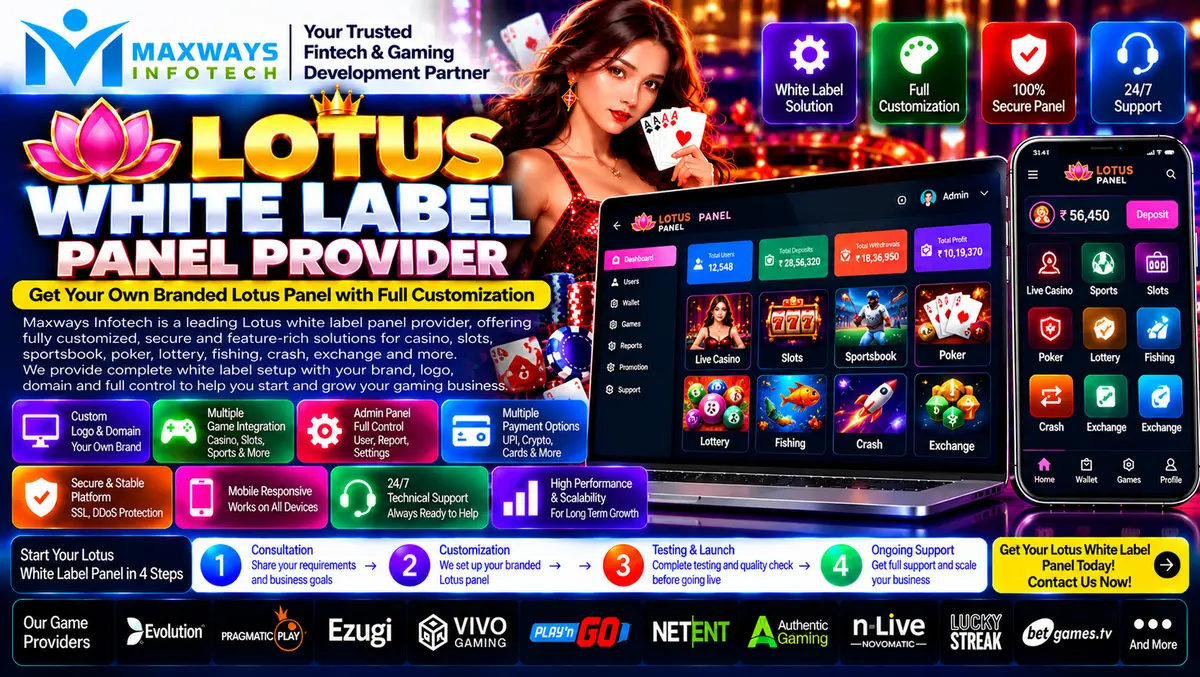
Learn how to evaluate a Lotus white label panel provider, including software licensing, branding rights, technical support, pricing, and data portability.
Lotus White Label Panel Provider: Branding, Ownership and Vendor Selection Guide
Choosing a Lotus white label panel provider requires more than comparing branding options or reviewing a software demonstration. Businesses researching white-label platforms should understand what the provider actually supplies, which rights are included in the agreement, who controls the underlying technology, and how the software will be maintained over time.
A white-label arrangement generally allows a business to present an existing software product under an agreed brand identity. The original technology may remain controlled by the provider, while the customer receives specific customization rights and access to agreed features.
Before evaluating any Lotus-branded panel offering, it is important to verify the provider's identity, confirm the intended software functionality, and review all relevant commercial and legal conditions.
What Is a Lotus White Label Panel Provider?
A white-label panel provider offers an existing software platform that can be configured with a customer's permitted branding and selected settings. Depending on the product, the arrangement may include a branded interface, administrative tools, technical documentation, hosting arrangements, or ongoing support.
The phrase "Lotus white label panel" may refer to different offerings in the market. Do not assume that every provider using this term supplies the same software, integrations, rights, or service levels. Request written specifications for the particular product being considered.
A typical white-label agreement should clarify:
-
Which software modules are included.
-
What branding and interface changes are permitted.
-
Whether hosting and maintenance are included.
-
Which third-party services are involved.
-
Who owns the source code and custom developments.
-
What support and service commitments apply.
-
Which uses are permitted under the contract and applicable law.
Businesses researching software and digital services can visit the Maxways Infotech website for general company information.
Understand the Difference Between Branding and Ownership
One of the most important parts of a white-label agreement is understanding what the customer actually owns.
Using a brand name, logo, or customized interface does not automatically transfer ownership of the underlying software. A provider may retain the platform's source code, proprietary components, infrastructure, and intellectual property.
Before signing an agreement, separate the following rights.
Brand assets
Clarify who owns the business name, logo, original graphics, domain name, and other customer-supplied materials. The agreement should explain which assets the provider may use and under what conditions.
Software licensing
Review whether the software is licensed for a limited term, a particular territory, a specific number of users, or a defined business purpose. Confirm whether the licence can be renewed, transferred, or terminated.
Custom development
If the provider builds new features specifically for the customer, establish who owns those additions and whether they can be used independently of the original platform.
Data access and portability
Determine how business records and permitted customer data can be exported. Ask about available file formats, export fees, data-retention policies, and the process for receiving data when the contract ends.
These details can have a major effect on the business's flexibility in the future.
How to Evaluate a White Label Provider
A polished demonstration is useful, but it cannot replace proper vendor checks. The objective is to establish whether the provider can deliver the agreed software and whether the arrangement is suitable for the intended use.
1. Verify the provider's identity
Request the provider's legal business name, official contact details, contractual entity, and relevant business documentation. Confirm that the entity offering the software is the same entity named in the agreement or is properly authorized to act on its behalf.
2. Request a documented product demonstration
Ask for a demonstration of the actual product and its documented features. The demonstration should help you understand the available administrative functions, customization limits, reporting tools, and technical dependencies.
Do not treat a demonstration account as proof that every advertised feature will be included in the final agreement.
3. Review the technical specification
Request information about supported browsers, infrastructure responsibilities, API availability, authentication, data storage, backup arrangements, and software updates.
If the provider depends on external services, identify those dependencies before committing to the project.
4. Understand support arrangements
Ask who will handle defects, service interruptions, configuration changes, and technical questions. Check whether support is available during defined hours and whether response times are documented.
5. Check references where available
Where appropriate, ask for verifiable customer references or evidence of previous software delivery. Respect confidentiality requirements, but seek enough information to assess the provider's reliability and professionalism.
Customization: What Should Be Agreed in Writing?
White-label customization can range from a logo and colour scheme to a broader interface redesign. The available options depend on the platform and the rights granted by the provider.
A written customization specification should identify the requested changes, who will implement them, and how completion will be assessed.
Consider documenting:
-
Logo placement and approved brand assets.
-
Colour schemes, typography, and interface layouts.
-
Permitted domain and environment configurations.
-
Supported languages and device sizes.
-
Custom reports or administrative views.
-
Accessibility and usability requirements.
-
Approval procedures for design changes.
-
Additional fees for work outside the original scope.
Separate standard configuration from custom development. This makes it easier to understand which changes are included in the quoted price and which may require a separate estimate.
Technical Reliability and Service Responsibilities
The provider's technical responsibilities should be clear before the platform is adopted. A business needs to know who manages each component and how issues will be investigated.
Hosting and availability
Determine whether hosting is included, who manages the infrastructure, and how planned maintenance is communicated. If the agreement includes availability commitments, review the measurement method and any stated exclusions.
Security and access control
Ask how administrator accounts are protected, how permissions are assigned, and how credentials are stored. The system should restrict access to authorized users and provide appropriate records of important administrative changes.
Backups and recovery
Clarify whether backups are included, how often they are created, how restoration is tested, and who is responsible for recovery after an incident.
Updates and compatibility
Confirm how software updates are delivered and whether customers receive advance notice of changes that may affect integrations or customizations.
Incident management
Ask how technical problems are reported, escalated, and resolved. A documented process is more useful than an informal promise that support will be available when needed.
For additional software and digital business information, explore the Maxways Infotech fintech page.
Understanding Pricing and Contract Terms
White-label pricing can include several separate charges. Comparing only the initial setup fee may hide significant costs that appear later.
Request an itemized quotation covering the applicable categories:
Also review the contract's renewal period, cancellation notice, refund terms, service restrictions, liability provisions, and dispute-resolution process.
If the agreement requires a long commitment, understand the exit conditions before making the payment. Ask for all material promises to be included in the written contract rather than relying on verbal assurances.
Why Data Portability and Exit Planning Matter
A provider relationship may change because of price increases, technical limitations, support issues, or a change in business strategy. Planning for that possibility at the beginning can reduce disruption later.
Ask the provider to explain how the customer can retrieve permitted data, obtain relevant documentation, remove customer-owned assets, and close accounts at the end of the agreement.
The exit plan should identify:
-
Which data can be exported.
-
Which file formats and delivery methods are supported.
-
Whether an export or migration fee applies.
-
How long data remains available after termination.
-
How customer credentials and access are revoked.
-
How the parties will handle outstanding support issues.
-
Which parts of the software cannot be transferred because of licensing restrictions.
A realistic exit plan does not mean that the provider must transfer its proprietary software. It means both parties understand their rights and responsibilities if the relationship ends.
Questions to Ask Before Selecting a Lotus White Label Panel Provider
Use these questions during a vendor discussion:
-
What legal entity will sign the agreement?
-
What exactly does the white-label package include?
-
Which branding and customization rights are granted?
-
Who owns the software, custom features, and customer-supplied assets?
-
Which hosting, API, and third-party dependencies are involved?
-
What security, backup, and recovery arrangements are documented?
-
What support commitments and service limitations apply?
-
What are the total setup, recurring, and exit costs?
-
How can permitted data be exported if the contract ends?
-
Which legal and licensing requirements apply to the intended product?
Compare providers using the same checklist. Clear documentation and realistic commitments are stronger indicators of a suitable partnership than a large list of unverified features.
For more software and technology articles, visit the Maxways Infotech blog.
Legal and Regulatory Considerations in India
Before adopting a white-label panel, establish what the proposed platform will actually do and where it will be offered. A white-label contract or software licence does not automatically authorize every possible use of a platform.
India's Promotion and Regulation of Online Gaming Act, 2025 prohibits online money games and related activities. The associated Promotion and Regulation of Online Gaming Rules, 2026 came into force on May 1, 2026, according to the government's published announcement. Review the applicable requirements and seek qualified legal advice before proceeding with any gaming-related use case.
Legal review should take place before the business commits to a contract, implementation schedule, or promotional activity.
Conclusion
Selecting a Lotus white label panel provider involves evaluating much more than a branded interface. Software rights, customization limits, technical responsibilities, support commitments, pricing transparency, and data portability all influence the long-term value of the arrangement.
Before signing, verify the provider's identity, obtain a written specification, clarify ownership and licensing, and establish a realistic exit plan. Most importantly, confirm that the proposed use is permitted under the relevant legal and regulatory framework.
A documented agreement and a careful vendor evaluation give businesses a stronger basis for making an informed software decision.


