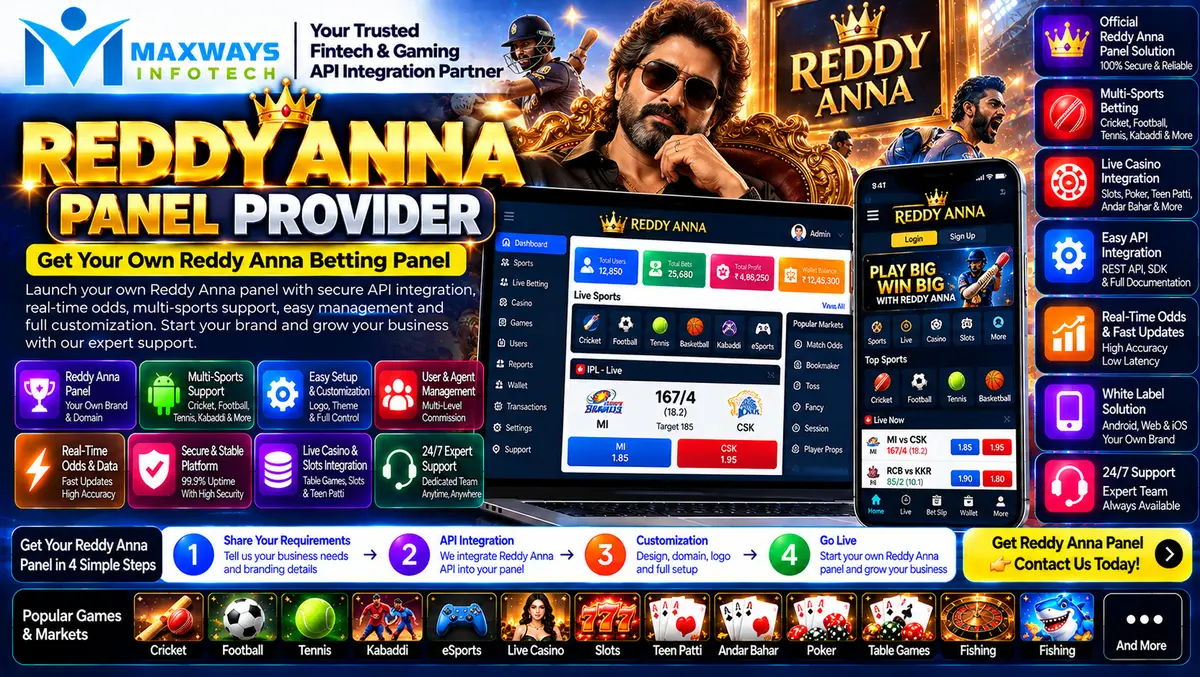
Explore Reddy Anna Panel Provider software features, vendor verification, administration tools, API documentation, data security, and legal considerations.
Reddy Anna Panel Provider: Software Features, Vendor Evaluation and Compliance
Searching for a Reddy Anna Panel Provider often means looking for information about panel-based software, administration tools, platform configuration, and technical support. Before choosing any provider, it is important to understand exactly what the product includes, who operates it, and whether the intended use is legally permitted.
A panel is not just a dashboard. Its underlying software, access controls, data management, integration capabilities, maintenance arrangements, and contractual terms all influence its suitability for a project.
This guide explains how to evaluate panel software from a technical and operational perspective, with particular attention to vendor verification, security, documentation, and responsible project planning.
What Is a Reddy Anna Panel Provider?
The term “Reddy Anna Panel Provider” is used in online searches associated with panel-based sports and betting platforms. However, search terminology alone does not establish the identity of a company, the authenticity of a product, or the services that a particular vendor offers.
Before evaluating a provider, request its legal business details, product documentation, written service scope, and information about its authority to offer the proposed services.
For any software project, it is also useful to distinguish between a ready-made panel, a white-label application, a custom-developed dashboard, and an integration service. Each option may involve different costs, responsibilities, access rights, and maintenance requirements.
Important Software Features to Evaluate
1. Administration Dashboard
A well-designed administration dashboard should make authorised management tasks straightforward. Its usefulness depends on how clearly it presents information and how reliably it handles configuration changes.
During a product demonstration, examine the navigation, available filters, status indicators, error messages, and supported screen sizes. Ask which functions are included in the standard product and which require additional development.
Avoid choosing a panel solely because its interface looks impressive. The underlying functionality and documentation matter just as much.
2. User Roles and Access Management
Different staff members should have access only to the functions required for their responsibilities.
A well-designed permission model may include separate roles for technical administrators, support staff, and reporting users. Sensitive configuration changes should be restricted to authorised accounts.
Key questions include:
-
Can permissions be configured by role?
-
Can individual accounts be disabled when access is no longer required?
-
Are important administrative changes recorded?
-
Are account recovery and authentication processes documented?
-
Can sensitive information be restricted from unnecessary access?
These controls help improve accountability and reduce the risk of accidental or unauthorised changes.
3. Reporting and Activity Records
Reporting tools can help teams investigate technical issues and understand system activity. Depending on the product, reports may include configuration changes, application errors, integration status, and administrative actions.
Before selecting a panel, check how records are created, how timestamps are handled, whether reports can be exported, and who is permitted to view them.
Audit records should be sufficiently detailed for troubleshooting without unnecessarily storing passwords, secret tokens, or sensitive personal information.
4. API Integration and Technical Documentation
Some panel-based applications depend on external APIs or third-party services. An integration should be evaluated through its documentation rather than assumed to work simply because a provider advertises compatibility.
Review the supported API methods, authentication requirements, data formats, versioning policy, request limits, and error-handling procedures.
A separate integration layer can help isolate external dependencies from the main application. It also gives developers a clearer place to validate incoming data and handle temporary service failures.
Confirm whether integration support is included in the agreement and identify who will maintain the connection if the external provider changes its API.
Security and Data Protection
Security should be considered during the initial planning stage, not only after the panel has been configured.
Credential protection: Keep private keys and confidential configuration values in protected server-side storage rather than exposing them in public application code.
Authentication: Use appropriate authentication controls and stronger protection for privileged accounts where supported.
Permission management: Restrict access to sensitive functions according to each user's responsibilities.
Auditability: Record important administrative actions and configuration changes.
Maintenance: Establish a documented process for software updates, vulnerability reports, and dependency management.
Backup and recovery: Confirm how data is backed up, how restoration is tested, and who is responsible during an incident.
Ask the provider for documentation that explains its actual security practices. General marketing claims are not a substitute for reviewing technical controls and contractual responsibilities.
Vendor Verification Before Making a Decision
A vendor review helps establish whether the company and product are suitable for the intended project.
Request written information about:
-
The provider's legal identity and business contact details.
-
The exact product name and included functionality.
-
The software's ownership and licensing arrangements.
-
Technical documentation and available testing facilities.
-
Hosting, maintenance, and support responsibilities.
-
Data access, export, retention, and deletion arrangements.
-
All setup fees, recurring charges, and additional service costs.
-
The contract's termination and transition provisions.
If a vendor cannot clearly explain what it provides or who is responsible for operating the system, pause the evaluation until those questions are resolved.
Do not rely on screenshots, promotional messages, or verbal promises as proof of ownership, authorisation, or product reliability.
Understanding the Difference Between Ready-Made and Custom Software
A ready-made panel generally starts with an existing software product that can be configured within its supported limits. Custom software is developed around a defined set of requirements and may provide greater control over workflows and architecture.
The appropriate choice depends on the lawful purpose of the project, technical requirements, available resources, and long-term maintenance plan.
Legal and Regulatory Considerations in India
Legal review is essential when a proposed panel is associated with betting, wagering, or online money gaming.
India's Promotion and Regulation of Online Gaming Act, 2025, and the Promotion and Regulation of Online Gaming Rules, 2026, establish a framework addressing online money games, related promotion, and facilitation. The Rules were notified to come into force on 1 May 2026.
Businesses should consult the official government materials and qualified legal counsel before undertaking any project that could involve prohibited online money gaming. A software licence, offshore provider, or white-label arrangement does not itself establish that an activity is lawful in India.
For technology projects, define the intended use before selecting or integrating a product. Confirm the applicable requirements for the product category, target market, data handling, and each party's responsibilities.
A Practical Project Evaluation Process
Step 1: Document the Requirements
Define the project's purpose, intended users, required administrative functions, reporting needs, and technical dependencies. Identify any legal or contractual restrictions before development begins.
Step 2: Review the Product
Request a demonstration and examine the available technical documentation. Confirm which features are already included and which require configuration or additional development.
Step 3: Assess Security
Review authentication, permissions, credential storage, audit records, update procedures, and backup arrangements.
Step 4: Confirm Commercial Terms
Obtain a written breakdown of costs, support responsibilities, maintenance obligations, data ownership, and termination conditions.
Step 5: Test in a Controlled Environment
Where the proposed use is lawful and authorised, test user permissions, error handling, integration failures, reporting accuracy, and recovery procedures before approving a production deployment.
Step 6: Maintain Documentation
Keep the technical configuration, support contacts, vendor agreement, and recovery instructions accessible to the people responsible for maintaining the system.
Explore Technology Resources from Maxways Infotech
Businesses researching software architecture and digital platform requirements can visit the Maxways Infotech website for company information.
For projects involving legitimate payment-related or financial software workflows, the Fintech page may offer useful background on related technology topics.
Additional educational material and software articles are available through the Maxways Infotech blog.
Any specific product, provider relationship, or development service should be confirmed directly with the relevant organisation. Review the written scope and applicable legal requirements before making a commitment.
Frequently Asked Questions
What is a Reddy Anna Panel Provider?
The phrase is commonly used in searches related to panel-based sports or betting platforms. The exact product, company, and capabilities should be independently verified.
What should be checked before selecting a panel provider?
Review the provider's identity, product documentation, software scope, security controls, support arrangements, pricing, data ownership, and contractual terms.
Can a panel be customised?
Customisation depends on the product. Some panels support changes to branding, permissions, and administrative workflows, while others have more limited configuration options.
Why are technical documents important?
Documentation helps developers understand supported functions, integration requirements, known limitations, and maintenance responsibilities before committing to a project.
Is a betting-related panel automatically legal to operate in India?
No. Legal suitability depends on the proposed activity and applicable law. Obtain qualified legal advice before proceeding with any project involving online money gaming or betting-related functions.
Conclusion
Evaluating a Reddy Anna Panel Provider requires more than comparing features or dashboard designs. Businesses should verify the vendor's identity, understand the software's limitations, assess security and maintenance arrangements, and establish the legal suitability of the intended use.
A documented evaluation process can help avoid unclear contractual obligations, unexpected technical costs, and unverified product claims. Start with a clear project scope, review the evidence, and make decisions based on confirmed capabilities and applicable requirements.


