Explore all panel providers, software features, API integration, security, customization, pricing and key questions to ask before selecting a provide
All Panel Provider: How to Choose the Right Technology Partner
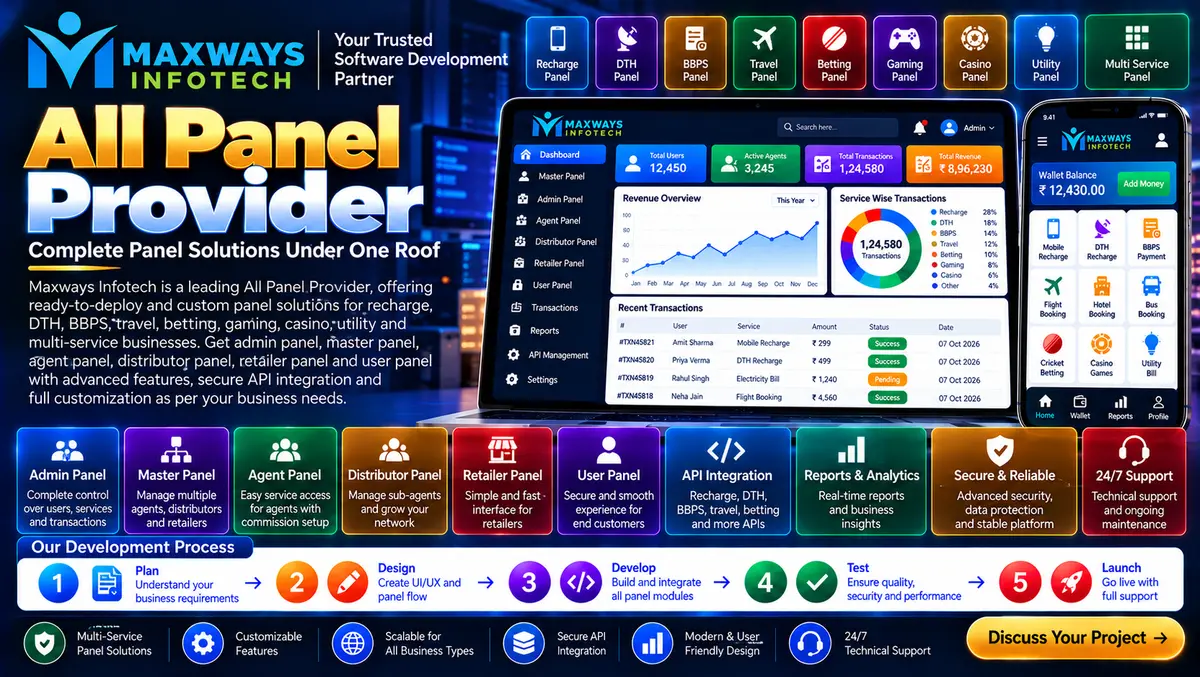
An All Panel Provider helps businesses explore technology solutions that bring multiple management functions, user dashboards and connected services into one platform. Depending on the project, a solution may include administrative tools, user management, reporting, database connectivity and integrations with external applications.
Choosing a provider is an important decision because the quality of the underlying technology affects usability, maintenance, security and future development. Businesses should evaluate the complete solution rather than focusing only on the number of features offered or the initial quotation.
What Is an All Panel Provider?
An All Panel Provider is a company or technology partner that supplies, develops or integrates software for a platform containing multiple connected panels. The exact meaning depends on the industry and the services included in the provider's offering.
A typical business platform may contain:
-
Administration tools: Manage approved settings, accounts and system configuration.
-
User management: Organize accounts, roles and access permissions.
-
Reporting features: Present operational data and activity summaries.
-
Integration services: Connect the platform with compatible third-party applications.
-
Technical support: Help investigate software issues and maintain the system.
-
Customization options: Adapt selected features to documented business requirements.
Not every provider includes all these services. Before signing an agreement, businesses should confirm precisely what is included in the proposed package.
Why Businesses Research All Panel Providers
Businesses often compare providers when they need a centralized system but do not want to manage every technical component independently.
Consolidating business operations
A connected platform can reduce the need to switch between unrelated tools. For example, approved staff members may be able to manage accounts, view reports and review operational activity through a common interface.
Reducing integration complexity
When several applications need to exchange information, a provider with suitable integration experience can help define how those systems communicate and handle errors.
Supporting future requirements
A platform should be designed with the expected workload, additional users and potential feature changes in mind. The provider should explain how the proposed architecture can accommodate those requirements.
Establishing technical accountability
A written agreement can clarify which party handles implementation, hosting, software updates, troubleshooting and ongoing support.
Businesses can visit Maxways Infotech to explore the company's website and review its publicly available information before evaluating whether its offerings match their requirements.
Types of Services an All Panel Provider May Offer
The services available vary by provider, industry and project scope.
Ready-made software solutions
Some providers supply existing software that can be configured for a particular business. This approach may reduce initial development work when the existing features closely match the requirements.
Customized platform development
Custom development is useful when a business needs specific workflows, specialized dashboards, particular reporting formats or integration with existing systems.
API integration
An API allows compatible applications to exchange data through defined requests and responses. A provider may help connect databases, reporting tools or other approved services to the main platform.
Hosting and deployment assistance
Depending on the agreement, deployment services may include environment configuration, domain setup, monitoring, backups and application updates. Businesses should verify which infrastructure costs are included and which are charged separately.
Maintenance and technical support
Ongoing support can cover bug investigation, security updates, compatibility changes and assistance with software operations. A service agreement should define response times, support hours and the process for escalating serious issues.
How to Evaluate an All Panel Provider
A useful evaluation process examines the provider's technical approach and the practical terms of the service.
1. Review the exact scope
Ask for a written list of included modules, features, integrations and deliverables. Confirm which functions are excluded and how additional requests will be priced.
2. Understand the technology
The provider should be able to explain the proposed application architecture, database, hosting environment and integration approach in understandable language.
3. Check security practices
Ask how the system handles authentication, access permissions, sensitive information, backups and software updates. Security claims should be supported by clear technical explanations.
4. Examine documentation
Documentation should explain system configuration, APIs, deployment procedures, known limitations and the steps needed for future maintenance.
5. Confirm ownership and licensing
Clarify who owns the source code, designs, configuration files and custom-developed components. Also confirm whether third-party software requires separate licenses or recurring fees.
6. Review support arrangements
A provider should explain how issues are reported, how urgent problems are handled and what happens when the original development team is no longer available.
Understanding the Total Cost of an All Panel Solution
The quoted development price is only one part of the overall investment. Depending on the project, the total cost may include:
-
Initial software configuration or development.
-
Custom design and additional modules.
-
Third-party API or software licensing fees.
-
Hosting, storage and bandwidth.
-
Security testing and deployment.
-
Technical support and software maintenance.
-
Future feature requests and infrastructure upgrades.
A transparent quotation separates one-time charges from recurring expenses. It should also explain payment milestones and the process for approving work outside the original scope.
The cheapest option may not be the most economical over time if it lacks documentation, requires frequent redevelopment or creates expensive dependencies.
API Integration and Platform Compatibility
Integration is often one of the most important parts of a multi-panel project. Before connecting external services, the provider should confirm that the APIs are available for the intended use and that the necessary permissions have been obtained.
For projects involving financial technology, Maxways Infotech's fintech section is a relevant resource to explore for fintech-related information.
A properly planned integration should cover:
-
API authentication and credential management.
-
Request and response formats.
-
Data validation and error handling.
-
Rate limits and service availability.
-
Logging and monitoring.
-
Version changes and compatibility.
-
Data privacy and applicable compliance obligations.
Businesses should test integrations in an appropriate environment before relying on them in production. They should also establish a procedure for handling outages or rejected requests.
Warning Signs to Watch For
Not every provider offers the same level of transparency. Be cautious when a proposal contains unclear deliverables or avoids reasonable technical questions.
Common warning signs include:
-
Promises of unlimited customization without a defined scope.
-
Unclear ownership or licensing terms.
-
No explanation of security or backup procedures.
-
Missing API documentation.
-
Unspecified hosting and maintenance charges.
-
No defined testing or acceptance process.
-
No clear plan for transferring access and documentation.
These issues do not automatically prove that a provider is unsuitable, but they should be resolved before the project begins.
Building a Long-Term Relationship With a Technology Provider
A provider relationship should not end when the platform is deployed. Software environments change, third-party services are updated and business requirements evolve.
A practical long-term plan includes scheduled maintenance, monitoring, backup verification, security reviews and documented procedures for future improvements.
Businesses should retain appropriate administrative access and maintain copies of important project documentation. They should also agree on how updates are tested, approved and deployed to avoid unnecessary disruption.
For more technology and software-related reading, explore the Maxways Infotech blog. Use relevant articles as background information while independently checking whether a provider's services, technical capabilities and contractual terms fit your project.
Frequently Asked Questions
What does an All Panel Provider do?
An All Panel Provider may supply, develop or integrate software that connects multiple dashboards, management tools and application services. The exact services depend on the provider and project agreement.
How do I choose an All Panel Provider?
Compare the feature scope, technical architecture, security practices, integration capabilities, documentation, licensing terms, maintenance arrangements and total cost.
Can an All Panel Provider customize a solution?
Some providers offer customization, while others mainly supply pre-built products. Confirm which changes are supported and whether custom work carries additional charges.
Does an All Panel Provider include hosting?
Not always. Hosting, domain management, backups and monitoring may be separate services or additional costs. Check the written quotation.
Why is technical support important?
Support helps businesses respond to software errors, compatibility problems and maintenance requirements after deployment. The agreement should specify the level of assistance provided.
What should be included in a provider agreement?
The agreement should clearly describe deliverables, pricing, milestones, acceptance criteria, ownership and licensing, security responsibilities, support terms and the process for requesting additional work.
Conclusion
Selecting an All Panel Provider involves evaluating the complete technology offering, not simply comparing feature lists. The provider should understand the project's requirements, explain its technical approach and clearly define its responsibilities.
A careful review of customization, integration, security, documentation, licensing and ongoing costs can help businesses make a more informed decision. Before committing, request a written scope and verify that the proposed solution meets the project's operational and legal requirements.
A well-defined provider relationship can make implementation and maintenance more predictable while giving the business a clearer path for future changes.