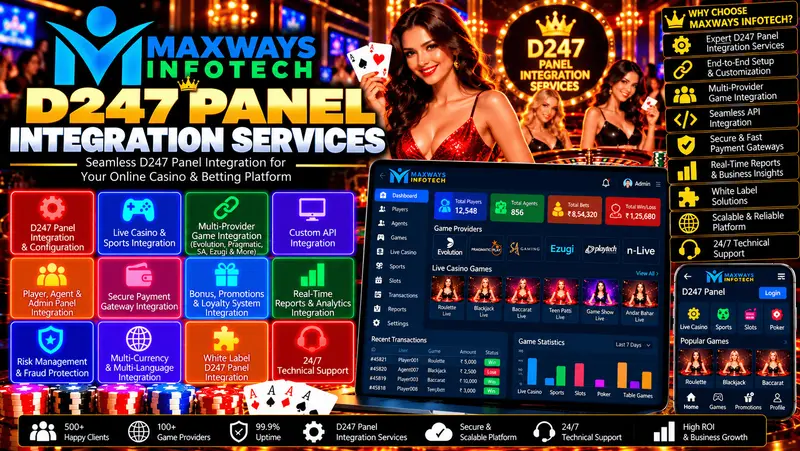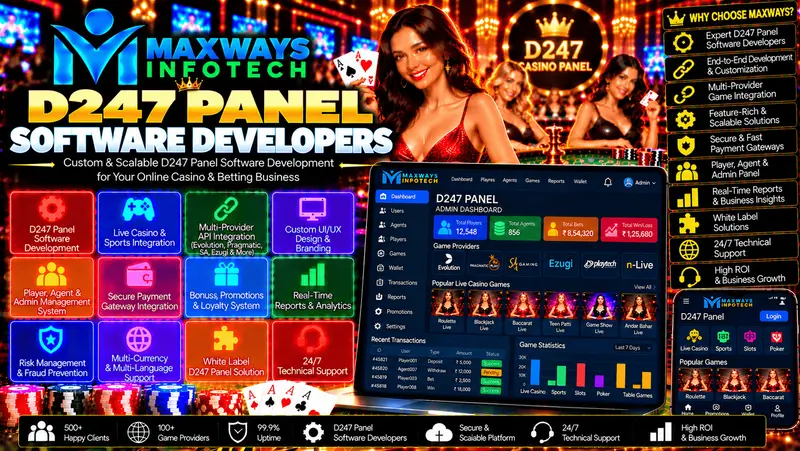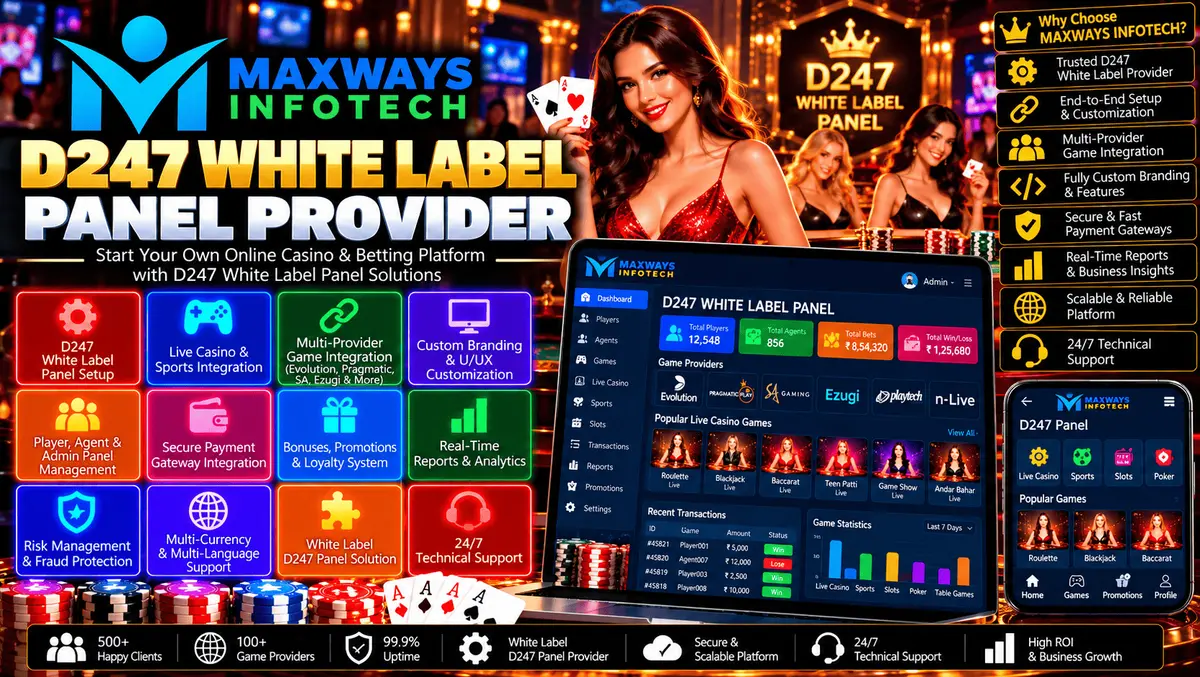
D247 White Label Panel Provider, custom branding, dashboard configuration, API integration, security, deployment, and technical support.
D247 White Label Panel Provider: Branding, Features, Integration, and Support
Businesses exploring branded panel software often look for a solution that combines a professional interface, centralized administration, customization options, and ongoing technical support. A D247 White Label Panel Provider may offer a software framework that businesses can configure around their brand and operational requirements, depending on the provider's available features and commercial terms.
At MaxWays Infotech, businesses can explore software development information and related digital platform solutions. Before choosing a white-label panel, it is important to understand how branding works, which modules are included, how integrations are managed, and what security and maintenance arrangements are available.
What Is a D247 White Label Panel?
A D247 white-label panel generally refers to a panel-based software solution that can be presented under a business's own brand, subject to the software provider's terms and permitted use.
Instead of building every component from the beginning, a business may start with an existing software framework and configure supported features. Depending on the project, these may include an administrative dashboard, user permissions, reporting tools, custom branding, and approved third-party integrations.
A white-label arrangement does not automatically mean the customer owns the underlying source code or can transfer the software to another provider. These rights should be confirmed in the service agreement.
Key Features to Look for in a D247 White Label Panel Provider
The right feature set depends on the intended use, project scope, and technical requirements. Consider these important capabilities before selecting a provider.
1. Custom Branding and Domain Configuration
Brand consistency helps users recognize a digital platform. Depending on the provider's capabilities, customization may include:
-
Business logo and brand colours
-
Customized login and dashboard screens
-
Supported domain configuration
-
Consistent interface styling
-
Responsive layouts for supported devices
Ask which branding changes are included in the package and which require additional development.
2. Centralized Administration
An administrative dashboard can bring supported settings and operational information into one interface. Useful capabilities may include account administration, configuration management, access permissions, and activity monitoring.
A well-organized dashboard should make routine tasks straightforward while limiting sensitive functions to authorized staff.
3. User and Role Management
Different team members may require different levels of access. Role-based permissions help separate administrative responsibilities and reduce the risk of unauthorized changes.
Before implementation, confirm whether the panel supports separate user roles, permission settings, account activity records, and administrator access reviews.
4. Reporting and Analytics
Reporting tools can help teams review operational activity and identify technical issues. Depending on the solution, reports may cover system activity, account changes, usage information, or other supported metrics.
Check whether reports can be exported, how frequently data is updated, and which users can access sensitive information.
5. API Integration
An API can connect a panel to compatible external services when the relevant provider authorizes access. Integration work may involve authentication, data exchange, error handling, and testing.
For additional reading about integration models, explore the reddy-anna-white-label-panel-provider. The suitability of any API depends on its documentation, permissions, technical compatibility, and commercial terms.
6. Security and Data Protection
Security should be part of the design and deployment process. Ask a prospective provider about:
-
Secure authentication and credential management
-
Role-based access controls
-
Encrypted data transmission
-
Administrative audit logs
-
Backup and recovery procedures
-
Vulnerability fixes and software updates
The final security controls should be documented and tested against the project's requirements.
Benefits of a White-Label Software Approach
A white-label solution may suit businesses that want to use an existing technology foundation rather than develop every standard feature independently.
Faster Initial Implementation
When the underlying framework already exists, the project may require less development than a completely custom application. The actual timeline still depends on customization, integrations, testing, and deployment.
Consistent Brand Experience
Supported branding options can help a business maintain a recognizable visual identity across its interface and domain.
Flexible Feature Selection
Some providers allow businesses to select or customize modules according to their requirements. Confirm which options are configurable and which depend on additional development.
Access to Technical Support
A documented support agreement can establish how the provider handles troubleshooting, maintenance, updates, and agreed enhancements after launch.
Potentially Lower Initial Development Effort
Reusing existing software components can reduce the need to build standard functionality from scratch. However, businesses should compare setup charges, recurring fees, maintenance, hosting, and integration costs before making a decision.
How to Choose a Reliable D247 White Label Panel Provider
Choosing a provider involves more than comparing prices or reviewing a product demonstration. Use the following steps to assess whether a solution is appropriate for your project.
Review the Provider's Capabilities
Request a demonstration of the actual software and confirm which features are available. Avoid relying on a feature list that does not distinguish between existing functionality and planned development.
Confirm Customization and Ownership Terms
Ask who owns the software, who controls the domain and hosting, whether source code is included, and what happens when the agreement ends. Clarify any restrictions on customization and migration.
Evaluate Integration Requirements
List the external services your project needs and ask the provider to confirm compatibility. Obtain documentation for supported integrations and understand any third-party fees or approval requirements.
Check Support and Maintenance
Clarify the support hours, response process, update policy, backup arrangements, and responsibilities for resolving issues. Make sure these terms are included in the agreement.
Compare the Total Cost
The complete cost may include setup, customization, hosting, domain configuration, API access, maintenance, and additional modules. Request an itemized proposal so you can compare providers fairly.
Businesses researching broader software approaches can also read about lotus-white-label-panel-provider and the factors involved in evaluating different platform models.
D247 White Label Panel Setup and Deployment Process
A structured deployment process helps reduce confusion and creates clear checkpoints for testing and approval.
-
Requirement gathering: Define the project's purpose, required features, branding, integrations, and operating environment.
-
Technical planning: Confirm the software framework, hosting requirements, access roles, and customization scope.
-
Brand configuration: Apply the approved logo, colours, interface changes, and domain settings.
-
Integration and testing: Test supported connections, permissions, error handling, and relevant security controls.
-
Deployment and handover: Deploy the approved version and provide the agreed documentation and access details.
-
Ongoing maintenance: Apply updates, monitor performance, and resolve issues according to the support agreement.
Businesses considering a subscription-based panel model can also review the d247-panel-development-company to compare how rental arrangements may differ from other software agreements.
White Label Panel vs Custom Software Development
A white-label panel and a custom-built application serve different project needs.
A white-label solution starts with an existing software foundation and offers supported branding or configuration options. Custom development starts with requirements and builds features specifically for the project.
White-label software may be suitable when its existing capabilities meet most requirements. Custom development may be more appropriate when a project needs unique workflows, specialized integrations, or greater control over architecture.
For a related perspective on customization, see d247-panel-software-provider.
The best choice depends on the required functionality, budget, technical resources, maintenance responsibilities, and the provider's contractual terms.
Common Mistakes to Avoid
When evaluating a D247 white-label panel provider, avoid these common mistakes:
-
Selecting a provider based only on the lowest quoted price.
-
Assuming all advertised features are included in the package.
-
Ignoring source-code ownership and software licensing terms.
-
Skipping security, integration, and performance testing.
-
Failing to confirm backup and recovery arrangements.
-
Overlooking recurring costs and third-party service fees.
-
Starting operations without verifying applicable legal requirements.
A written specification and service agreement help establish expectations and make the final deliverables easier to evaluate.
Why Explore MaxWays Infotech?
Businesses researching software and digital platform development can visit MaxWays Infotech to explore the company's available information and related technology services.
Before choosing any provider, discuss your requirements, request a clear proposal, and verify the available features, security practices, support arrangements, and contractual terms. This approach helps you determine whether the proposed software is suitable for your business objectives.
Frequently Asked Questions
What is a D247 White Label Panel Provider?
It refers to a provider offering a panel-based software solution that may be configured with a business's branding and selected features. Exact functionality depends on the software, provider agreement, and permitted use.
Can I use my own logo and domain?
Branding and domain configuration may be supported, depending on the package and technical setup. Confirm the available customization options before signing an agreement.
Can a white-label panel be customized?
Customization may include interface changes, dashboard settings, reporting, and compatible integrations. The extent of customization depends on the software architecture and the provider's terms.
Does a white-label panel include API integration?
Not necessarily. Some packages include selected integrations, while others charge separately for implementation or require third-party approval. Request written confirmation of the integrations you need.
How much does a D247 white-label panel cost?
Pricing varies according to features, customization, hosting, integrations, maintenance, and licensing arrangements. Request an itemized quotation based on your project requirements.
What should I check before choosing a provider?
Review the available features, security controls, support commitments, customization rights, recurring costs, data handling, and software ownership or licensing terms.
Conclusion
Selecting a D247 White Label Panel Provider requires careful consideration of branding, administrative features, API compatibility, security, maintenance, and total cost. A suitable solution should match your requirements, clearly document its limitations, and provide transparent support and contractual terms.
Visit MaxWays Infotech to explore related software development information and plan your project's technical requirements.
Compliance note: Any betting, casino, or gaming-related platform must be used only where legally permitted and with all required licences and authorizations. Businesses should also implement applicable age restrictions, responsible-use measures, privacy protections, and data-security safeguards.